


Piper parmatum
Piper parmatum
Couldn't load pickup availability


Rare, compact Panamanian pepper plant with puckered, almost black leaves, an Anthurium-like miniature for terrariums
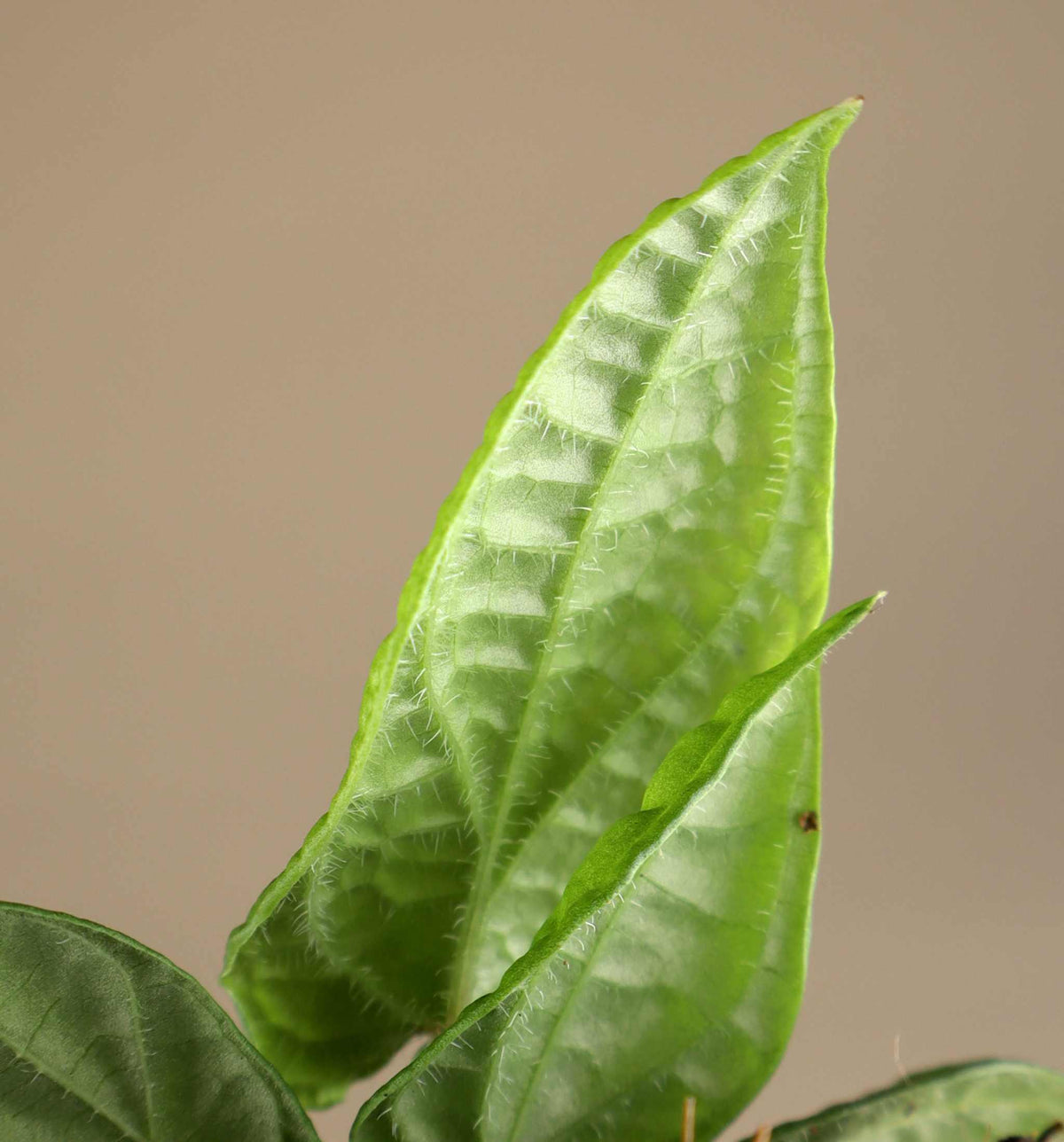
Piper parmatum is a very rare pepper species from Panama. Unlike most other Piper species, it does not grow as a ground cover, vine, or shrub, but rather as a very compact plant with stems of only 5 to 15 centimeters. It grows either epiphytically or on the sides of steep riverbanks, which is completely different from all other Piper species currently in cultivation.

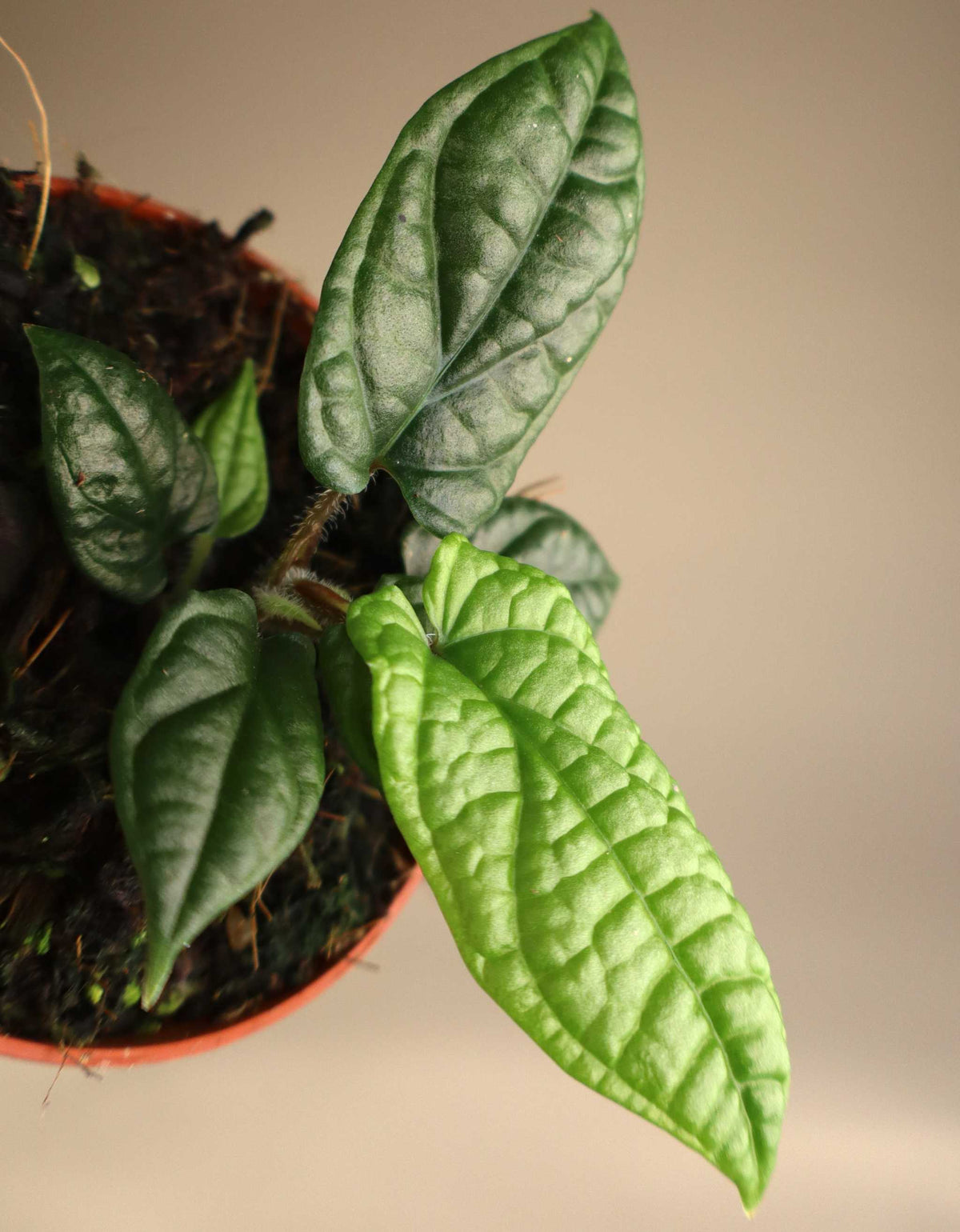
Its appearance also makes it special. The leaves are shield-shaped (peltate) and strongly bullate with a blister-like, raised texture. They strongly resemble certain Anthurium species like Anthurium luxurians or Anthurium corrugatum, but are even more finely textured. Unlike Anthuriums, the leaves, and the plant as a whole, remain significantly smaller. Piper parmatum reaches a total height of about 20 centimeters, with leaves that grow to be about 10 centimeters long and 5 to 6 centimeters wide.
The leaf color depends heavily on light conditions and the age of the leaves. In low light, older leaves in particular become very dark, almost black, where the green color is barely discernible. New leaves are always light green.
Care
Thrives in partial shade to shade; weaker light produces the darkest, almost black leaves. Requires high humidity (70-80% or more), making it best suited for terrariums or plant cabinets.
Keep the substrate consistently moist but never soggy. Use an airy, well-drained substrate. Ideal temperature 20-26 degrees Celsius.
Avoid watering directly on the leaves, which easily collect water in their depressions. Fertilize sparingly during the growing season. Buy Piper parmatum online!
Shipping Policy
Shipping Policy
When buying live plants, transport can sometimes affect the condition of the plant. We strive to ensure that all plants arrive in good health, but minor shipping damage, such as a torn leaf or bent stem, is sometimes unavoidable. Read more about our policy here.



Join the customer club
Earn points on purchases and through special actions. Spend your points on rewards including gift products & discounts
Learn more about your plants!
View all-

How to repot houseplants - Step by step
Repotting houseplants is the key to keeping your indoor plants healthy and happy. It's all about the right soil, the right size pot and a little patience. In our guide...
How to repot houseplants - Step by step
Repotting houseplants is the key to keeping your indoor plants healthy and happy. It's all about the right soil, the right size pot and a little patience. In our guide...
-
Indoor Climbing Plants | Complete Guide to Clim...
Indoor climbing plants bring life and movement to your home. They can hang freely from hanging baskets or climb up trellises. These green plants quickly transform windows and corners into...
Indoor Climbing Plants | Complete Guide to Clim...
Indoor climbing plants bring life and movement to your home. They can hang freely from hanging baskets or climb up trellises. These green plants quickly transform windows and corners into...
-

Propagate your Houseplants | Tips from the Expert
Is there anything more satisfying than watching a new plant grow from a cutting you made yourself? Plant propagation involves creating new plants from parts of your existing plants. It's...
Propagate your Houseplants | Tips from the Expert
Is there anything more satisfying than watching a new plant grow from a cutting you made yourself? Plant propagation involves creating new plants from parts of your existing plants. It's...

