
What is a Climbing Plant?
A climber is a plant that develops long tendrils or stems that either hang downward, cling to surfaces, or twine upward around supports. These plants have evolved in nature to grow upward toward the light by using trees and other plants as support.

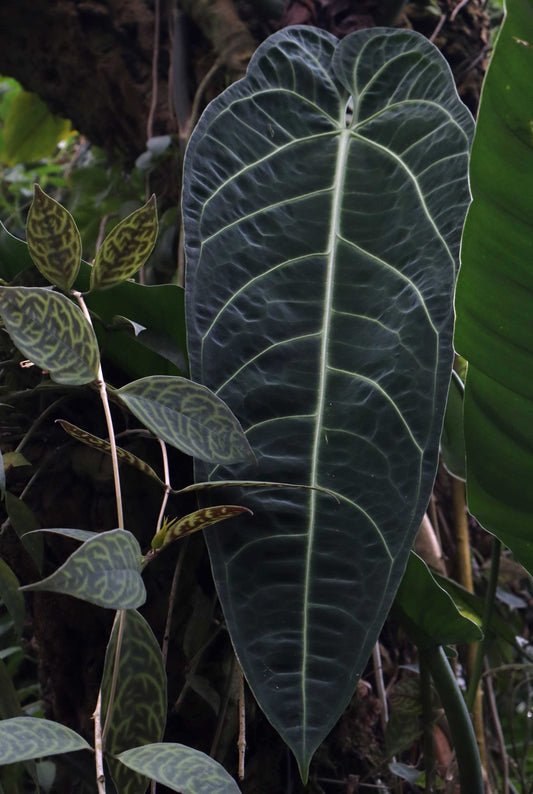
The golden vine gets much larger leaves when it is allowed to climb on a plant support!
Indoors, we can take advantage of this growth habit by growing them in hanging baskets where the vines can hang freely, in tall pots where they wind downwards, or with trellises and moss stakes where they can climb upwards.
Climbing Plants in Pots | Practical Tips
Choose the right pot: Use pots with drainage holes. For hanging plants, choose lightweight plastic pots to reduce weight.
Soil: Use well-drained potting soil . Feel free to mix in perlite for better drainage.
Placement: Hang hanging baskets where you can easily reach them for watering. Keep in mind that water may drip after watering.
Rotation: Rotate the plant regularly so that all sides receive equal light and the plant becomes even.
Popular indoor climbing plants
Ivy (Hedera helix)
Ivy is a classic and hardy climbing plant that is perfect for north or east/west windows. It comes in a variety of varieties with solid green or variegated leaves in white or yellow. There are both large-leaved and small-leaved varieties that all work excellently both as a hanging plant and as a creeper on a trellis.

Ivy is a good climbing plant for those who want a hardy plant that can handle cooler temperatures and less light than many other climbing plants.
Golden pothos (Epipremnum aureum)
Golden pothos is a simple climber with leathery leaves and golden yellow stripes. It is very easy to care for and forgiving, making it a great climber for beginners. Young plants are best suited for hanging baskets, while older specimens are perfect for training up a moss pole or trellis.

One tip is to place the golden pothos in a bright location to retain the beautiful yellow streaks. If it is too dark, the leaves will eventually turn completely green.
Philodendron scandens
The heart leaf philodendron 'philodendron scandens' has long tendrils with heart-shaped, dark green, shiny leaves. It is best suited as a climber on moss stakes but also works in hanging baskets. If the tendrils get too long, just cut them down.

The Philodendron genus includes many different species, all of which are excellent climbing plants in pots. Most thrive in partial shade to bright locations and are very hardy.
Monstera
Monsteras are often fast-growing climbers that develop large, spectacular leaves with characteristic holes and slits. They thrive best when allowed to climb up a moss stake where the aerial roots can attach themselves. The higher the Monstera climbs, the larger the leaves become.

Perfect for those who want a dramatic climbing plant that fills a lot of space. Great for corners or as a room divider.
Porcelain flower (Hoya)
The porcelain flower is a flowering climber with thick, waxy leaves and wonderfully fragrant flower clusters. This is a flowering climber that is suitable for a sunny location where it receives plenty of light to bloom profusely.

There are many different Hoya species with varying leaf shapes and flower colors. All are relatively easy to care for and can tolerate drying out between waterings.
Syngonium
Syngonium is a fast-growing climbing plant with arrow-shaped leaves that come in a variety of colors from green to pink and white. It is excellent for both hanging baskets and trellises. The leaves change shape as the plant matures, from arrow-shaped to more lobed.

A good climbing plant that thrives in bright to semi-shady locations and is easy to propagate.
Climbing fig (Ficus pumila)
Climbing ficus is a small, fine-leaved plant that grows densely and can completely cover a moss pile. It thrives in high humidity and is perfect for terrariums but also works well as a houseplant.

How to Grow Climbing Plants Indoors?
Lighting conditions
Most climbing plants thrive in bright to semi-shaded locations. Flowering climbing plants generally need more light than green varieties. Place them near windows but avoid strong direct sunlight which can burn the leaves.
For north-facing windows, choose hardier varieties such as ivy or Philodendron. Most climbing plants thrive in east/west-facing windows. South-facing windows are suitable for flowering climbing plants such as porcelain flower.
Watering
Water when the soil begins to dry out. Most climbing plants prefer evenly moist soil but cannot stand standing water. Always feel the soil before watering.
Hanging climbing plants often dry out faster than plants in regular pots because air circulates around the pot. Check these more often.
Supports and Trellises
Give your climbing plants something to climb on to encourage growth and larger leaves. Options include:
- Moss stakes: Perfect for Monstera, Philodendron and other aroids where aerial roots can attach
- Bamboo or wooden sticks: Simple and cheap option
- Decorative trellises: Available in different shapes and materials to match your interior design
- Fishing line or string: Discreet way to guide vines
Fertilization
Fertilize during the growing season (spring to fall) with a liquid plant food every two weeks. Fast-growing climbers appreciate regular nutrition to develop their long tendrils.
Pruning
Prune liberally to shape the plant and encourage bushier growth. Most climbing plants tolerate pruning well and may become sparser if not pruned. Use pruned pieces as cuttings for propagation.
Climbing Plants on the Balcony
Many indoor climbing plants can be left outside on the balcony during the summer. This gives them extra growth and fresh air. Make sure that:
- Gradually accustom the plant to the outdoor environment
- Protect from strong midday sun
- Water more often because pots on the balcony dry out quickly
- Bring the plants inside before the first frost.
Cheap Climbing Plants
Want to create a green jungle without breaking the bank? Here are some inexpensive climbing plants that are easy to find:
- Golden pothos: Common in most plant stores and very affordable
- Epipremnum pinnatum: Often cheap and easy to propagate yourself
- Monstera adansonii 'monkey mask': Very easy-care plant with hollow leaves
- Philodendron micans : Fast growing and extremely easy to propagate from cuttings
- Scindapsus pictus: Classics that are available everywhere at a good price
Many climbing plants are easy to propagate, meaning you can buy one plant and create several new ones from cuttings.
Flowering Climbing Plants Indoors
If you are looking for flowering climbing plants, there are several options:
Porcelain flower (Hoya): Fragrant flower clusters in various colors. Thrives in a sunny location.

Passion flower: Spectacular flowers. Needs a lot of light.

Jasmine: Fragrant white flowers. Thrives in the sun!

Flowering climbing plants in pots generally need more light and nutrients than green varieties to bloom profusely. All of them are great to grow indoors either in a bright window or with some additional plant lighting.
Indoor climbing plants are a great way to add greenery and dimension. Whether you're looking for an easy climber for beginners, a flowering variety for sunny locations, or a hardy climber for cooler rooms, there's an option for everyone.
Start with an easy-care variety like goldenrod or climbing calla, experiment with different trellises and moss stakes, and enjoy how your green vines transform your home into an urban jungle.
With the right placement and minimal care, your climbing plants will thrive and bring you joy for many years to come.