


Rubber Fig | Ficus elastica 'Schrijveriana'
Rubber Fig | Ficus elastica 'Schrijveriana'
Couldn't load pickup availability


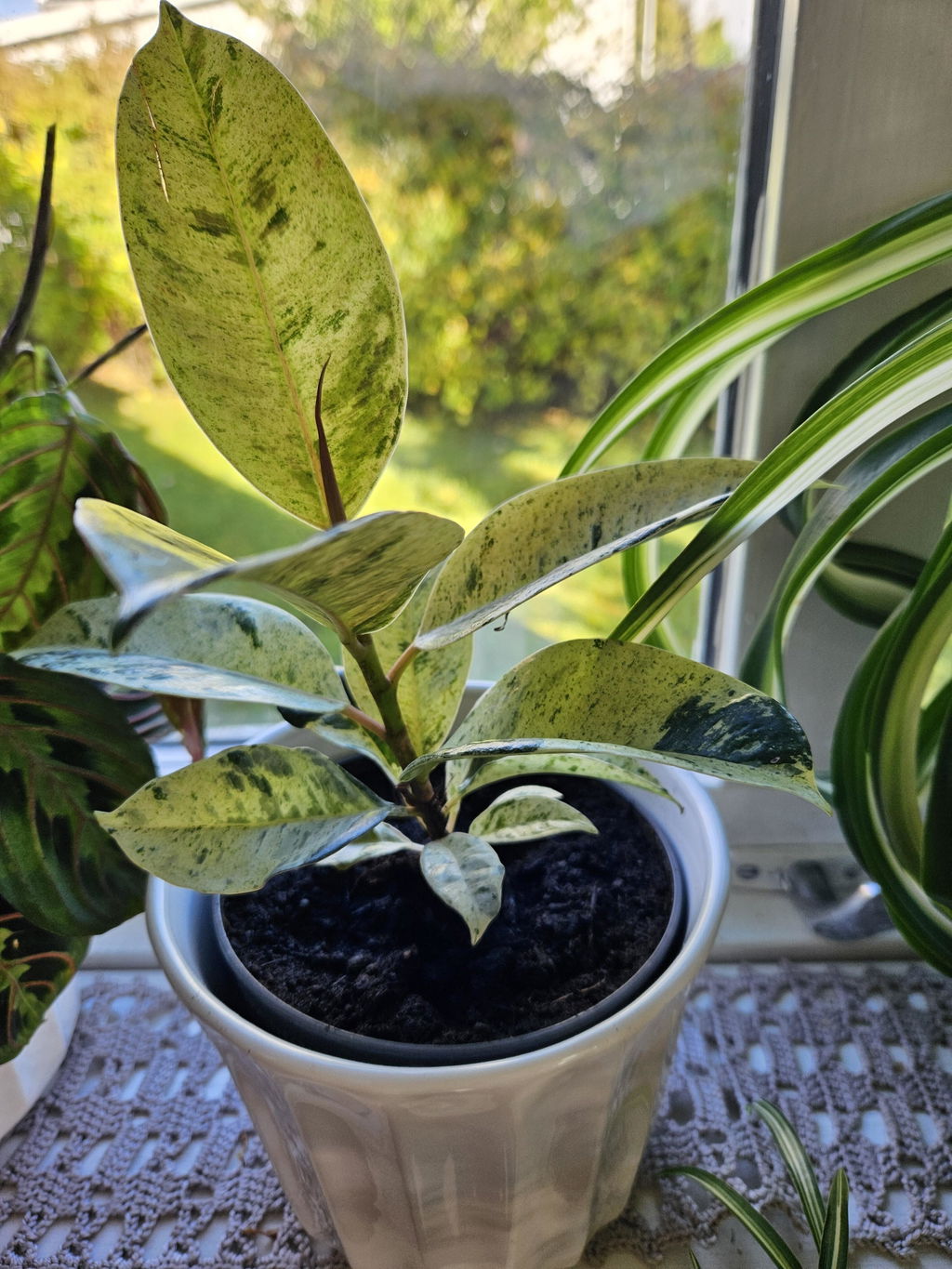
Popular variety of rubber tree with light green variegated leaves
Fresh leaves on this variety are initially yellowish, but over time the variegation brightens until it takes on a light green, almost white, color. This variety grows as easily as a regular rubber tree but offers much more color thanks to the leaves' individual patterns.
Ficus elastica, also called the rubber plant (though not to be confused with the true rubber tree Hevea brasiliensis), originates from northern India and Southeast Asia. It is a so-called "strangler fig" that in nature climbs as a hemiepiphyte on large trees and eventually grows around them with its trunk and large aerial roots, which "strangles" them, though not parasitically but only for support.
When damaged, the plant secretes a sticky white latex, which can be used for rubber production, although natural rubber is now primarily extracted from other species. In parts of India, people guide the tree's roots across ravines to eventually form living bridges; even today, large bridges woven from aerial roots exist in Meghalaya, India.
Botanical description
The rubber plant was particularly popular in Sweden during the 1930s when it adorned almost every Swedish windowsill. The species exists with solid dark green leaves, but also with marbled leaves in dark green with hints of white and pink or yellow.
The latex from Ficus elastica can irritate eyes and skin and is toxic if ingested internally. The plant was once used as the most common plant in Sumatra and the Malay Peninsula for tapping latex before the Pará rubber tree (Hevea brasiliensis) was introduced from Brazil in the late 19th century.
Care
The rubber plant is incredibly easy to care for and tolerates dry air, but it's good to spray or wipe the leaves so they stay clean and become more resistant to pests. It prefers bright conditions but not strong direct sunlight.
Water 1-2 times a week depending on the season, but allow the soil to dry out thoroughly between waterings. You can prune the plant to encourage branching.
Ideal temperature 16-24°C. Fertilize monthly during the growing season. Repot every two to three years. Buy Ficus elastica 'Schrijveriana' online!
Shipping Policy
Shipping Policy
When buying live plants, transport can sometimes affect the condition of the plant. We strive to ensure that all plants arrive in good health, but minor shipping damage, such as a torn leaf or bent stem, is sometimes unavoidable. Read more about our policy here.



Join the customer club
Earn points on purchases and through special actions. Spend your points on rewards including gift products & discounts
Learn more about your plants!
View all-

How to repot houseplants - Step by step
Repotting houseplants is the key to keeping your indoor plants healthy and happy. It's all about the right soil, the right size pot and a little patience. In our guide...
How to repot houseplants - Step by step
Repotting houseplants is the key to keeping your indoor plants healthy and happy. It's all about the right soil, the right size pot and a little patience. In our guide...
-
Indoor Climbing Plants | Complete Guide to Clim...
Indoor climbing plants bring life and movement to your home. They can hang freely from hanging baskets or climb up trellises. These green plants quickly transform windows and corners into...
Indoor Climbing Plants | Complete Guide to Clim...
Indoor climbing plants bring life and movement to your home. They can hang freely from hanging baskets or climb up trellises. These green plants quickly transform windows and corners into...
-

Propagate your Houseplants | Tips from the Expert
Is there anything more satisfying than watching a new plant grow from a cutting you made yourself? Plant propagation involves creating new plants from parts of your existing plants. It's...
Propagate your Houseplants | Tips from the Expert
Is there anything more satisfying than watching a new plant grow from a cutting you made yourself? Plant propagation involves creating new plants from parts of your existing plants. It's...

