


Ficus dammaropsis | The world's largest fig
Ficus dammaropsis | The world's largest fig
Couldn't load pickup availability


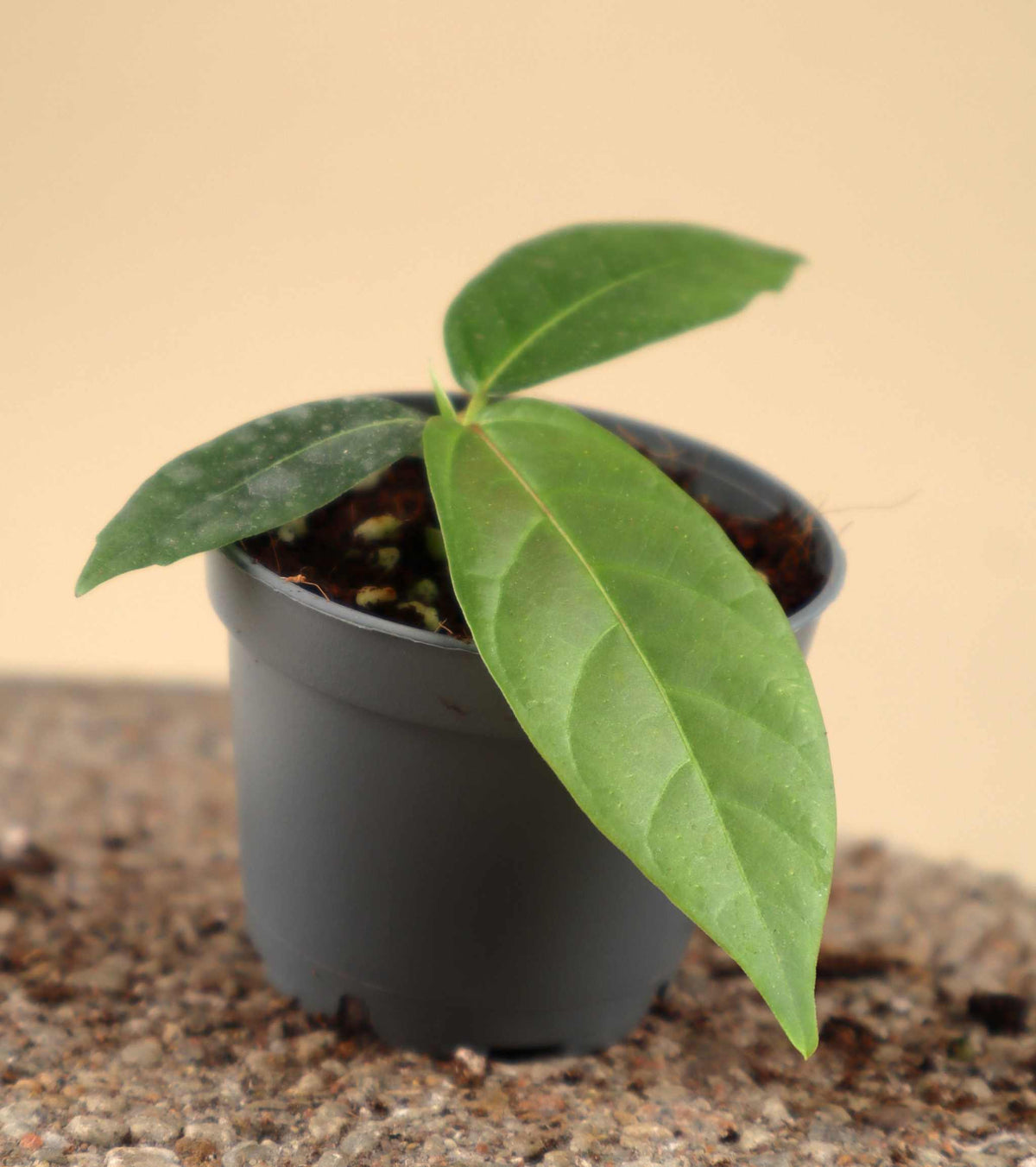
Fig from the mountains of New Guinea with enormous ribbed leaves and the world's largest figs
Ficus dammaropsis is a very rare fig species endemic to the mountains of New Guinea, where it occurs at altitudes of up to 2,300 meters. It grows as a sparsely branched shrub or tree, often with a somewhat straggly habit, and can reach 9 to 13 meters in height in the wild.
The leaves are large and pleated, up to 60 centimeters wide and 90 centimeters long. The figs have been measured at 22 x 18 centimeters, making this species the bearer of the world's largest figs.

Both fruit and leaves are edible. In New Guinea, the young leaves are eaten cooked, and the plant is harvested from the wild but also occasionally cultivated. The young fruits are boiled and eaten as a vegetable, while the ripe fruits are mostly eaten in times of need.
Like all fig species, it is dependent on its own specialized fig wasp for pollination. The flowers are hidden inside the fig itself, and the female wasp crawls inside, lays its eggs, and pollinates the flowers at the same time. The new female wasps then fly on to other trees with pollen. Without this specific wasp, the tree does not set seed, which means that in cultivation here, it does not produce fertile fruits.
Care
Thrives in a bright location, preferably with some direct sun, but protect the large leaves from strong midday sun. As a mountain species, it appreciates cooler nights and does not perform as well in persistent heat.
Keep the soil evenly moist during the growing season and let it dry slightly on the surface between waterings. Use nutrient-rich, well-draining soil and fertilize regularly from spring to autumn. Preferably place it in a larger pot so that it has space to develop its leaves.
Does not tolerate frost. Ideal temperature 15–26 degrees Celsius, with a somewhat cooler winter and reduced watering.
Shipping Policy
Shipping Policy
When buying live plants, transport can sometimes affect the condition of the plant. We strive to ensure that all plants arrive in good health, but minor shipping damage, such as a torn leaf or bent stem, is sometimes unavoidable. Read more about our policy here.



Join the customer club
Earn points on purchases and through special actions. Spend your points on rewards including gift products & discounts
Learn more about your plants!
View all-

How to repot houseplants - Step by step
Repotting houseplants is the key to keeping your indoor plants healthy and happy. It's all about the right soil, the right size pot and a little patience. In our guide...
How to repot houseplants - Step by step
Repotting houseplants is the key to keeping your indoor plants healthy and happy. It's all about the right soil, the right size pot and a little patience. In our guide...
-
Indoor Climbing Plants | Complete Guide to Clim...
Indoor climbing plants bring life and movement to your home. They can hang freely from hanging baskets or climb up trellises. These green plants quickly transform windows and corners into...
Indoor Climbing Plants | Complete Guide to Clim...
Indoor climbing plants bring life and movement to your home. They can hang freely from hanging baskets or climb up trellises. These green plants quickly transform windows and corners into...
-

Propagate your Houseplants | Tips from the Expert
Is there anything more satisfying than watching a new plant grow from a cutting you made yourself? Plant propagation involves creating new plants from parts of your existing plants. It's...
Propagate your Houseplants | Tips from the Expert
Is there anything more satisfying than watching a new plant grow from a cutting you made yourself? Plant propagation involves creating new plants from parts of your existing plants. It's...

