


Anthurium brownii
Anthurium brownii
Couldn't load pickup availability


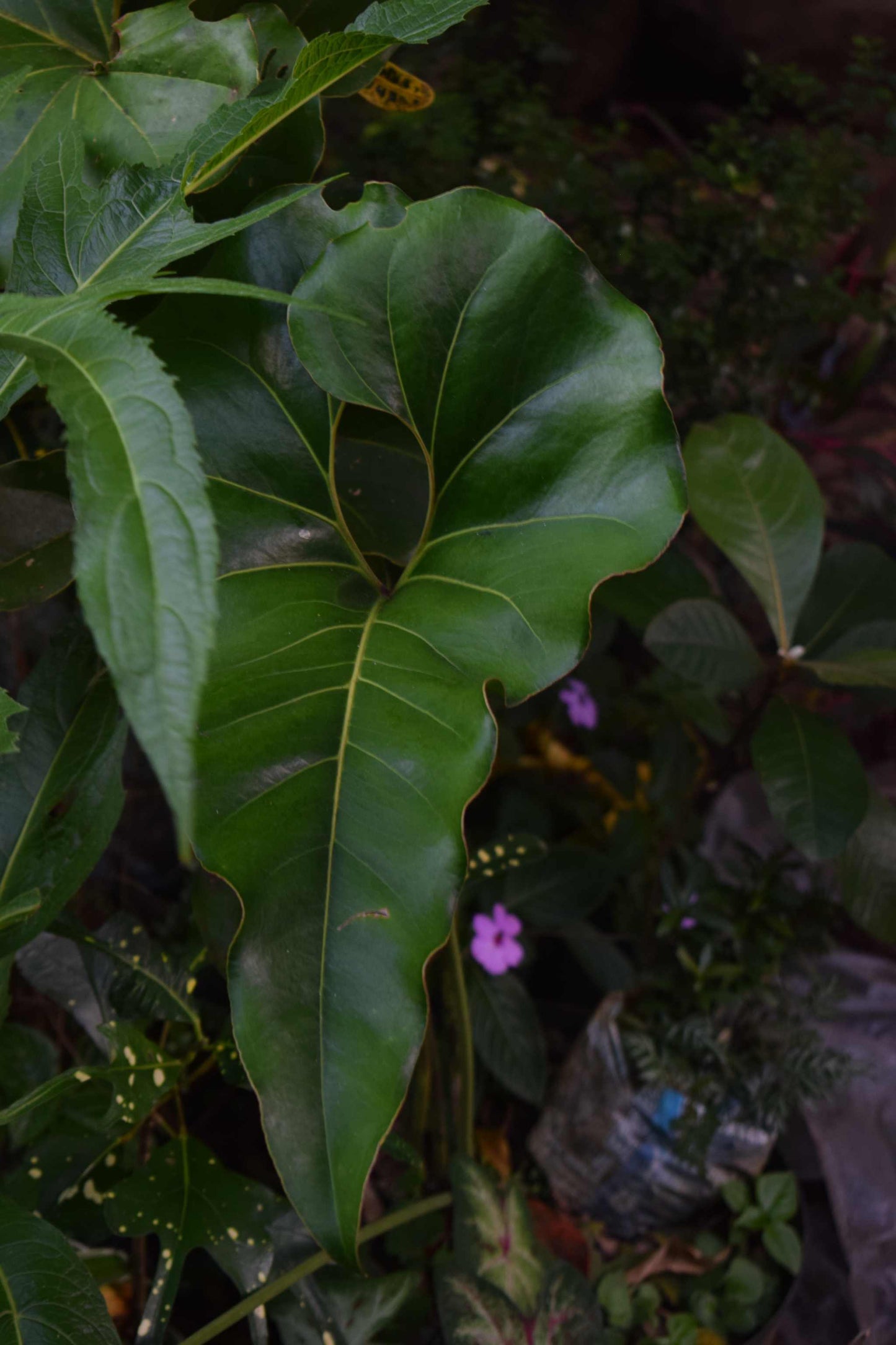
Rare South American Epiphytic Anthurium with Large Heart-shaped Leaves
Anthurium brownii is a rare and decorative species, native to Central and South America from Costa Rica through Panama and south to Colombia, Ecuador, and Venezuela. The species was scientifically described in 1876, collected by Gustav Wallis, and named after the botanist N. E. Brown. It grows from sea level up to 1200 meters in tropical forests, with its main distribution in Colombia.
The plant has beautiful, large heart-shaped leaves and typically grows as an epiphyte in trees, where its roots provide anchorage and collect rainwater. Since the roots are not accustomed to soil, the plant thrives best in a very well-draining substrate. It remains relatively small, eventually reaching a height of about 80 centimeters. After a few years, it may bloom with a white-green inflorescence consisting of a spathe and a spadix, characteristic of arum plants.

Care
Thrives in bright, indirect light. Avoid direct sunlight which can burn the leaves; a north-facing position is suitable.
Use a well-draining, airy substrate rich in organic matter, such as orchid mix blended with sphagnum moss, coco coir, and/or sand. Keep the substrate consistently slightly moist; it should neither be too dry nor too wet. Good drainage is crucial to prevent root rot.
The heart-shaped leaves are somewhat tolerant of slightly lower humidity, but the plant thrives best in high humidity. Use a humidifier, mist regularly, or grow in a terrarium. Ideal temperature 18-27 degrees Celsius.
Shipping Policy
Shipping Policy
When buying live plants, transport can sometimes affect the condition of the plant. We strive to ensure that all plants arrive in good health, but minor shipping damage, such as a torn leaf or bent stem, is sometimes unavoidable. Read more about our policy here.



Join the customer club
Earn points on purchases and through special actions. Spend your points on rewards including gift products & discounts
Learn more about your plants!
View all-

How to repot houseplants - Step by step
Repotting houseplants is the key to keeping your indoor plants healthy and happy. It's all about the right soil, the right size pot and a little patience. In our guide...
How to repot houseplants - Step by step
Repotting houseplants is the key to keeping your indoor plants healthy and happy. It's all about the right soil, the right size pot and a little patience. In our guide...
-
Indoor Climbing Plants | Complete Guide to Clim...
Indoor climbing plants bring life and movement to your home. They can hang freely from hanging baskets or climb up trellises. These green plants quickly transform windows and corners into...
Indoor Climbing Plants | Complete Guide to Clim...
Indoor climbing plants bring life and movement to your home. They can hang freely from hanging baskets or climb up trellises. These green plants quickly transform windows and corners into...
-

Propagate your Houseplants | Tips from the Expert
Is there anything more satisfying than watching a new plant grow from a cutting you made yourself? Plant propagation involves creating new plants from parts of your existing plants. It's...
Propagate your Houseplants | Tips from the Expert
Is there anything more satisfying than watching a new plant grow from a cutting you made yourself? Plant propagation involves creating new plants from parts of your existing plants. It's...

