


Yucca brevifolia | Cold-Hardy Yucca Tree
Yucca brevifolia | Cold-Hardy Yucca Tree
Couldn't load pickup availability


Iconic Cold-Hardy (-18 C) Yucca from the Mojave Desert
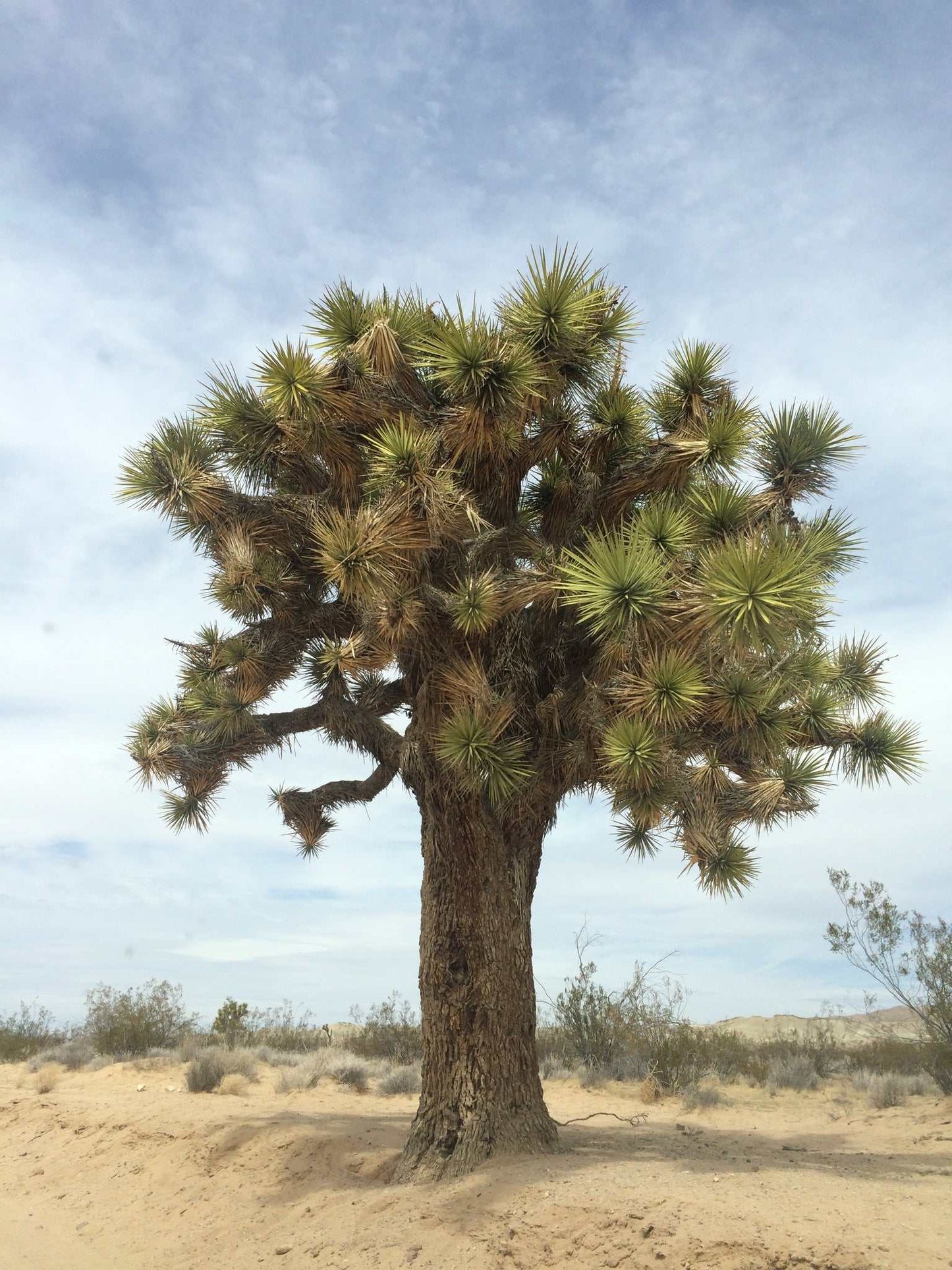
Yucca brevifolia is a very distinctive tree yucca and a typical species of the Mojave Desert in the USA.
This is a large, slow-growing, upright evergreen tree reaching about 4.5 meters in height with an open, rounded form and twisted branches with sharp, grey-green leaves. Older plants form a sturdy trunk that bears many crowns.
The name "Joshua tree" is commonly said to have been given by a group of Mormon colonists who crossed the Mojave Desert in the mid-19th century. The tree's role in guiding them through the desert, combined with its unique shape, reminded them of a biblical story where Joshua stretched out his hands for an extended period.
For a desert species, Joshua trees grow quite quickly; new plants can grow an average of 7.6 centimeters per year during their first 10 years.
Care
Y. brevifolia is very cold-hardy and tolerates severe frost with ease, down to about -18 degrees Celsius, and possibly as low as -23 degrees Celsius. However, as a true desert plant, it prefers dry climates and is difficult to keep alive in cool, wet conditions, which is often the case during our winters.
The most important factor is drainage; Y. brevifolia does not tolerate constant moisture in the root zone and can suddenly rot after years in the same spot if kept wet. Wet winter conditions are a threat, so they must be grown in a well-drained and protected location.
With Swedish wet winters, these plants only survive in very dry and protected places with good drainage and preferably some protection from winter rain. One should grow it on a raised ridge with very permeable soil so that excess water can drain away. Established plants are very drought-tolerant. A tree that would look very exotic in the garden and definitely worth a try to grow outdoors!
Shipping Policy
Shipping Policy
When buying live plants, transport can sometimes affect the condition of the plant. We strive to ensure that all plants arrive in good health, but minor shipping damage, such as a torn leaf or bent stem, is sometimes unavoidable. Read more about our policy here.



Join the customer club
Earn points on purchases and through special actions. Spend your points on rewards including gift products & discounts
Learn more about your plants!
View all-

How to repot houseplants - Step by step
Repotting houseplants is the key to keeping your indoor plants healthy and happy. It's all about the right soil, the right size pot and a little patience. In our guide...
How to repot houseplants - Step by step
Repotting houseplants is the key to keeping your indoor plants healthy and happy. It's all about the right soil, the right size pot and a little patience. In our guide...
-
Indoor Climbing Plants | Complete Guide to Clim...
Indoor climbing plants bring life and movement to your home. They can hang freely from hanging baskets or climb up trellises. These green plants quickly transform windows and corners into...
Indoor Climbing Plants | Complete Guide to Clim...
Indoor climbing plants bring life and movement to your home. They can hang freely from hanging baskets or climb up trellises. These green plants quickly transform windows and corners into...
-

Propagate your Houseplants | Tips from the Expert
Is there anything more satisfying than watching a new plant grow from a cutting you made yourself? Plant propagation involves creating new plants from parts of your existing plants. It's...
Propagate your Houseplants | Tips from the Expert
Is there anything more satisfying than watching a new plant grow from a cutting you made yourself? Plant propagation involves creating new plants from parts of your existing plants. It's...

