


Vanilla pompona | West Indian vanilla
Vanilla pompona | West Indian vanilla
Couldn't load pickup availability


Very rare and larger vanilla variety from Mexico
Vanilla pompona is perhaps the most impressive species in the vanilla genus. The species has larger leaves, flowers and beans that, according to many, surpass the common vanilla orchid Vanilla planifolia .
Vanilla beans from V. pompona have a complex flavor that is markedly different from regular vanilla. The aromas are sweet, woody, and floral with notes of chocolate, nutmeg, fresh tobacco leaves, and exotic flowers.
This is an extremely rare vanilla because it is less productive and more difficult to grow than other species. The beans have a tendency to crack before reaching full maturity, making commercial cultivation challenging. As a result, Vanilla pompona is rarely cultivated and is therefore highly sought after by collectors. Growing your own is often the only way to taste this exclusive vanilla.
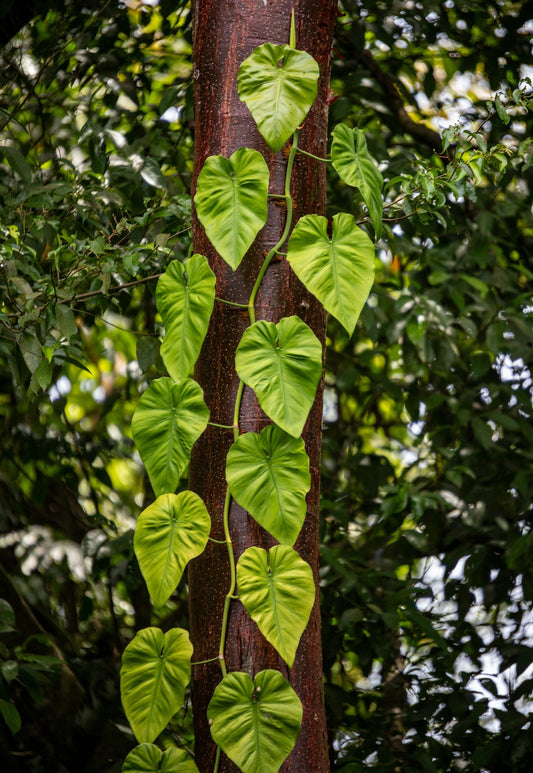
This rare epiphytic (growing on other plants) orchid climbs up trees and other plants using its fleshy aerial roots without harming the host plant, making it particularly suitable for growing on a moss stake , which we highly recommend.
Botanical description
Vanilla pompona is a species of vanilla orchid native to Mexico, Central America, and northern South America, especially Colombia. The scientific name is based on a Mexican specimen collected in central Veracruz. The species is considered a species complex due to its variability across its extensive range.

Like all members of the genus Vanilla, V. pompona is a climbing vine that uses its fleshy roots for support as it grows. The leaves and stems are generally thicker than those of V. planifolia and V. phaeantha , giving the plant its characteristic robust appearance.
The greenish-yellow flowers can develop at any time when the plant is tall enough. The bloom is pollinated in nature by a medium-sized orchid bee, Eulaema cingulata, which collects pollen while searching for nectar that the flowers do not actually possess. Only bees within a specific size range can fit into the flower and make contact with the mark; larger species cannot fit and smaller species cannot reach the reproductive organs.
In cultivation, hand pollination is required to develop vanilla beans. When the flower is pollinated the same day it opens, a bean develops that matures in about three months. After harvesting, the pod is dried and can be placed in vodka to create vanilla extract, after six months the extract is ready.
Care
Vanilla pompona is an epiphytic plant that needs firm support for its thick, heavy stems. It grows excellently indoors with the right conditions.
Grow in medium light, not full sun but not too shady either. The plant needs a substrate such as moss at the base of the root system, while the aerial roots are allowed to climb freely up the support. The support should be a moss stake which allows the aerial roots to attach.
Watering should be moderate but abundant: the entire root ball should be soaked, but then wait until the substrate has dried deeply before the next watering. Stick your finger into the soil, as long as you feel moisture, do not water. The plant recovers better from lack of water than from overwatering.
If the air is too dry, place bowls of water nearby (for example over radiators) so that the evaporation humidifies the air. The plant is therefore perfect for a terrarium.
Repotting should be done about twice a year, in gradually larger pots that are adapted to the size of the root network. The roots need space but not too much, as the plant must be able to dry the substrate between waterings. Choose a good soil mixture, preferably with perlite or orchid bark mixed in to lighten the substrate. Never use garden soil or acidic soil such as heather soil. We use our orchid soil.
The plant is not frost-resistant and should not be planted outdoors except in limited parts of southern Europe. It tolerates pruning but this is not recommended as it destroys the plant's natural shape.
Warning: This is a rare and challenging plant that requires patience and careful care, but rewards the dedicated grower with unique vanilla beans of exceptional quality. Buy Vanilla pompona online!
Shipping Policy
Shipping Policy
When buying live plants, transport can sometimes affect the condition of the plant. We strive to ensure that all plants arrive in good health, but minor shipping damage, such as a torn leaf or bent stem, is sometimes unavoidable. Read more about our policy here.


Join the customer club
Earn points on purchases and through special actions. Spend your points on rewards including gift products & discounts
Learn more about your plants!
View all-

How to repot houseplants - Step by step
Repotting houseplants is the key to keeping your indoor plants healthy and happy. It's all about the right soil, the right size pot and a little patience. In our guide...
How to repot houseplants - Step by step
Repotting houseplants is the key to keeping your indoor plants healthy and happy. It's all about the right soil, the right size pot and a little patience. In our guide...
-
Indoor Climbing Plants | Complete Guide to Clim...
Indoor climbing plants bring life and movement to your home. They can hang freely from hanging baskets or climb up trellises. These green plants quickly transform windows and corners into...
Indoor Climbing Plants | Complete Guide to Clim...
Indoor climbing plants bring life and movement to your home. They can hang freely from hanging baskets or climb up trellises. These green plants quickly transform windows and corners into...
-

Propagate your Houseplants | Tips from the Expert
Is there anything more satisfying than watching a new plant grow from a cutting you made yourself? Plant propagation involves creating new plants from parts of your existing plants. It's...
Propagate your Houseplants | Tips from the Expert
Is there anything more satisfying than watching a new plant grow from a cutting you made yourself? Plant propagation involves creating new plants from parts of your existing plants. It's...

