

Tillandsia funckiana
Tillandsia funckiana
Couldn't load pickup availability


Small tillandsia from Venezuela forming dense bushes
With hairy, slender, and pointed leaves that turn orange to reddish in very bright light, Tillandsia funckiana is very suitable for terrariums.
The leaves are tightly arranged on curved stems, giving it an appearance similar to a spruce branch. Over time, it develops large, dense clumps of many dozens of individual plants. The plant reaches a diameter of about 3 centimeters and a length of up to 15 centimeters.
Botanical description
Tillandsia funckiana comes from a humid habitat in Venezuela. The species is currently considered a synonym of T. andreana by authorities such as Kew, but it has been argued that significant differences between the two taxa mean they should be considered separate species, with T. andreana restricted to Colombia and T. funckiana to Venezuela.

Like most tillandsias, this species is largely epiphytic, meaning it grows as a non-parasitic plant on trees and bushes. Tillandsia continues to grow normally even without roots and does not necessarily need to be attached to another plant to survive. They can be grown free-hanging or mounted.
The leaves have more or less dense white hairs that act like small sponges and become transparent when filled with water. These hairs keep the tillandsia moist longer and give it more time to absorb water and nutrients before it dries out again.
Care
A bright spot in a terrarium or plant cabinet is ideal. Direct sunlight is not necessary but contributes to redder color. Spray heavily regularly with water but allow it to dry slightly.
Thrives in high humidity (60-80%). Ideal temperature 18-26°C. Can be mounted on bark, branches, or grown free-hanging. Fertilize sparingly with diluted orchid fertilizer once a month by spraying on the leaves. Buy Tillandsia funckiana online
Shipping Policy
Shipping Policy
When buying live plants, transport can sometimes affect the condition of the plant. We strive to ensure that all plants arrive in good health, but minor shipping damage, such as a torn leaf or bent stem, is sometimes unavoidable. Read more about our policy here.


Join the customer club
Earn points on purchases and through special actions. Spend your points on rewards including gift products & discounts
Learn more about your plants!
View all-

How to repot houseplants - Step by step
Repotting houseplants is the key to keeping your indoor plants healthy and happy. It's all about the right soil, the right size pot and a little patience. In our guide...
How to repot houseplants - Step by step
Repotting houseplants is the key to keeping your indoor plants healthy and happy. It's all about the right soil, the right size pot and a little patience. In our guide...
-
Indoor Climbing Plants | Complete Guide to Clim...
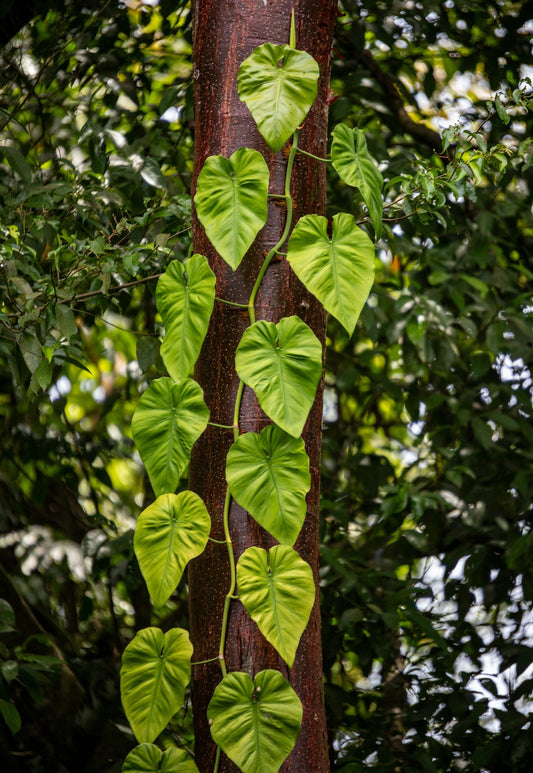
Indoor climbing plants bring life and movement to your home. They can hang freely from hanging baskets or climb up trellises. These green plants quickly transform windows and corners into...
Indoor Climbing Plants | Complete Guide to Clim...
Indoor climbing plants bring life and movement to your home. They can hang freely from hanging baskets or climb up trellises. These green plants quickly transform windows and corners into...
-

Propagate your Houseplants | Tips from the Expert
Is there anything more satisfying than watching a new plant grow from a cutting you made yourself? Plant propagation involves creating new plants from parts of your existing plants. It's...
Propagate your Houseplants | Tips from the Expert
Is there anything more satisfying than watching a new plant grow from a cutting you made yourself? Plant propagation involves creating new plants from parts of your existing plants. It's...

