


Stapelia hirsuta
Stapelia hirsuta
Couldn't load pickup availability


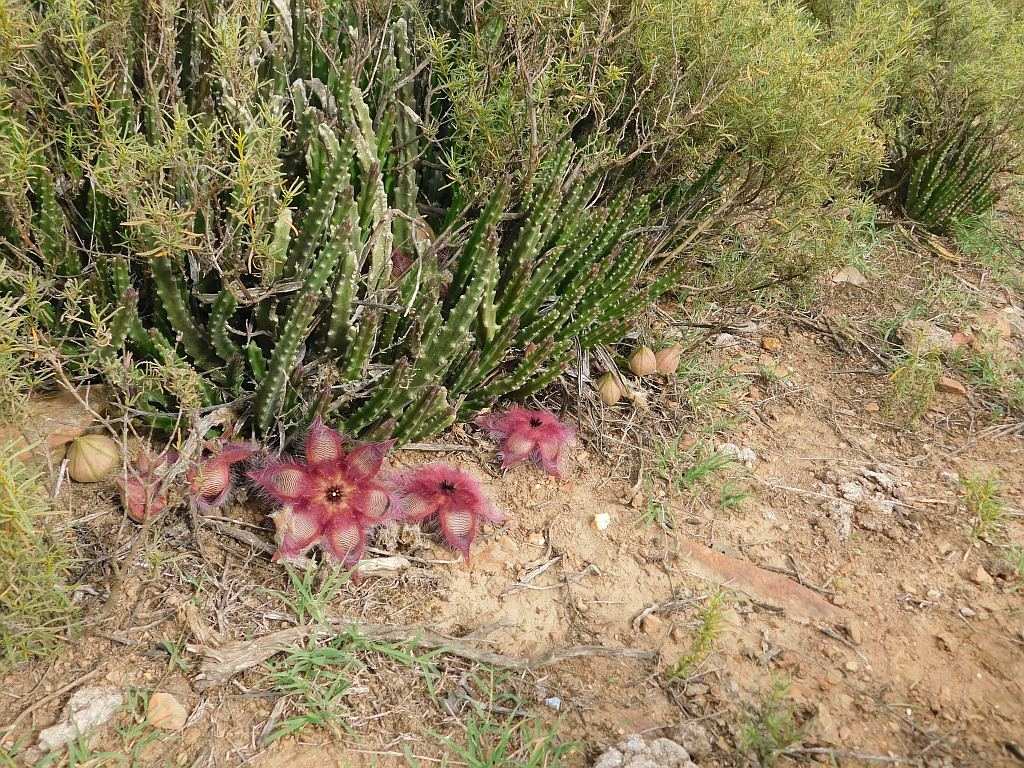
Succulent with hairy flowers that smell of rotting meat to attract pollinators
The dark red flowers are densely hairy (hirsute) in the center, and the purplish color simulates rotting meat from dead animals. The long bristles on the flowers resemble the fur of a dead animal, which, together with the carrion smell, attracts beetles and carrion flies that are tricked into trying to lay eggs on the flower, thereby pollinating the plant (sapromyophily). The flowering period extends from late summer to late autumn.
The genus name Stapelia was named in honor of Johannes van Stapel, who described the first discovered plant, while the Latin species name hirsuta means "hairy."
Botanical description
Stapelia hirsuta has a wide distribution along the southern edge of the arid Karoo region, throughout the "Little Karoo" in the southern Cape Province, South Africa.

Along with Stapelia gigantea and Orbea variegata, this is probably the most widely cultivated of the stapelias.
Care
An easy-to-care-for and rewarding succulent when mature. Requires moderate watering during the growing season but appreciates abundant water and a little fertilizer in warm weather, which helps them flower freely. Water more sparingly in winter.
Since the roots are quite shallow, use cactus soil or add extra perlite or pumice to regular potting soil. A gritty, very well-drained soil is suitable, and terracotta pots help the plants dry out between waterings. Thrives in partial sun or light shade.
Propagation is most easily done with stem cuttings. Let cuttings dry for a day before planting. Stems must be laid (not buried) on gritty soil and then root from the underside of the stems. Can also be propagated from seeds sown in spring in moist, sandy moss. Barely cover the seeds. Buy Stapelia hirsuta online!
Shipping Policy
Shipping Policy
When buying live plants, transport can sometimes affect the condition of the plant. We strive to ensure that all plants arrive in good health, but minor shipping damage, such as a torn leaf or bent stem, is sometimes unavoidable. Read more about our policy here.



Join the customer club
Earn points on purchases and through special actions. Spend your points on rewards including gift products & discounts
Learn more about your plants!
View all-

How to repot houseplants - Step by step
Repotting houseplants is the key to keeping your indoor plants healthy and happy. It's all about the right soil, the right size pot and a little patience. In our guide...
How to repot houseplants - Step by step
Repotting houseplants is the key to keeping your indoor plants healthy and happy. It's all about the right soil, the right size pot and a little patience. In our guide...
-
Indoor Climbing Plants | Complete Guide to Clim...
Indoor climbing plants bring life and movement to your home. They can hang freely from hanging baskets or climb up trellises. These green plants quickly transform windows and corners into...
Indoor Climbing Plants | Complete Guide to Clim...
Indoor climbing plants bring life and movement to your home. They can hang freely from hanging baskets or climb up trellises. These green plants quickly transform windows and corners into...
-

Propagate your Houseplants | Tips from the Expert
Is there anything more satisfying than watching a new plant grow from a cutting you made yourself? Plant propagation involves creating new plants from parts of your existing plants. It's...
Propagate your Houseplants | Tips from the Expert
Is there anything more satisfying than watching a new plant grow from a cutting you made yourself? Plant propagation involves creating new plants from parts of your existing plants. It's...

