


Sarracenia psittacina
Sarracenia psittacina
Couldn't load pickup availability


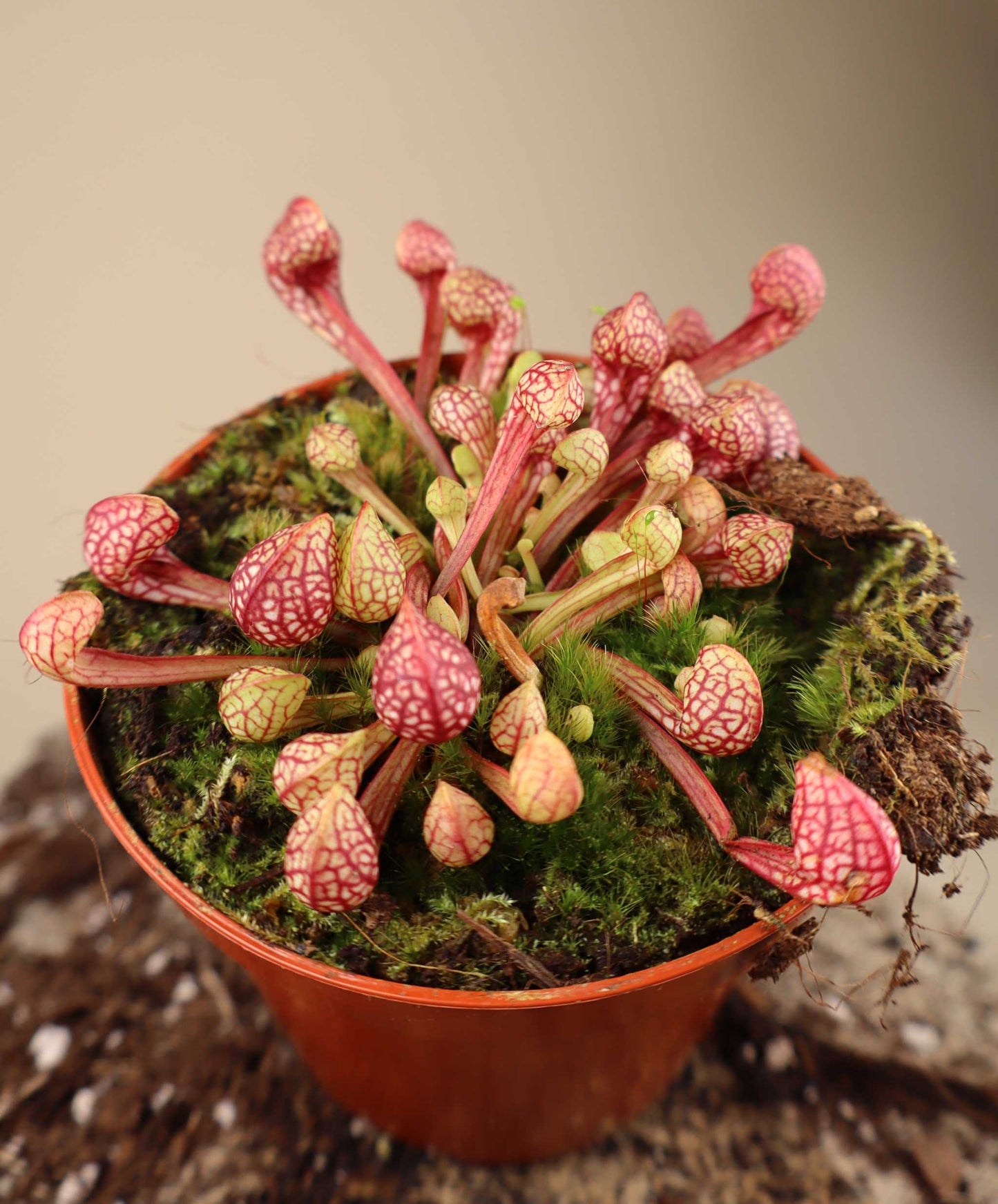
Unique prostrate pitcher plant with parrot beak-shaped traps that catch prey in both air and water
Sarracenia psittacina is a low-growing southern pitcher plant with green and red, bulbous traps. Its shape is very distinctive, resembling a parrot's beak with white "windows" (areoles) and a small hidden opening.
The prostrate trap is unique among Sarracenia in that it functions more like a lobster pot than the typical pitfall trap. This allows prey to be caught in both air and water. Ants and other small crawling insects are common prey, as are small aquatic organisms.
The species prefers open, sunny, and very wet environments that are often but briefly flooded, but it also tolerates shade. In autumn, the traps darken to a deep red color. The pitchers often last for two years and persist through winter, as the plant tolerates light frost and very wet winter conditions.
The flowers are small, dark red, and fragrant, typically blooming from March to May before the pitchers are fully developed.
Care
Requires full sun for best color, but tolerates some shade. NEVER use regular potting soil or fertilizer; use nutrient-poor substrate of sphagnum moss and perlite or sand.
This species prefers extra wet conditions compared to other pitcher plants. Place the pot in a tray of water and keep the substrate constantly moist. Water only with distilled or rainwater.
Winter dormancy is mandatory; the plant needs a cold resting period to survive long-term.
Shipping Policy
Shipping Policy
When buying live plants, transport can sometimes affect the condition of the plant. We strive to ensure that all plants arrive in good health, but minor shipping damage, such as a torn leaf or bent stem, is sometimes unavoidable. Read more about our policy here.



Join the customer club
Earn points on purchases and through special actions. Spend your points on rewards including gift products & discounts
Learn more about your plants!
View all-

How to repot houseplants - Step by step
Repotting houseplants is the key to keeping your indoor plants healthy and happy. It's all about the right soil, the right size pot and a little patience. In our guide...
How to repot houseplants - Step by step
Repotting houseplants is the key to keeping your indoor plants healthy and happy. It's all about the right soil, the right size pot and a little patience. In our guide...
-
Indoor Climbing Plants | Complete Guide to Clim...
Indoor climbing plants bring life and movement to your home. They can hang freely from hanging baskets or climb up trellises. These green plants quickly transform windows and corners into...
Indoor Climbing Plants | Complete Guide to Clim...
Indoor climbing plants bring life and movement to your home. They can hang freely from hanging baskets or climb up trellises. These green plants quickly transform windows and corners into...
-

Propagate your Houseplants | Tips from the Expert
Is there anything more satisfying than watching a new plant grow from a cutting you made yourself? Plant propagation involves creating new plants from parts of your existing plants. It's...
Propagate your Houseplants | Tips from the Expert
Is there anything more satisfying than watching a new plant grow from a cutting you made yourself? Plant propagation involves creating new plants from parts of your existing plants. It's...

