


Prickly Pear, Opuntia Ficus Indica (Edible Fruits)
Prickly Pear, Opuntia Ficus Indica (Edible Fruits)
Couldn't load pickup availability


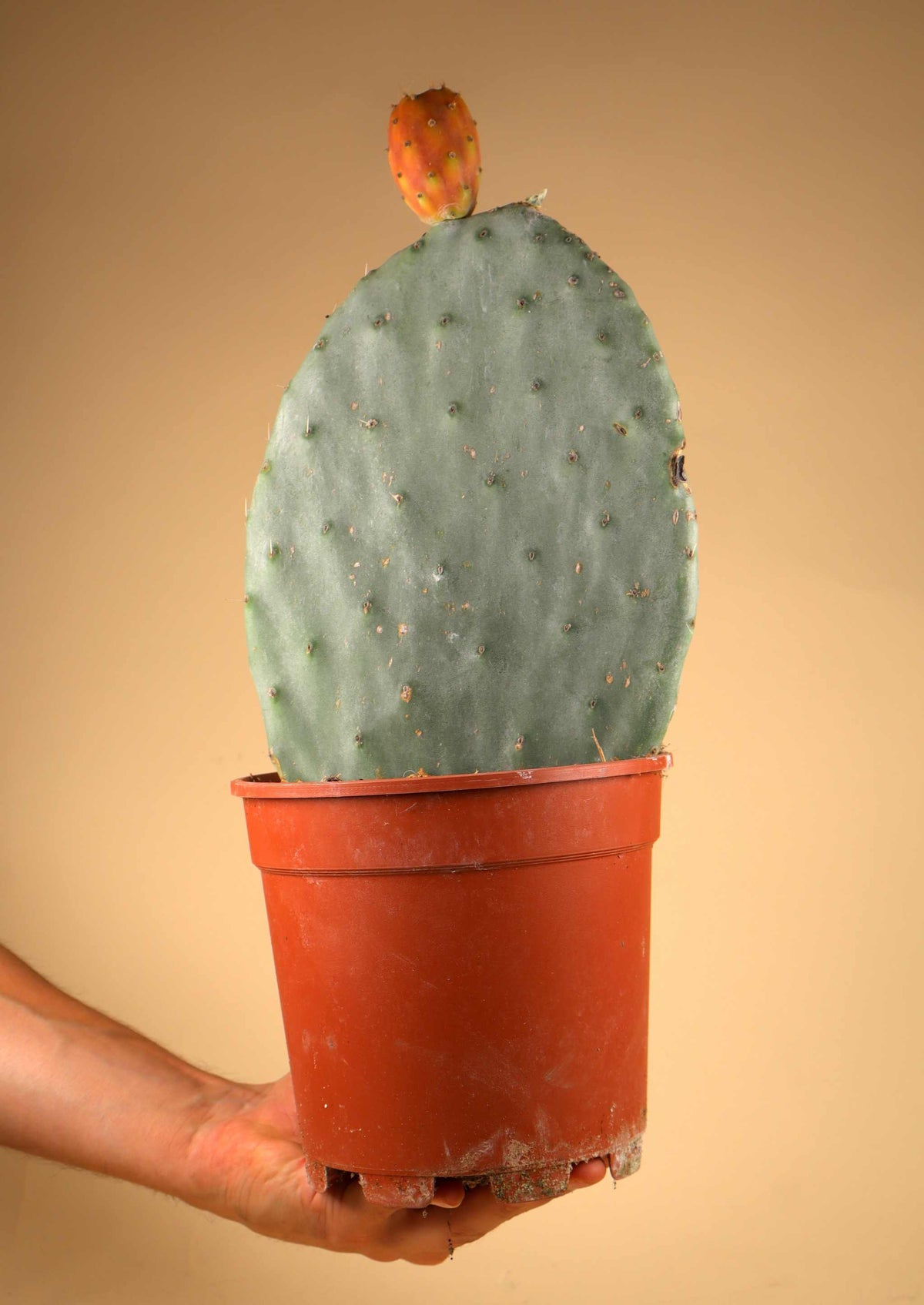
Frost-hardy cactus from Mexico that produces edible and truly delicious fruits.
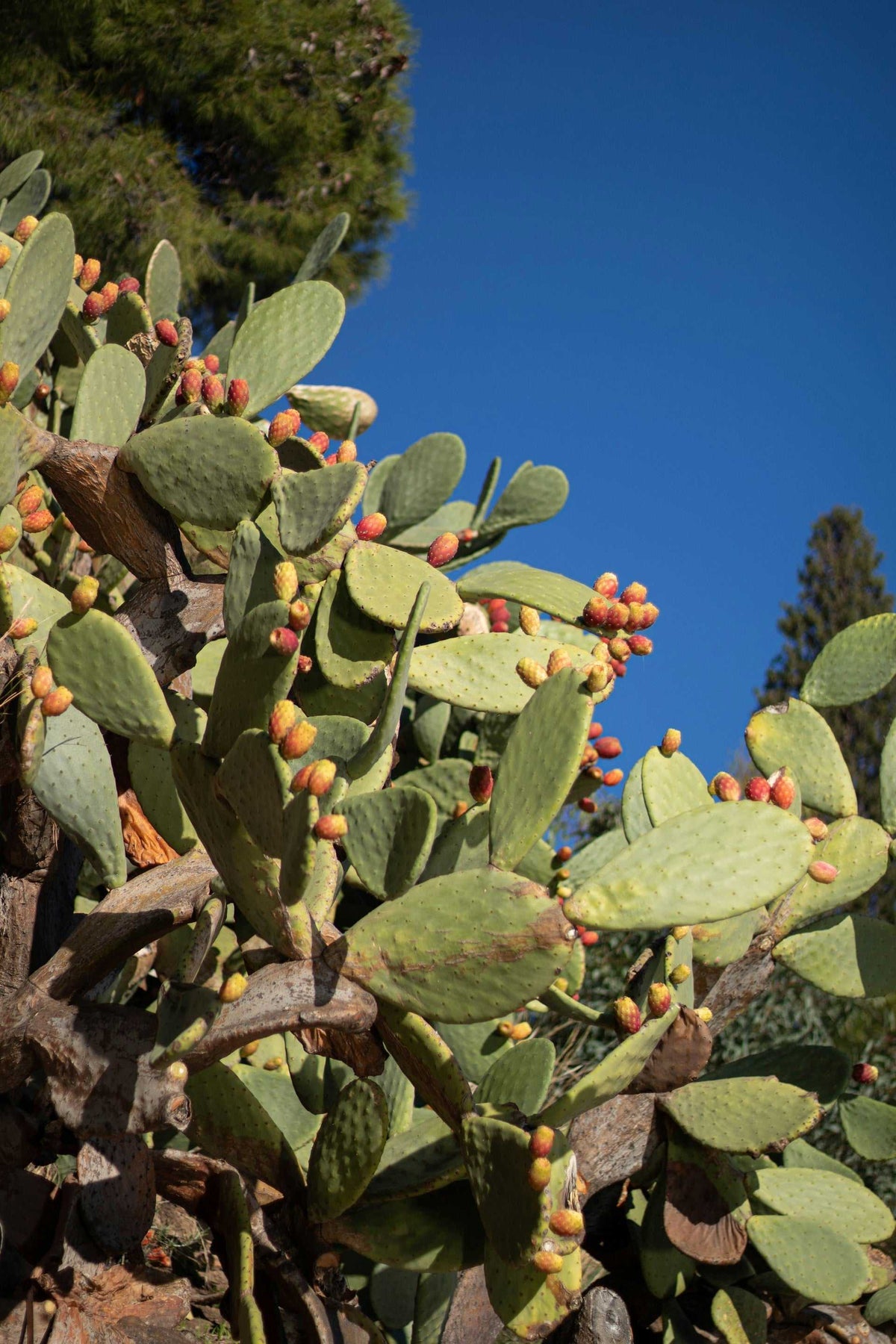
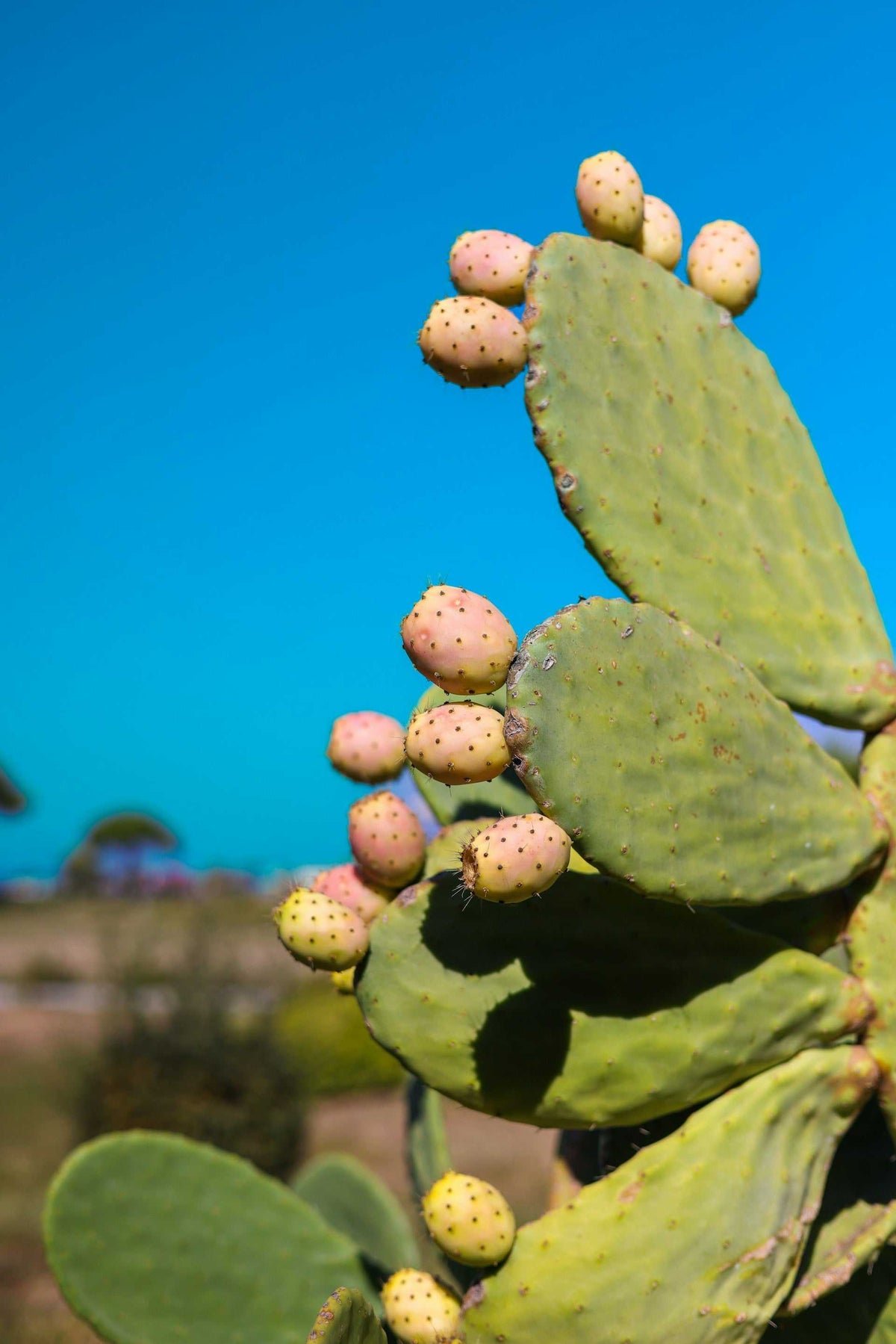
Opuntia ficus-indica, also known as the prickly pear, originates from Mexico but is now cultivated all over the world in tropical and Mediterranean climates as both an ornamental plant and a fruit crop. The cactus's spines are reduced and even fall off after a short time, making it practically impossible to prick yourself on it. It is also frost-hardy down to -10°C and could therefore be grown outdoors with winter protection.
Botanical description
Opuntia ficus-indica is believed to originate from central Mexico, where its closest relatives are also found.

Commercially, it is grown primarily for its edible, sweet and tangy fruits, which are widely used in Mexican cuisine. Cultivation is particularly facilitated by the fact that the flowers are autogamous, meaning they self-pollinate and produce fruit.
The prickly pear usually grows to a height of about 3 meters, and the individual, flat stem segments grow 20 to 60 cm long and 10 to 30 cm wide. Over time, a woody trunk forms.
Care
The prickly pear is very hardy and grows well even in soils that are not particularly fertile or dry. It is even tolerant of light frost down to -10°C, provided it is not wet at the same time, which could otherwise lead to rot. Late spring frost is poorly tolerated, as the new shoots will freeze to death. In our region, it can be cared for as an indoor plant or even as a garden plant in a suitable location with mineral-rich soil.
The prickly pear thrives in direct sun and warm temperatures. It can be given cactus fertilizer every other week. It should be planted in a very loose, mineral-rich, and well-drained substrate. In summer, the plant should be watered regularly and abundantly, but always so that there is no water accumulation.
During autumn and winter, watering should be significantly reduced, and for specimens planted outdoors, you should keep the soil around the plant dry. For this, you can cover the ground around the plant with a waterproof tarp. In this way, it can survive frost down to about -10°C. Then protect the plant with burlap and/or heating cables during the winter.
Starting in autumn, the stem segments begin to wrinkle slightly and often lose their ability to stand upright. This is nothing to worry about. The cactus concentrates its cell sap and collects sugar in its cells, which lowers the freezing point. This is an anti-freeze mechanism!
Grow your own exotic fruits, buy prickly pear online!
Shipping Policy
Shipping Policy
When buying live plants, transport can sometimes affect the condition of the plant. We strive to ensure that all plants arrive in good health, but minor shipping damage, such as a torn leaf or bent stem, is sometimes unavoidable. Read more about our policy here.


Join the customer club
Earn points on purchases and through special actions. Spend your points on rewards including gift products & discounts
Learn more about your plants!
View all-

How to repot houseplants - Step by step
Repotting houseplants is the key to keeping your indoor plants healthy and happy. It's all about the right soil, the right size pot and a little patience. In our guide...
How to repot houseplants - Step by step
Repotting houseplants is the key to keeping your indoor plants healthy and happy. It's all about the right soil, the right size pot and a little patience. In our guide...
-
Indoor Climbing Plants | Complete Guide to Clim...
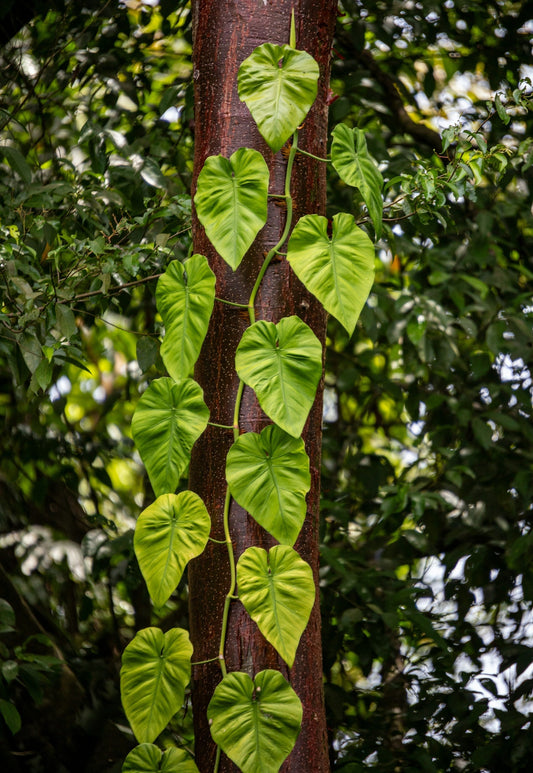
Indoor climbing plants bring life and movement to your home. They can hang freely from hanging baskets or climb up trellises. These green plants quickly transform windows and corners into...
Indoor Climbing Plants | Complete Guide to Clim...
Indoor climbing plants bring life and movement to your home. They can hang freely from hanging baskets or climb up trellises. These green plants quickly transform windows and corners into...
-

Propagate your Houseplants | Tips from the Expert
Is there anything more satisfying than watching a new plant grow from a cutting you made yourself? Plant propagation involves creating new plants from parts of your existing plants. It's...
Propagate your Houseplants | Tips from the Expert
Is there anything more satisfying than watching a new plant grow from a cutting you made yourself? Plant propagation involves creating new plants from parts of your existing plants. It's...

