


Labisia obtusifolia 'Turtleback'
Labisia obtusifolia 'Turtleback'
Couldn't load pickup availability


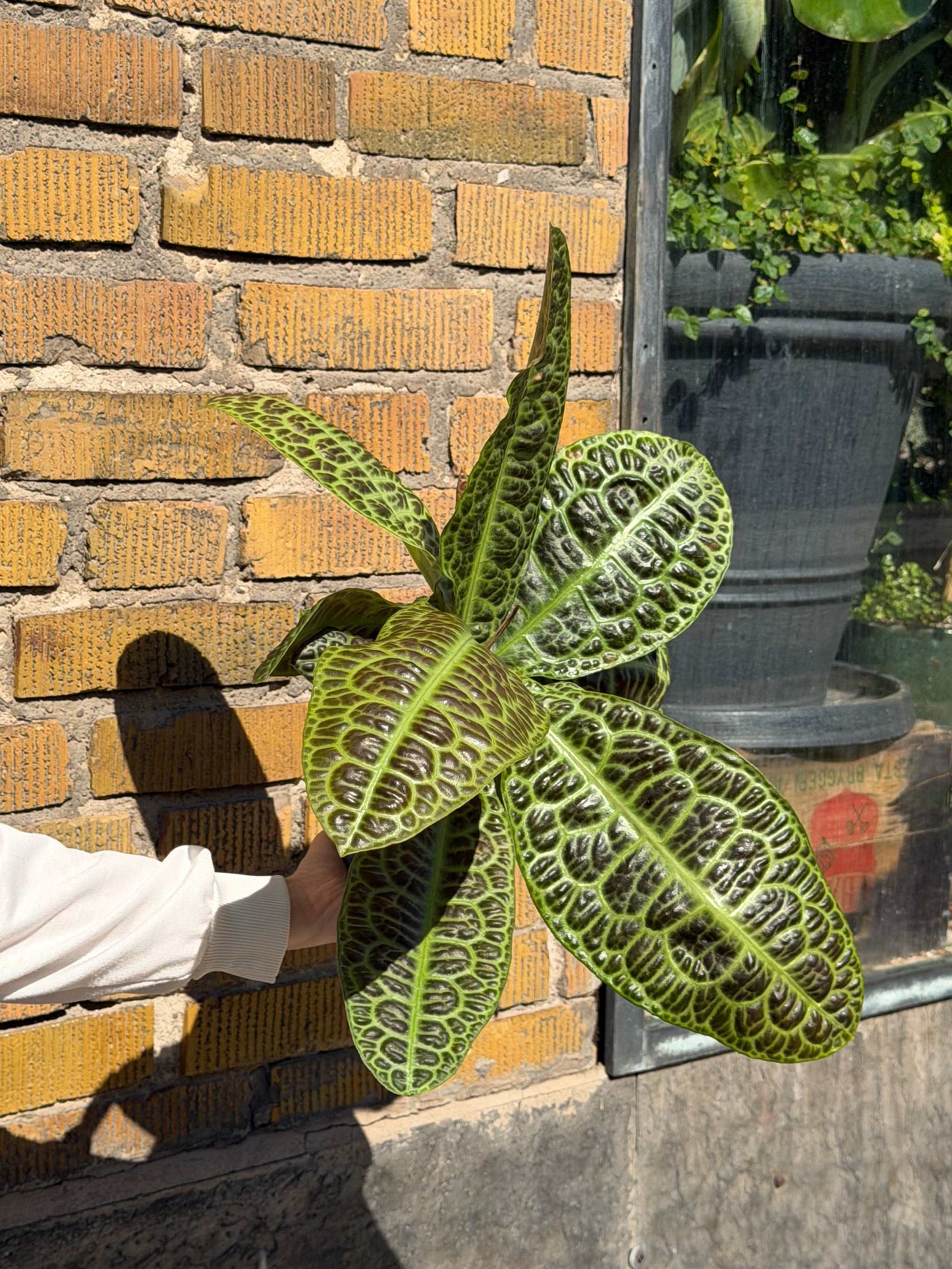
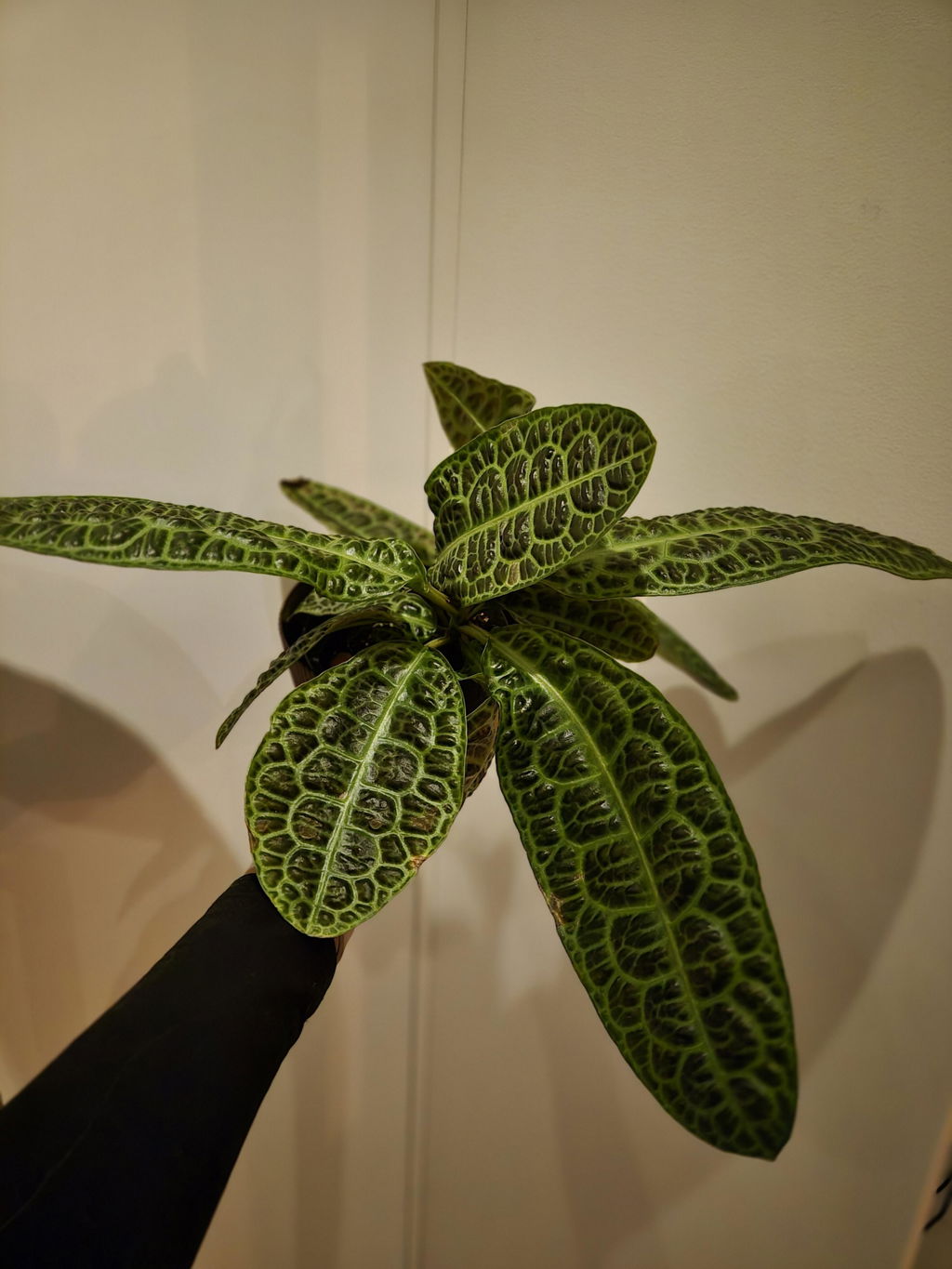
Slow-growing rarity from West Borneo with contrasting, bubbly leaves
The obovate leaves have dark bumps (bullae) and green leaf veins. The leaf color varies from light green with red bumps (on new leaves) to dark green with metallic black bumps (on fully mature leaves in low light). The flowers are small and whitish to pink.
Unlike many other Ardisia/Labisia species that are popular as small terrarium plants but grow much larger in nature, this species always retains its beautiful domed leaf shape and grows very large leaves that do not change in appearance. It can reach a diameter of approximately 1 meter and remains low to the ground.
Despite its surprisingly hard and robust leaves, it grows slowly (albeit somewhat faster than many other species). Under good conditions and with good care, this is one of the few Ardisia/Labisia that is also suitable as a houseplant.
Botanical description
This tropical plant was described and illustrated by Hans Hallier in 1910, based on a plant cultivated in the Bogor Botanical Garden. The plant was collected by Jaheri in 1893 during a large Dutch expedition to West Borneo in the present-day Landak district of West Kalimantan province. However, there is no herbarium record of this plant and it is considered lost in the wild.
As with almost all tropical Primulaceae in cultivation, i.e., mainly Ardisia and Labisia, there is some confusion about the name of this species. The description suggests that it may actually be an Ardisia rather than a Labisia.
Care
Easy to care for and grows easily, albeit slowly, as long as temperatures and humidity remain sufficiently high. Always likes warm and humid conditions and is therefore an ideal candidate for care in a terrarium or plant cabinet.
Thrives in semi-shade with loose, airy substrate. Fertilize with orchid fertilizer approximately every two weeks. Ideal temperature 20-28°C with high humidity (70-80%). Buy Labisia obtusifolia 'Turtleback' online!
Shipping Policy
Shipping Policy
When buying live plants, transport can sometimes affect the condition of the plant. We strive to ensure that all plants arrive in good health, but minor shipping damage, such as a torn leaf or bent stem, is sometimes unavoidable. Read more about our policy here.




Join the customer club
Earn points on purchases and through special actions. Spend your points on rewards including gift products & discounts
Learn more about your plants!
View all-

How to repot houseplants - Step by step
Repotting houseplants is the key to keeping your indoor plants healthy and happy. It's all about the right soil, the right size pot and a little patience. In our guide...
How to repot houseplants - Step by step
Repotting houseplants is the key to keeping your indoor plants healthy and happy. It's all about the right soil, the right size pot and a little patience. In our guide...
-
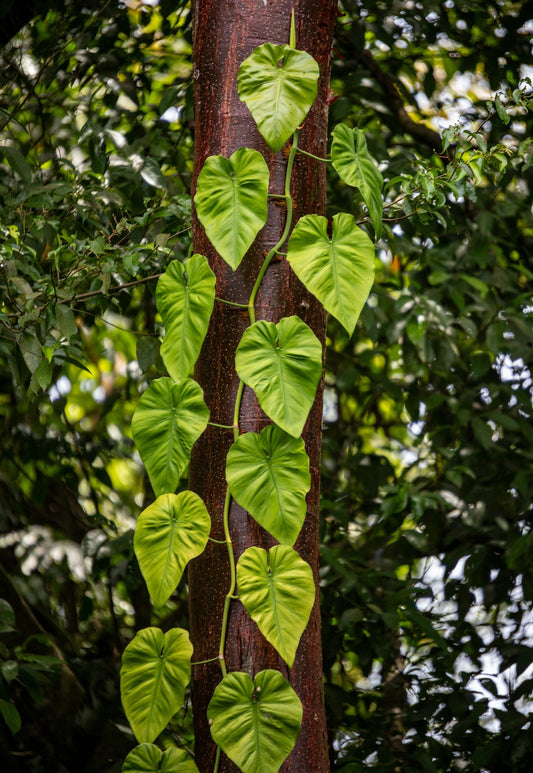
Indoor Climbing Plants | Complete Guide to Clim...
Indoor climbing plants bring life and movement to your home. They can hang freely from hanging baskets or climb up trellises. These green plants quickly transform windows and corners into...
Indoor Climbing Plants | Complete Guide to Clim...
Indoor climbing plants bring life and movement to your home. They can hang freely from hanging baskets or climb up trellises. These green plants quickly transform windows and corners into...
-

Propagate your Houseplants | Tips from the Expert
Is there anything more satisfying than watching a new plant grow from a cutting you made yourself? Plant propagation involves creating new plants from parts of your existing plants. It's...
Propagate your Houseplants | Tips from the Expert
Is there anything more satisfying than watching a new plant grow from a cutting you made yourself? Plant propagation involves creating new plants from parts of your existing plants. It's...

