

Franklino predatory thrips | Against hard-to-control thrips
Franklino predatory thrips | Against hard-to-control thrips
Couldn't load pickup availability


Read before ordering beneficial insects online [Important].
Our supplier Biobasiq ships fresh beneficial insects every Monday. Place your order no later than Sunday at 12:00 PM, and they will be shipped the following Monday. If your order is placed after Sunday, it will be shipped the following Monday. The beneficial insects are shipped to your mailbox; please keep this in mind when ordering during the winter if your mailbox is located outdoors. When the temperature drops in early November, orders are shipped to a PostNord collection point instead of the mailbox.
NOTE! We do not sell, store, or order products from the beneficial insects category (including leaf shine) for the physical store.
Biological control of hard-to-combat thrips
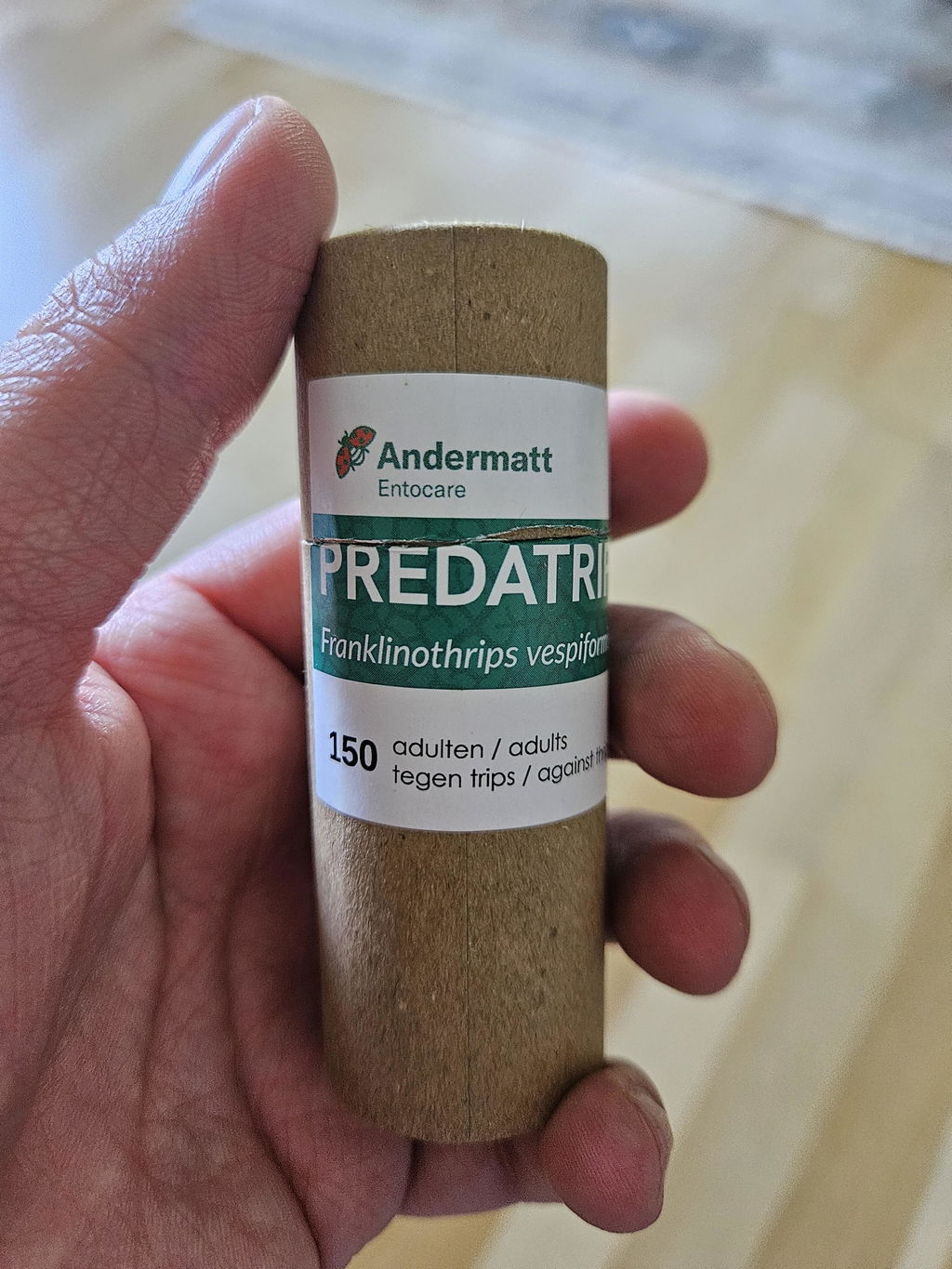
Franklino predatory thrips are used for more difficult thrips infestations, such as exotic, often dark, thrips species that have become increasingly common in crops. The product consists of approximately 150 adult predatory thrips of the species Franklinothrips vespiformis.
What are Franklino predatory thrips?
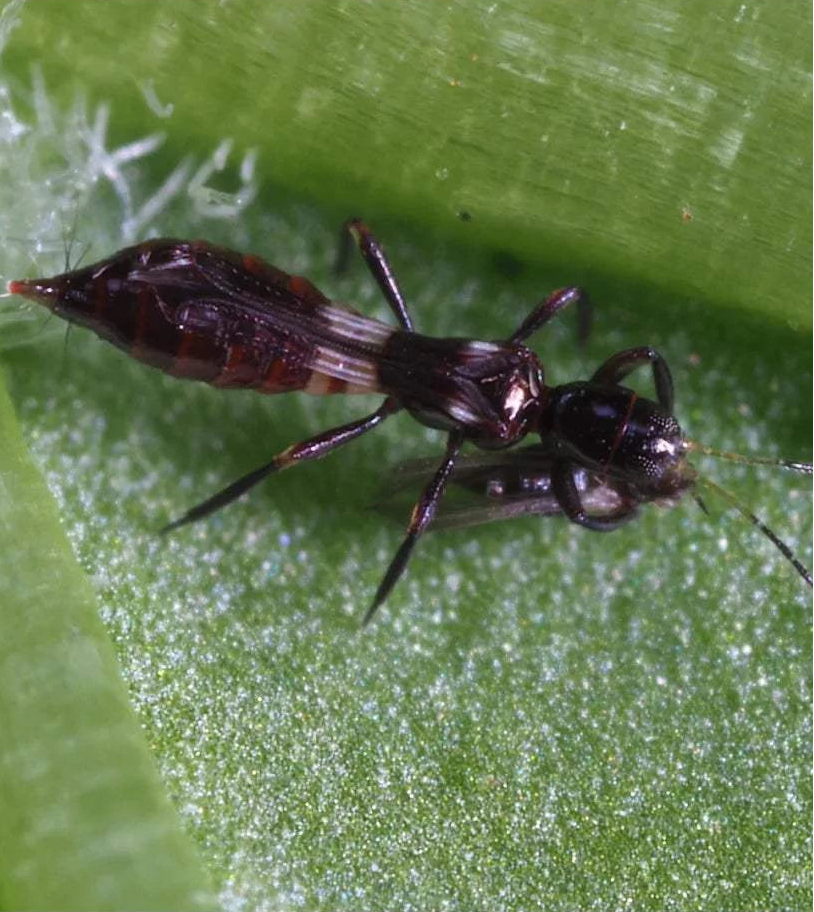
Franklino predatory thrips (Franklinothrips vespiformis) are cannibalistic thrips that feed on other thrips species. Exotic thrips species are an increasingly common problem in the ornamental plant trade. For persistent and hard-to-combat thrips infestations, Franklino predatory thrips are the beneficial insects of choice, as they can combat species of thrips that other beneficial insects struggle to manage.
Which pests are controlled?
Franklino predatory thrips feed on a wide range of thrips species, including western flower thrips (Frankliniella occidentalis) and even more difficult-to-combat leaf-dwelling thrips such as Echinothrips, orchid thrips (Chaetanophothrips orchidii), Japanese flower thrips (Thrips setosus), banded greenhouse thrips (Hercinothrips femoralis), and Thrips parvispinus. Some of these are dark in color and may also have white markings on their bodies.
What do thrips infestations look like?
Thrips infestations can appear as silvery patches where the thrips have rasped the plant's leaves. After a while, the infestation can lead to stunted growth and the withering of existing leaves. You may also see small, black fecal spots on the plant's leaves.
How do Franklino predatory thrips work?
Franklinothrips is an aggressive predatory thrip that consumes both nymphs (younger life stages) and adult thrips. It stays on the plant's leaves where the infestation is primarily taking place. The species has a rapid population increase as the populations consist mainly of females, each of which can lay up to 300 eggs during their lifetime.
Usage:
The package contains approximately 150 predatory thrips and is suitable for use on ornamental plants in indoor environments at temperatures between 18 and 30 degrees Celsius. The predatory thrips can be used year-round, but the best effect is achieved during the brighter months from March to September.
Distribute the predatory thrips evenly over the plant's leaves. Use approximately 10 to 20 individuals per square meter. The product can be used alone or in combination with other biological beneficial insects, such as predatory mites and minute pirate bugs (Orius).
Follow the control process:
Full effect is usually achieved after 5 to 6 weeks once the predatory thrips have established themselves. The adult Franklinothrips is black and resembles an ant in appearance, movement patterns, and size. The larva is easy to recognize because it is bright orange. Buy Franklino thrips online!
Shipping Policy
Shipping Policy
When buying live plants, transport can sometimes affect the condition of the plant. We strive to ensure that all plants arrive in good health, but minor shipping damage, such as a torn leaf or bent stem, is sometimes unavoidable. Read more about our policy here.

Join the customer club
Earn points on purchases and through special actions. Spend your points on rewards including gift products & discounts
Learn more about your plants!
View all-

How to repot houseplants - Step by step
Repotting houseplants is the key to keeping your indoor plants healthy and happy. It's all about the right soil, the right size pot and a little patience. In our guide...
How to repot houseplants - Step by step
Repotting houseplants is the key to keeping your indoor plants healthy and happy. It's all about the right soil, the right size pot and a little patience. In our guide...
-
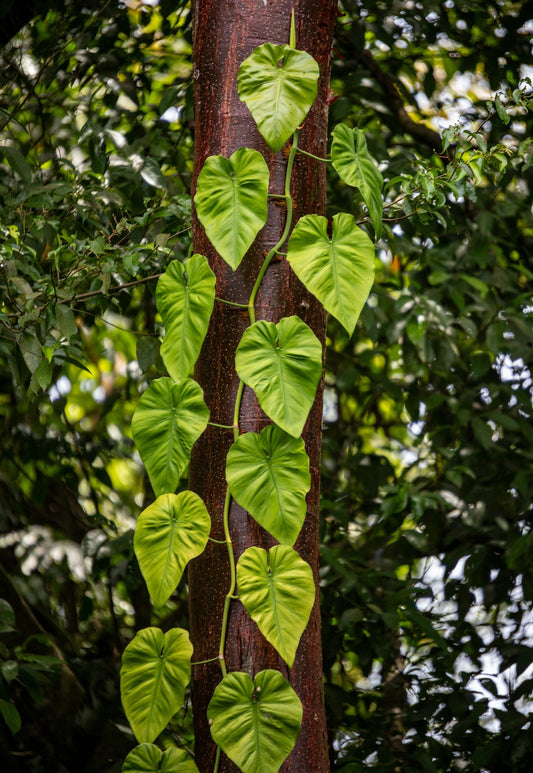
Indoor Climbing Plants | Complete Guide to Clim...
Indoor climbing plants bring life and movement to your home. They can hang freely from hanging baskets or climb up trellises. These green plants quickly transform windows and corners into...
Indoor Climbing Plants | Complete Guide to Clim...
Indoor climbing plants bring life and movement to your home. They can hang freely from hanging baskets or climb up trellises. These green plants quickly transform windows and corners into...
-

Propagate your Houseplants | Tips from the Expert
Is there anything more satisfying than watching a new plant grow from a cutting you made yourself? Plant propagation involves creating new plants from parts of your existing plants. It's...
Propagate your Houseplants | Tips from the Expert
Is there anything more satisfying than watching a new plant grow from a cutting you made yourself? Plant propagation involves creating new plants from parts of your existing plants. It's...

