


Ficus villosa
Ficus villosa
Couldn't load pickup availability


Large climbing fig with hairy leaves from Southeast Asia, attaches to almost all surfaces
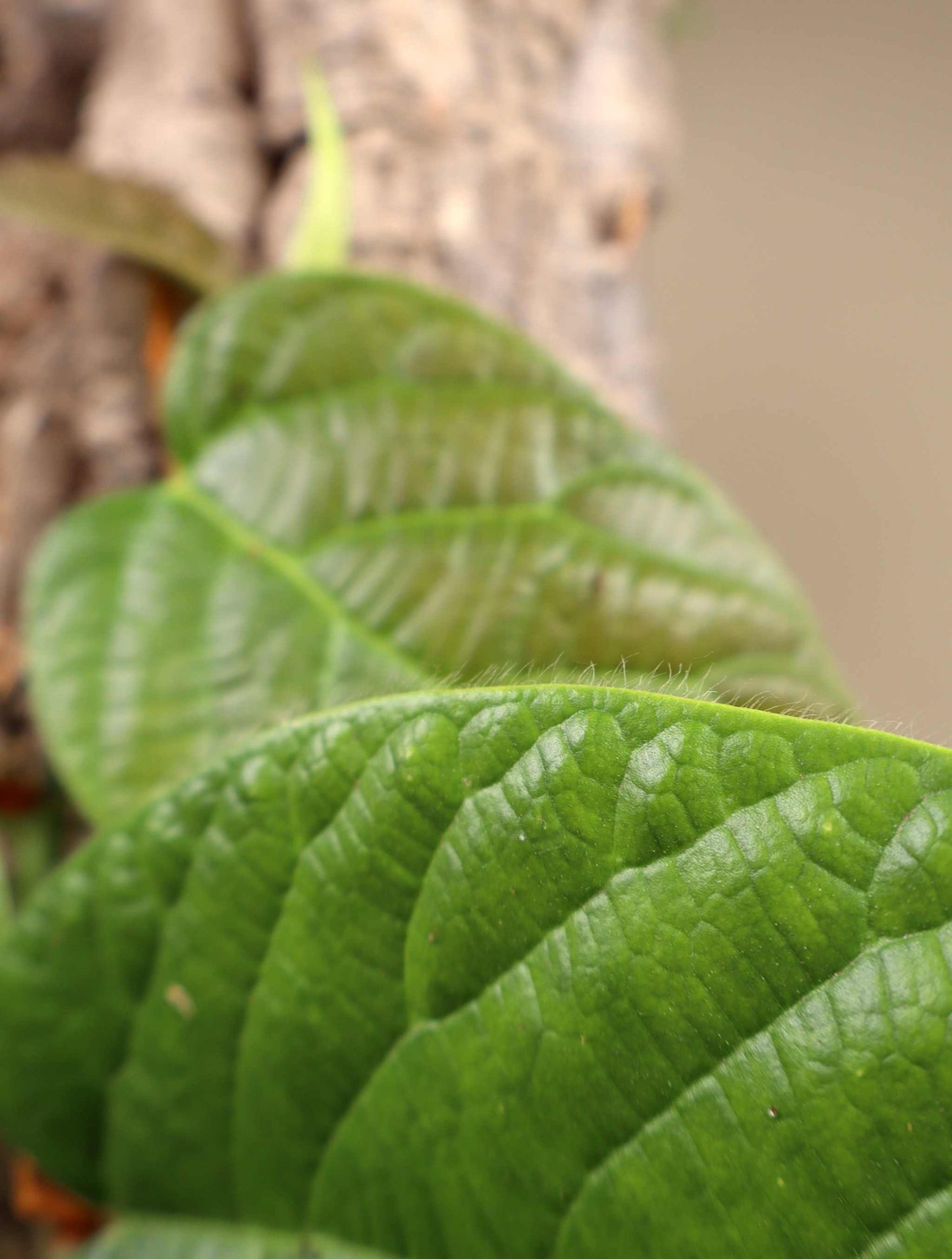
Ficus villosa is a large, climbing fig from Southeast Asia with hairy leaves, fantastic growth habit and color. This is a rare species native to Southeast Asia and particularly widespread on the larger islands (Sumatra, Borneo, Sulawesi) where it can be found everywhere in lowland rainforests up to 1700 meters altitude.

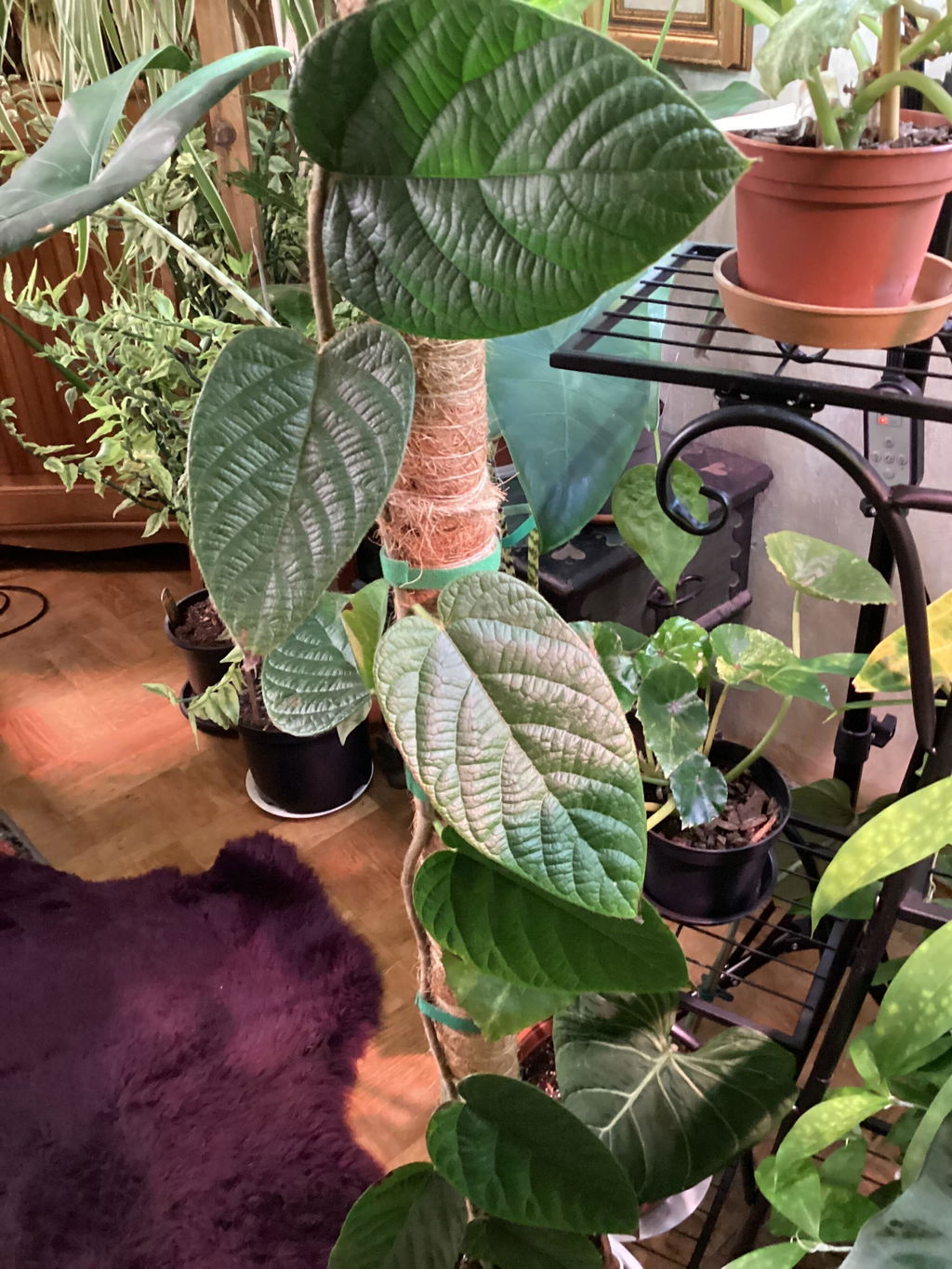
This climbing fig grows upright and hugs its substrate tightly. It is not picky about the substrate it clings to with its aerial roots. In nature, it naturally climbs mainly on trees, but also grows attached to rocks or wooden walls.
It branches little or not at all, so it mostly grows as a single stem with alternate leaves. The youngest leaves have a reddish tinge and become darker green over time. Especially the leaf edges and undersides are very hairy ("villosa" means hairy). The leaves can grow quite large, up to about 20 centimeters long and 15 centimeters wide (in the wild up to 30 centimeters). Due to this size, it is more suitable only for larger terrariums or as a potted plant.
Care
This Ficus should never dry out and likes high humidity of 60% or more. Grows better in shadier areas but can tolerate filtered sunlight. It attaches firmly to almost any surface, even glass! But this can take quite a long time as it does not grow attaching roots at every node.
Grows very tall over time but can easily be pruned. Be careful when pruning, like all Ficus species, F. villosa secretes a skin-irritating milky sap when cut.
For good and fast growth, it should be fertilized regularly. About every two weeks with regular fertilizer for houseplants is sufficient. Ideal temperature 20-28°C.
In the home garden, it is reported to reach 2.4 meters in length, but in the wild, it grows several meters high on trees. Buy Ficus villosa online!
Shipping Policy
Shipping Policy
When buying live plants, transport can sometimes affect the condition of the plant. We strive to ensure that all plants arrive in good health, but minor shipping damage, such as a torn leaf or bent stem, is sometimes unavoidable. Read more about our policy here.



Join the customer club
Earn points on purchases and through special actions. Spend your points on rewards including gift products & discounts
Learn more about your plants!
View all-

How to repot houseplants - Step by step
Repotting houseplants is the key to keeping your indoor plants healthy and happy. It's all about the right soil, the right size pot and a little patience. In our guide...
How to repot houseplants - Step by step
Repotting houseplants is the key to keeping your indoor plants healthy and happy. It's all about the right soil, the right size pot and a little patience. In our guide...
-
Indoor Climbing Plants | Complete Guide to Clim...
Indoor climbing plants bring life and movement to your home. They can hang freely from hanging baskets or climb up trellises. These green plants quickly transform windows and corners into...
Indoor Climbing Plants | Complete Guide to Clim...
Indoor climbing plants bring life and movement to your home. They can hang freely from hanging baskets or climb up trellises. These green plants quickly transform windows and corners into...
-

Propagate your Houseplants | Tips from the Expert
Is there anything more satisfying than watching a new plant grow from a cutting you made yourself? Plant propagation involves creating new plants from parts of your existing plants. It's...
Propagate your Houseplants | Tips from the Expert
Is there anything more satisfying than watching a new plant grow from a cutting you made yourself? Plant propagation involves creating new plants from parts of your existing plants. It's...

