


Euphorbia stellata
Euphorbia stellata
Couldn't load pickup availability


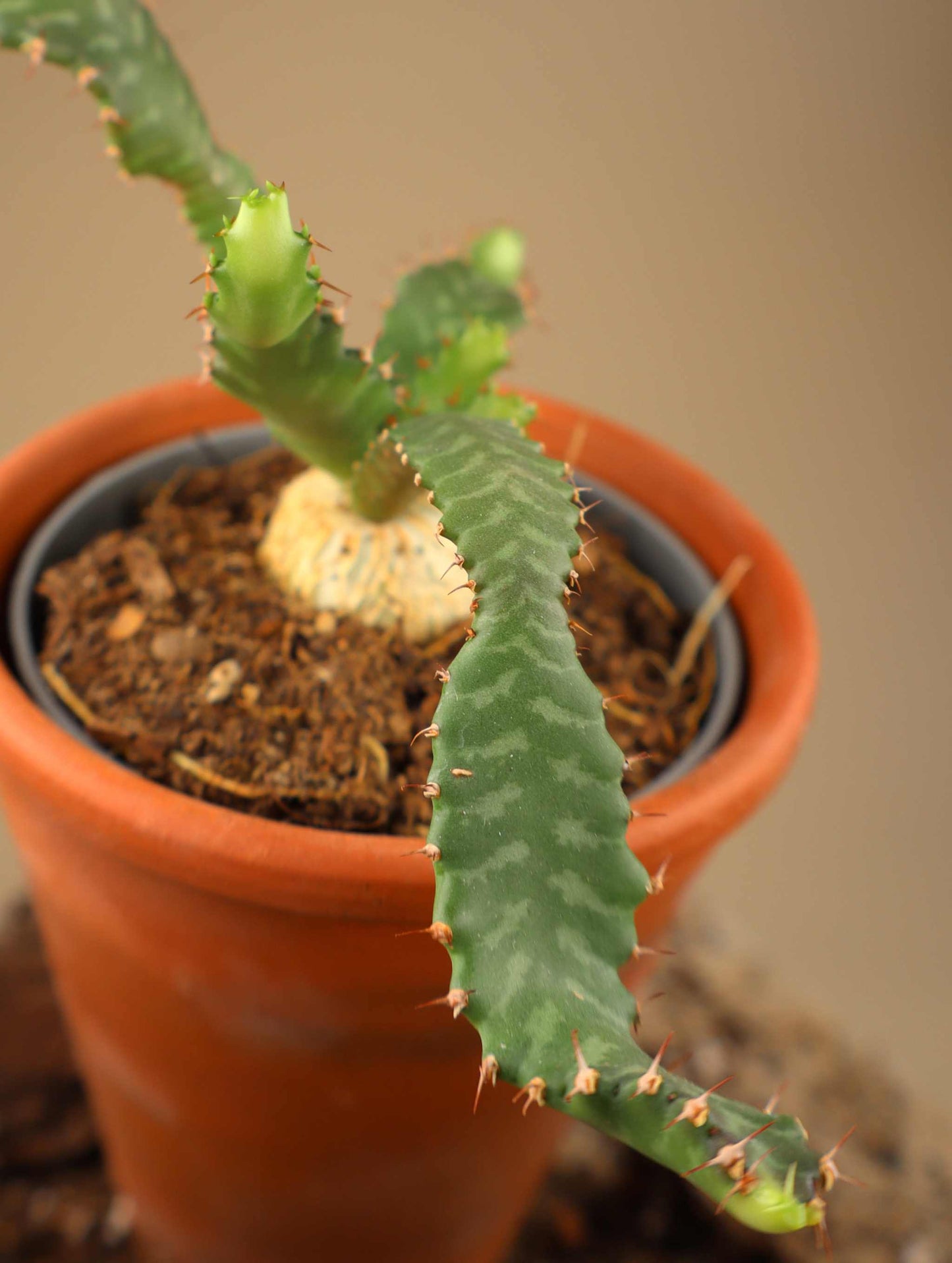
Star-shaped South African euphorbia with sprawling flattened stems and bonsai-like caudex
Euphorbia stellata is a peculiar and highly decorative euphorbia from South Africa with a small distribution area near the city of Gqeberha (formerly Port Elizabeth) in the Eastern Cape province.

In nature, it grows among grasses and pebbles, often fully exposed with the thick underground tuber firmly anchored in rock crevices. As the name suggests (stellata means star-shaped), the branches radiate from the tuber and spread out against the ground.
The plant reaches a diameter of about 30 centimetres (more if light is insufficient, due to stretching) and is practically leafless. The individual stems originate from a common centre and are flattened with a light/dark green pattern on the upper side. The stems are about 1.5 centimetres wide and grow to 10 to 15 centimetres long.
In its natural environment, the stems lie sprawling with the thickened stem and taproot underground. In cultivated plants, the thickened base (caudex) is usually exposed, giving the plant a bonsai-like appearance.
Care
Thrives in a bright location with good direct sun; sufficient light prevents the stems from stretching and becoming leggy. Water sparingly and allow the soil to dry out completely between waterings. Use well-draining cactus or succulent soil with good mineral content.
Water very sparingly during winter. Ideal temperature 18-28 degrees Celsius; keep cooler and drier during winter dormancy. Does not tolerate wet conditions in the root zone.
Shipping Policy
Shipping Policy
When buying live plants, transport can sometimes affect the condition of the plant. We strive to ensure that all plants arrive in good health, but minor shipping damage, such as a torn leaf or bent stem, is sometimes unavoidable. Read more about our policy here.



Join the customer club
Earn points on purchases and through special actions. Spend your points on rewards including gift products & discounts
Learn more about your plants!
View all-

How to repot houseplants - Step by step
Repotting houseplants is the key to keeping your indoor plants healthy and happy. It's all about the right soil, the right size pot and a little patience. In our guide...
How to repot houseplants - Step by step
Repotting houseplants is the key to keeping your indoor plants healthy and happy. It's all about the right soil, the right size pot and a little patience. In our guide...
-
Indoor Climbing Plants | Complete Guide to Clim...
Indoor climbing plants bring life and movement to your home. They can hang freely from hanging baskets or climb up trellises. These green plants quickly transform windows and corners into...
Indoor Climbing Plants | Complete Guide to Clim...
Indoor climbing plants bring life and movement to your home. They can hang freely from hanging baskets or climb up trellises. These green plants quickly transform windows and corners into...
-

Propagate your Houseplants | Tips from the Expert
Is there anything more satisfying than watching a new plant grow from a cutting you made yourself? Plant propagation involves creating new plants from parts of your existing plants. It's...
Propagate your Houseplants | Tips from the Expert
Is there anything more satisfying than watching a new plant grow from a cutting you made yourself? Plant propagation involves creating new plants from parts of your existing plants. It's...

