


Dieffenbachia seguine
Dieffenbachia seguine
Couldn't load pickup availability


Very large and popular tropical plant, easy to care for and very hardy
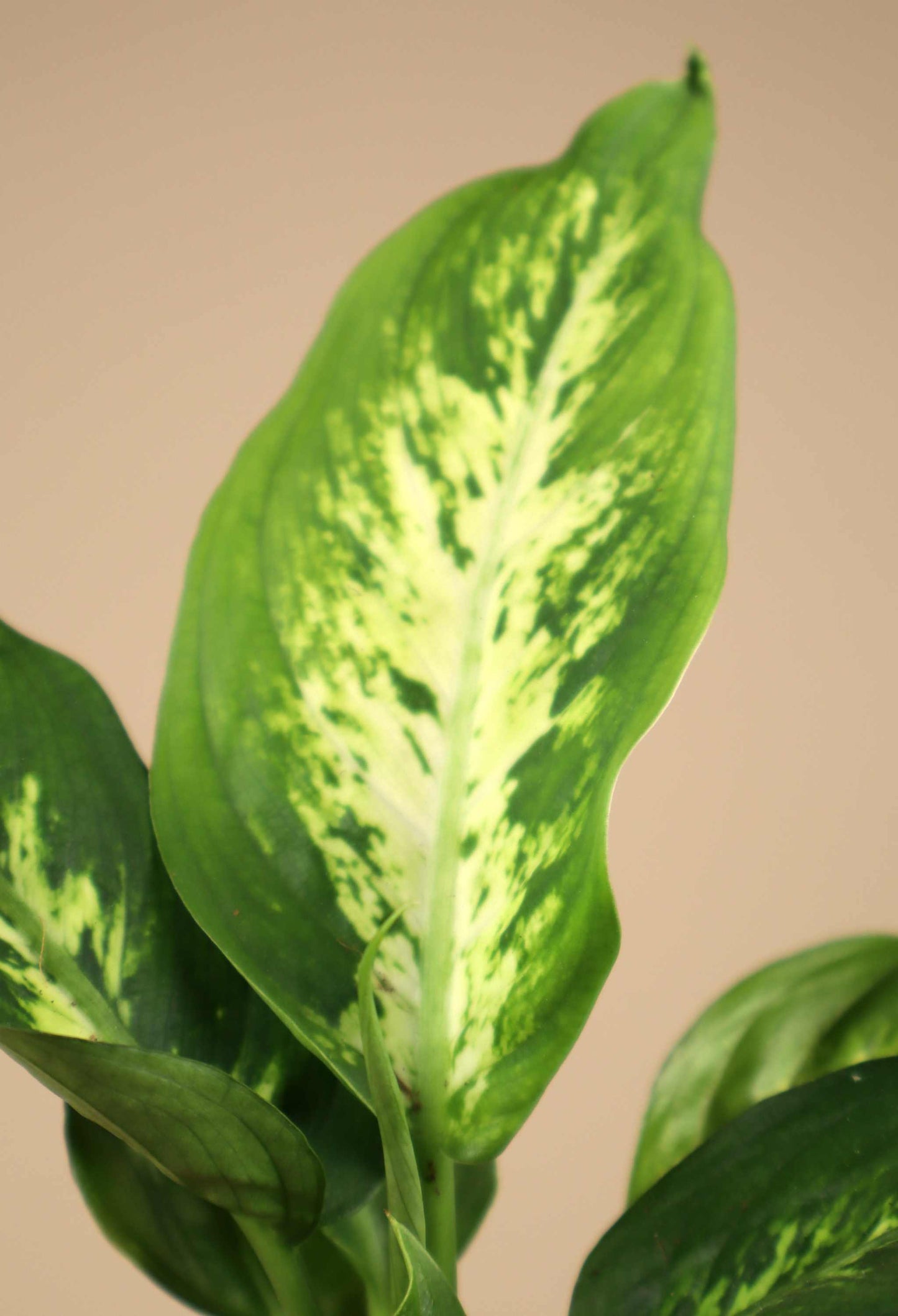
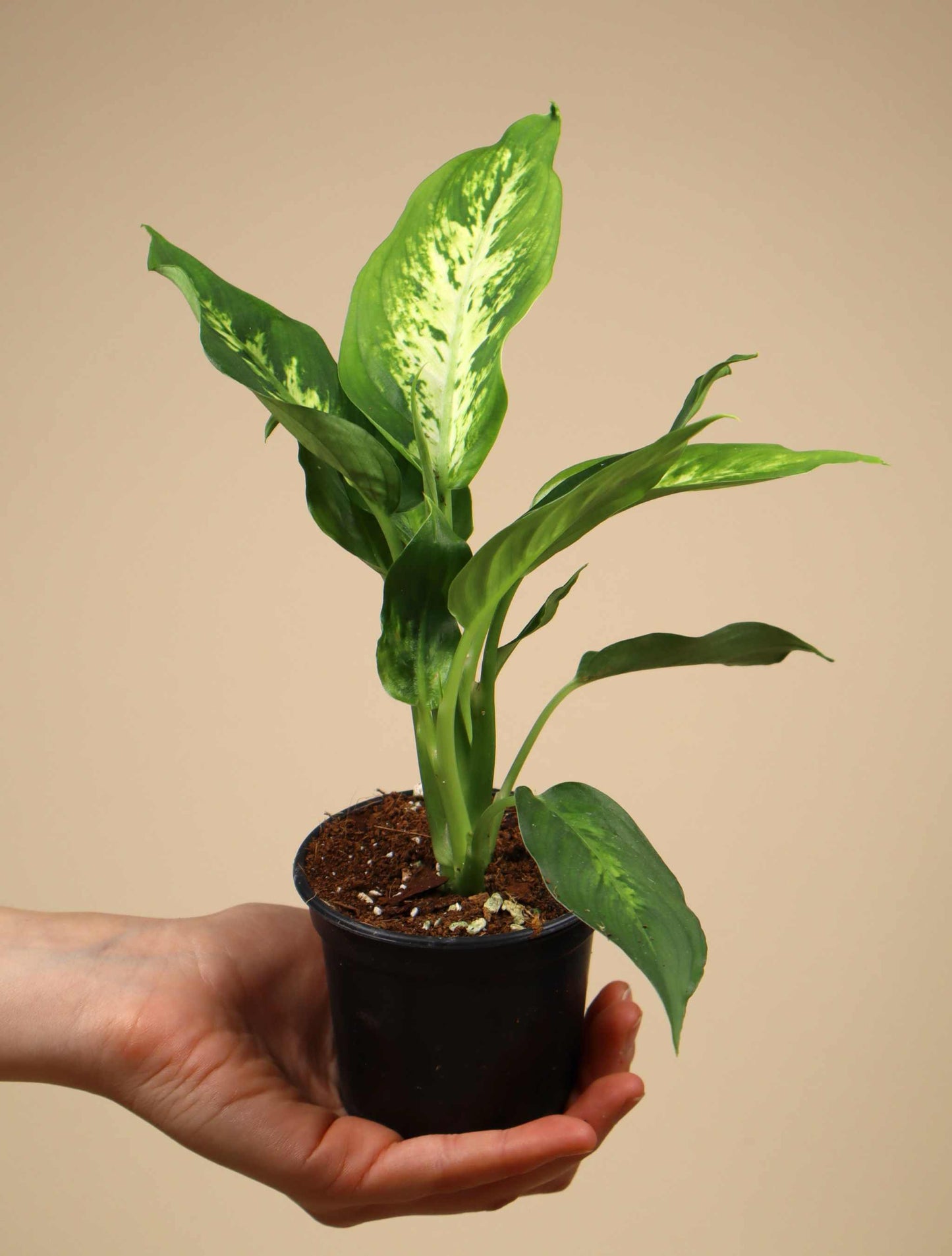
Dieffenbachia seguine, also known as the Dumb cane plant, is a popular and easy-care houseplant with strong and decoratively patterned leaves. The large, oval leaves almost always have irregular spots or streaks in lighter green, yellow or cream tones. The leaves are arranged in dense spiral formations at the top of the stem.
In nature, the plant grows 1-2 meters tall, which it can also grow as a potted plant where it thrives. The patterns on the leaves develop best in bright conditions. The more white or yellow the leaves have, the brighter the plant should be to compensate for the absence of chlorophyll and maintain its beautiful contrasts.
The leaves gradually die from below along the stem, giving older plants a tree-like appearance. Older plants may flower with a whitish-yellow cob surrounded by a greenish-yellow leaf, revealing that the prickly pear belongs to the cold-hardy plants. After flowering, the main shoot dies, but new root shoots appear next to the mother plant.
Botanical description
Dieffenbachia seguine is originally from tropical America and is part of the Araceae family (cold-loving plants). The genus Dieffenbachia includes more than 50 species of tropical plants and is named after Johann Dieffenbach, a botanist and gardener at Vienna's Schönbrunn Palace who discovered the plant in 1820.

In the wild, D. seguine usually grows in shady places in the undergrowth of rainforests, but it can also be found in clearings and often even along roadsides. It colonizes both humid and fairly dry environments. It is therefore highly adaptable and can cope well in a wide range of conditions.
The species is very variable in its vast range. There are forms with completely green leaves and those with patterns. This adaptability makes it one of the most dark-tolerant houseplants.
Care
Place in bright, indirect light or partial shade. Direct sunlight can burn the leaves and cause them to turn yellow. A location near an east or north facing location is ideal. The plant tolerates shade well, but the leaves will be smaller and the patterns less striking.
Let the soil dry out slightly between waterings. Overwatering can lead to root rot. The soil should be moist but not wet and not soggy either.
Keep the temperature around the plant regular and avoid cold drafts or radiators. Room temperature, 21-25 degrees, is optimal. The plant cannot tolerate temperatures below 15 degrees.
Dieffenbachia prefers high humidity, so consider using a humidifier or misting the foliage during dry winter months. Fertilize every 2-4 weeks during the growing season.
Rotate the plant regularly so that all leaves get equal light. Prune regularly to promote bushier growth and remove yellow or damaged leaves. As the plant grows larger, it may need support as it can become top-stalked. Buy Dieffenbachia seguine online!
Shipping Policy
Shipping Policy
When buying live plants, transport can sometimes affect the condition of the plant. We strive to ensure that all plants arrive in good health, but minor shipping damage, such as a torn leaf or bent stem, is sometimes unavoidable. Read more about our policy here.



Join the customer club
Earn points on purchases and through special actions. Spend your points on rewards including gift products & discounts
Learn more about your plants!
View all-

How to repot houseplants - Step by step
Repotting houseplants is the key to keeping your indoor plants healthy and happy. It's all about the right soil, the right size pot and a little patience. In our guide...
How to repot houseplants - Step by step
Repotting houseplants is the key to keeping your indoor plants healthy and happy. It's all about the right soil, the right size pot and a little patience. In our guide...
-
Indoor Climbing Plants | Complete Guide to Clim...
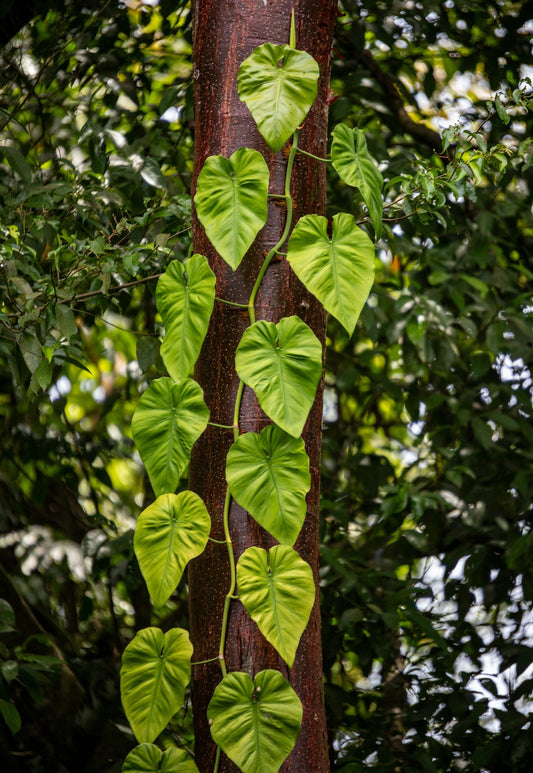
Indoor climbing plants bring life and movement to your home. They can hang freely from hanging baskets or climb up trellises. These green plants quickly transform windows and corners into...
Indoor Climbing Plants | Complete Guide to Clim...
Indoor climbing plants bring life and movement to your home. They can hang freely from hanging baskets or climb up trellises. These green plants quickly transform windows and corners into...
-

Propagate your Houseplants | Tips from the Expert
Is there anything more satisfying than watching a new plant grow from a cutting you made yourself? Plant propagation involves creating new plants from parts of your existing plants. It's...
Propagate your Houseplants | Tips from the Expert
Is there anything more satisfying than watching a new plant grow from a cutting you made yourself? Plant propagation involves creating new plants from parts of your existing plants. It's...

