


Areca catechu | Betel palm
Areca catechu | Betel palm
Couldn't load pickup availability


Beautiful palm with addictive seeds
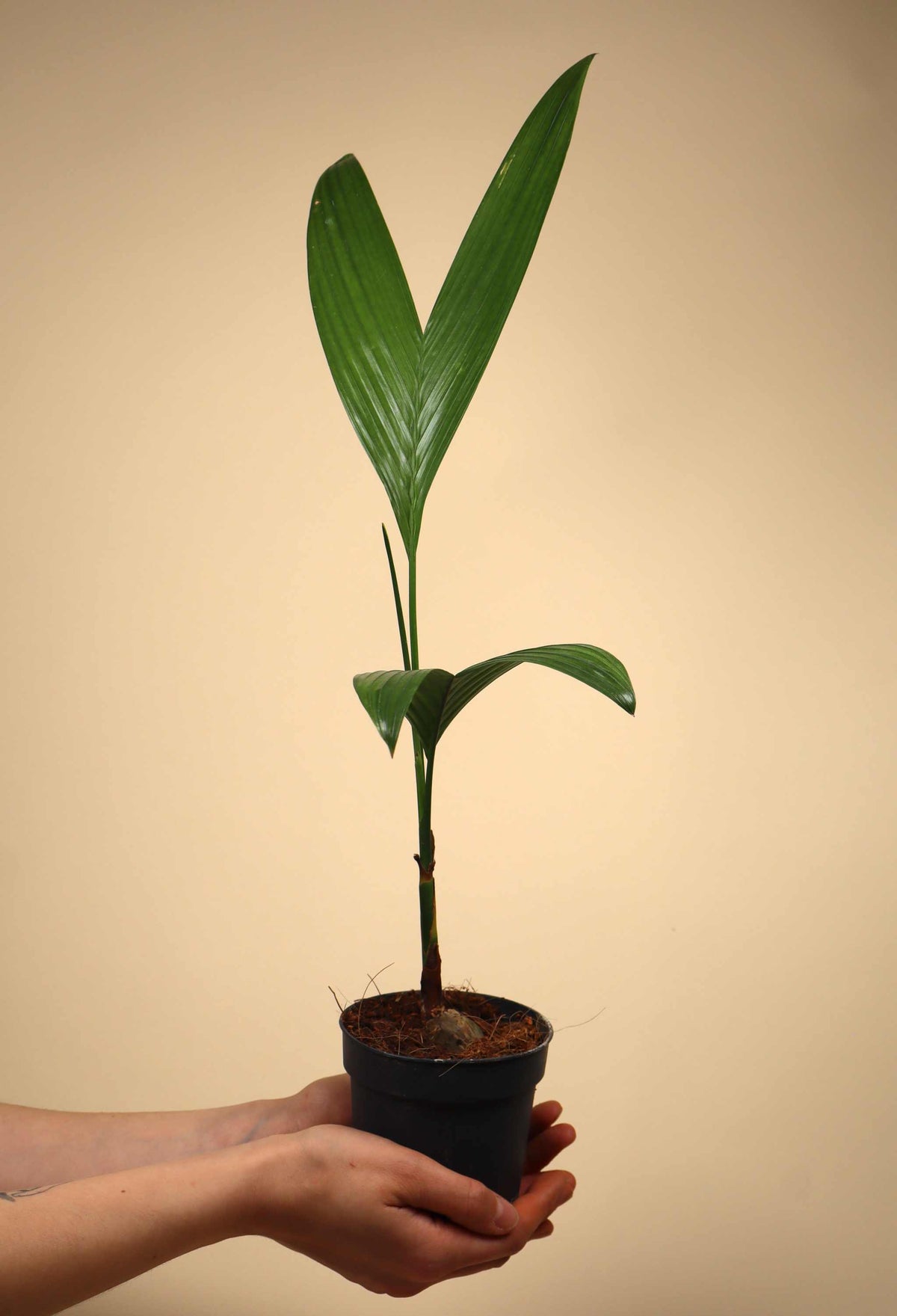
Areca catechu is a tropical palm whose seeds, 'betel nuts', have been chewed as a stimulant in South and Southeast Asia as well as Oceania for at least 4,000 years. The palm is originally native to the Philippines but was spread throughout the tropics via Austronesian migrations and trade from around 1500 BC, and is grown today from the Pacific Islands to East Africa.
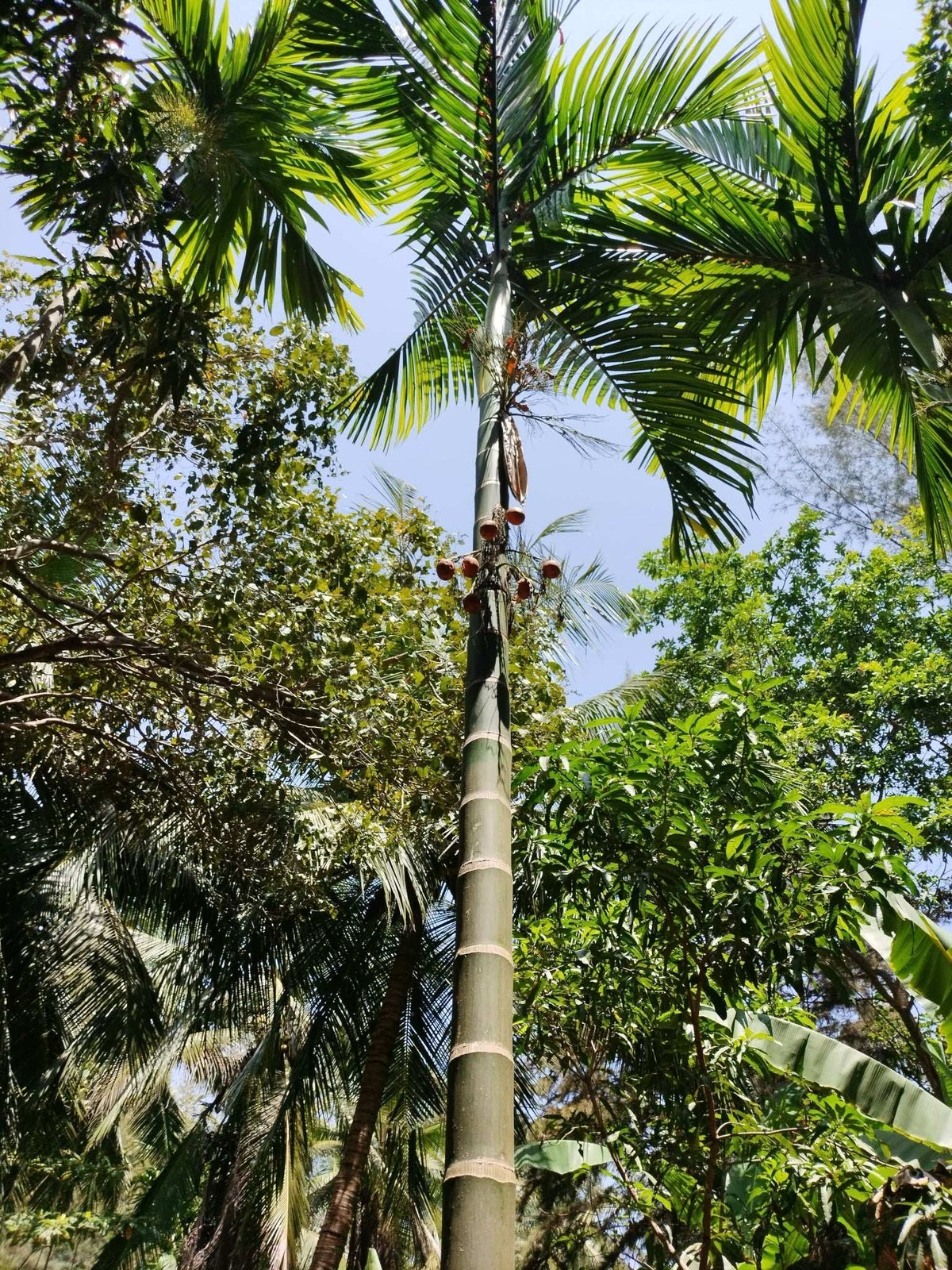
The palm is very beautiful, reaching 10-20 meters in height with a slender, ringed trunk and feather-like leaves. It stays significantly smaller in a pot but can still develop a trunk. The orange-red seeds are about 5 centimeters in size and contain the stimulating alkaloid arecoline.
The seeds are traditionally chewed wrapped in betel leaves (Piper betle) along with other herbs, a mixture that is culturally significant in many Asian countries. In Vietnam, areca and betel leaves are such important symbols of love and marriage that the phrase "matters of betel and areca" is synonymous with marriage. Historically, kings in India and Sri Lanka had special servants whose task was to carry a box with all the ingredients for a good chewing session.
Botanical description
Areca catechu belongs to the palm family Arecaceae and is the most important species in the genus Areca. The name "betel nut" is technically incorrect because the seed does not come from the betel plant (Piper betle); the betel leaves are only used to wrap the areca nut.

Archaeological findings from Thailand, Indonesia, and the Philippines show that areca and betel leaves have been used together for at least 4,000 years. The oldest unequivocal evidence of betel chewing comes from the Philippines, specifically from several individuals found in the Duyong Cave burial site on Palawan Island, dated to approximately 2680±250 BC.
The areca nut contains the alkaloid arecoline, a partial agonist of muscarinic and nicotinic acetylcholine receptors, which produces stimulating effects and makes the chew addictive. The practice of chewing betel nut continues today in many countries as an important and popular cultural activity.
Care
The palm thrives in moist, well-drained soil and temperatures between 20-25 degrees. Indoors, it prefers full sun to light shade and requires generous watering, especially during the summer.
The palm can begin to produce seeds after 4-8 years and can continue to yield harvests for up to 60 years.
Warning: Areca contains arecoline, which is addictive and carcinogenic. The plant is grown primarily for cultural and historical reasons, but consumption is strongly discouraged for health reasons. Buy Areca catechu palm online!
Shipping Policy
Shipping Policy
When buying live plants, transport can sometimes affect the condition of the plant. We strive to ensure that all plants arrive in good health, but minor shipping damage, such as a torn leaf or bent stem, is sometimes unavoidable. Read more about our policy here.





Join the customer club
Earn points on purchases and through special actions. Spend your points on rewards including gift products & discounts
Learn more about your plants!
View all-

How to repot houseplants - Step by step
Repotting houseplants is the key to keeping your indoor plants healthy and happy. It's all about the right soil, the right size pot and a little patience. In our guide...
How to repot houseplants - Step by step
Repotting houseplants is the key to keeping your indoor plants healthy and happy. It's all about the right soil, the right size pot and a little patience. In our guide...
-
Indoor Climbing Plants | Complete Guide to Clim...
Indoor climbing plants bring life and movement to your home. They can hang freely from hanging baskets or climb up trellises. These green plants quickly transform windows and corners into...
Indoor Climbing Plants | Complete Guide to Clim...
Indoor climbing plants bring life and movement to your home. They can hang freely from hanging baskets or climb up trellises. These green plants quickly transform windows and corners into...
-

Propagate your Houseplants | Tips from the Expert
Is there anything more satisfying than watching a new plant grow from a cutting you made yourself? Plant propagation involves creating new plants from parts of your existing plants. It's...
Propagate your Houseplants | Tips from the Expert
Is there anything more satisfying than watching a new plant grow from a cutting you made yourself? Plant propagation involves creating new plants from parts of your existing plants. It's...

