


Alocasia nebula
Alocasia nebula
Couldn't load pickup availability


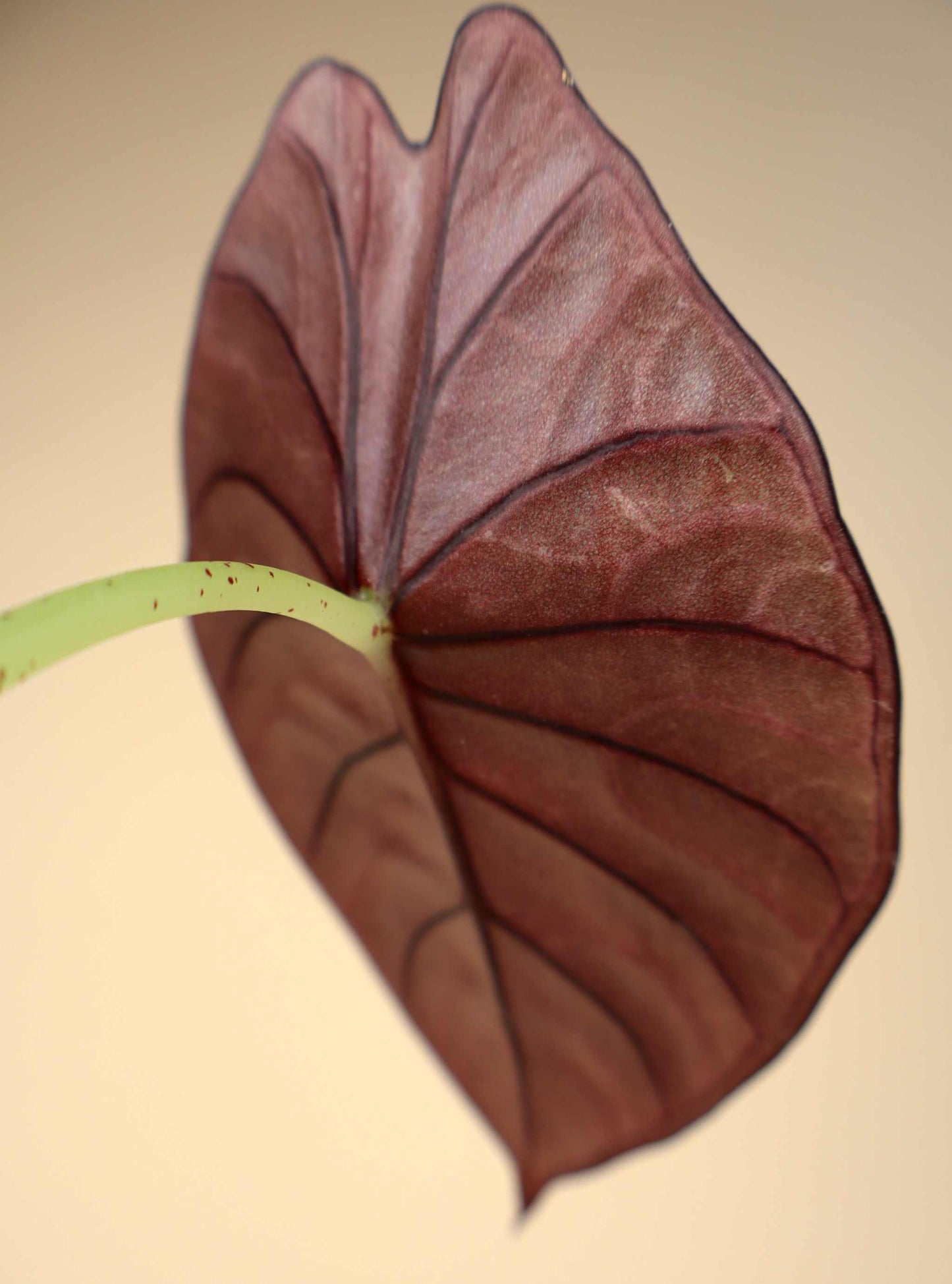
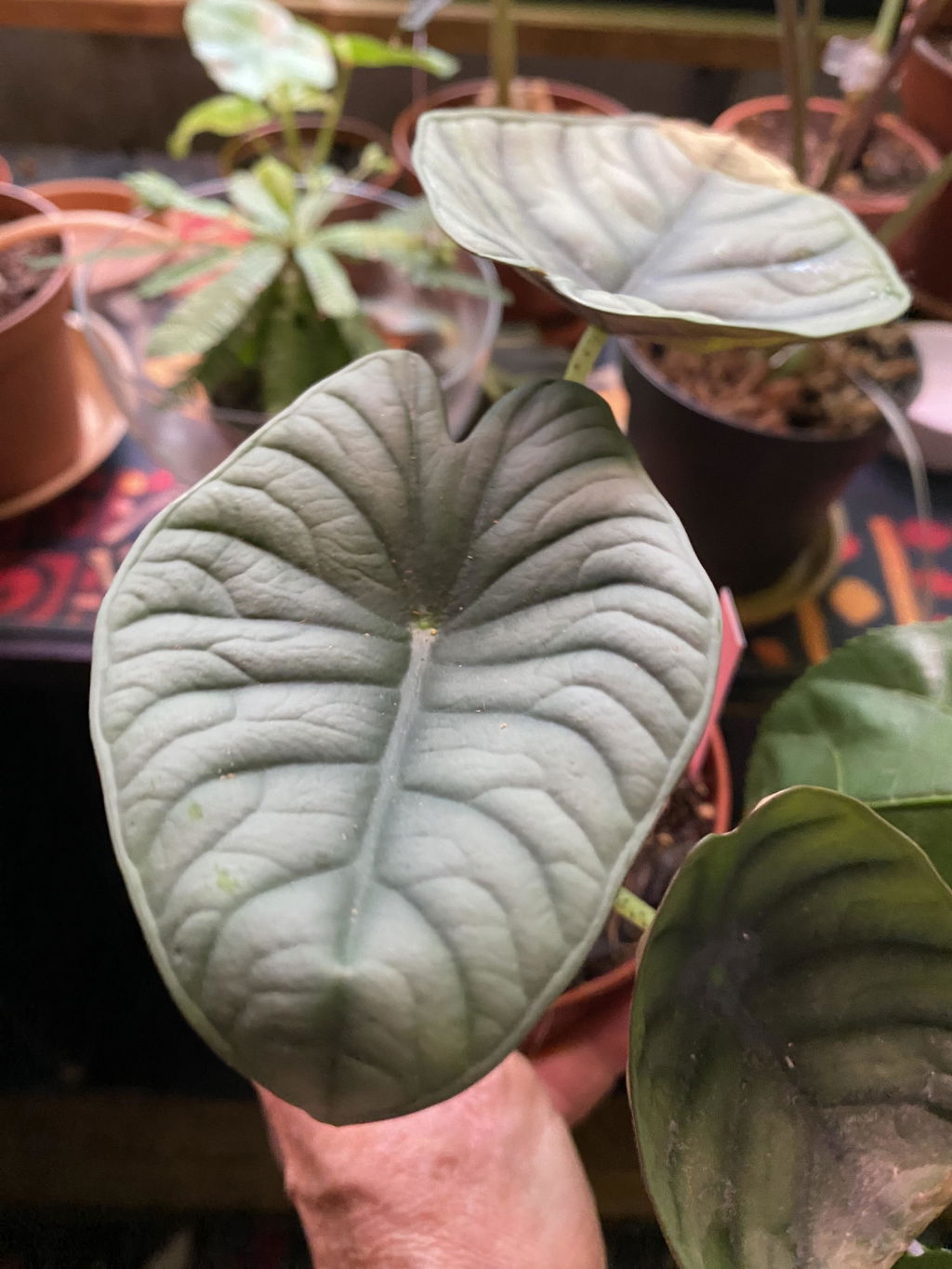
Rare bullate-leaved Alocasia from Borneo with soft variegation and reddish-purple undersides
Alocasia nebula is a spectacular and rare species from Borneo, described by botanist Alistair Hay in 2000. It is considered one of the most beautiful species in the entire Alocasia genus and belongs to a small group of three extraordinarily beautiful, small, hard-leaved, and closely related Bornean species, along with Alocasia melo and Alocasia reginula ('Black Velvet').

This is a small plant that grows to about 20 to 30 centimeters in height with about 6 leaves in total. They are strongly leathery with a characteristic bullate (bubbly, raised) texture between the veins. The upper side of the leaves is matte grayish-green, darker around the veins, while the underside is dark reddish-purple. The petioles are matte green with small deep purple dots.
The species epithet "nebula" means vapor, mist, or smoke and refers both to the plant's origin, shrouded in uncertainty, and to the soft variegation pattern on the leaves.
Botanical description
Alocasia nebula differs from the closely related Alocasia scabriuscula by its significantly smaller leaves, which are thinner in texture but still strongly leathery, bullate, with a clear marginal nerve and a large number of veins arranged in a distinct clustered pattern in the lower part of the leaf.
Although its exact origin is uncertain, the species is believed to come from limestone at Semenggoh near Kuching in Sarawak. Peter Boyce, Josef Bogner, and Alistair Hay all observed it growing there in the mid-1990s. Alocasia nebula is still unknown in the wild. Like several other rare Bornean Alocasias, it reached the international market and was cultivated through tissue culture before it formally received its scientific name.
Care
Alocasia nebula is a tropical lowland plant that requires similarly warm temperatures. It thrives best with very high humidity and needs shade to prevent the leaves from fading or burning in the sun.
Use an open, airy soil mix with a large proportion of organic matter and coarse sand or perlite. The plant benefits from plenty of space for its roots. As a limestone species, it responds well to the addition of coarsely crushed dolomite. Ideal temperature 20-28 degrees Celsius with high humidity (60-70% or more).
Well-grown plants often produce small tubers (cormels) on slender stolons at or below the soil surface. These often have a prolonged dormancy period but can be used to keep the plants alive, as adult plants are prone to sudden collapse, especially if the roots become too cool or rot. Buy Alocasia nebula online!
Shipping Policy
Shipping Policy
When buying live plants, transport can sometimes affect the condition of the plant. We strive to ensure that all plants arrive in good health, but minor shipping damage, such as a torn leaf or bent stem, is sometimes unavoidable. Read more about our policy here.



Join the customer club
Earn points on purchases and through special actions. Spend your points on rewards including gift products & discounts
Learn more about your plants!
View all-

How to repot houseplants - Step by step
Repotting houseplants is the key to keeping your indoor plants healthy and happy. It's all about the right soil, the right size pot and a little patience. In our guide...
How to repot houseplants - Step by step
Repotting houseplants is the key to keeping your indoor plants healthy and happy. It's all about the right soil, the right size pot and a little patience. In our guide...
-
Indoor Climbing Plants | Complete Guide to Clim...
Indoor climbing plants bring life and movement to your home. They can hang freely from hanging baskets or climb up trellises. These green plants quickly transform windows and corners into...
Indoor Climbing Plants | Complete Guide to Clim...
Indoor climbing plants bring life and movement to your home. They can hang freely from hanging baskets or climb up trellises. These green plants quickly transform windows and corners into...
-

Propagate your Houseplants | Tips from the Expert
Is there anything more satisfying than watching a new plant grow from a cutting you made yourself? Plant propagation involves creating new plants from parts of your existing plants. It's...
Propagate your Houseplants | Tips from the Expert
Is there anything more satisfying than watching a new plant grow from a cutting you made yourself? Plant propagation involves creating new plants from parts of your existing plants. It's...

