


Agave victoriae-reginae
Agave victoriae-reginae
Couldn't load pickup availability


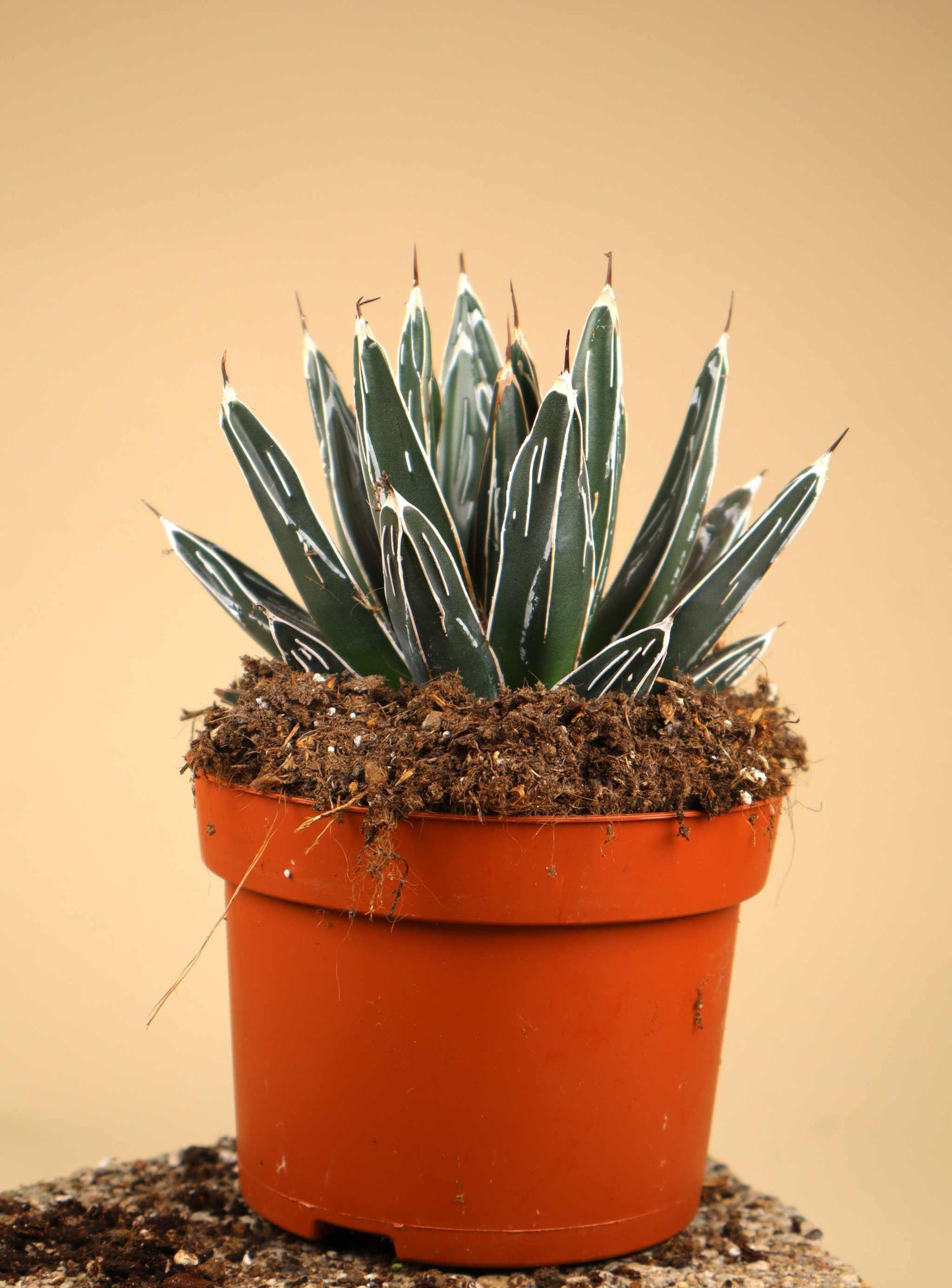
A compact succulent that is considered one of the most beautiful and elegant agave species.
This small-growing species forms dense rosettes of short, stiff, thick olive-green leaves with a distinct pattern of white markings along the leaf edges. The leaves end with 1-3 black central spines.
After 20-30 years of growth, the plant produces a curved, green flower stalk that can reach an impressive 4 meters in height! The stem bears cream to yellow flowers with a purple tinge arranged in upright clusters. Like all agaves, victoriae-reginae is monocarpic, meaning it dies immediately after flowering, although new shoots may sometimes develop from the base within n the mother plant dies.
Botanical description
Agave victoriae-reginae is native to the Chihuahuan Desert in the Mexican states of Coahuila, Durango and Nuevo León. The species is named after the British Queen Victoria and is one of the most variable agave species in form, but always maintains its compact, dense character.

In its natural habitat it grows on barren, sunny mountain slopes and rock formations where it has developed its compact form and thick leaves as an adaptation to drought and intense sunlight. It is relatively cold-hardy for an agave, which makes it popular in more northern gardens where other agave species do not survive. However, not in the Swedish climate :(
In its native range, the plant has been used by indigenous people for fiber, food, and to produce alcoholic beverages. The leaves have been used to make clothing and rope, while the flower stalks, flowers, and other plant parts can be boiled, roasted, or eaten raw. A sugary liquid can be extracted from the agave and turned into honey water or pulque, a traditional fermented beverage.
Propagation is normally by seed as the plant rarely produces basal shoots, although clump-forming forms can be carefully divided.
Care
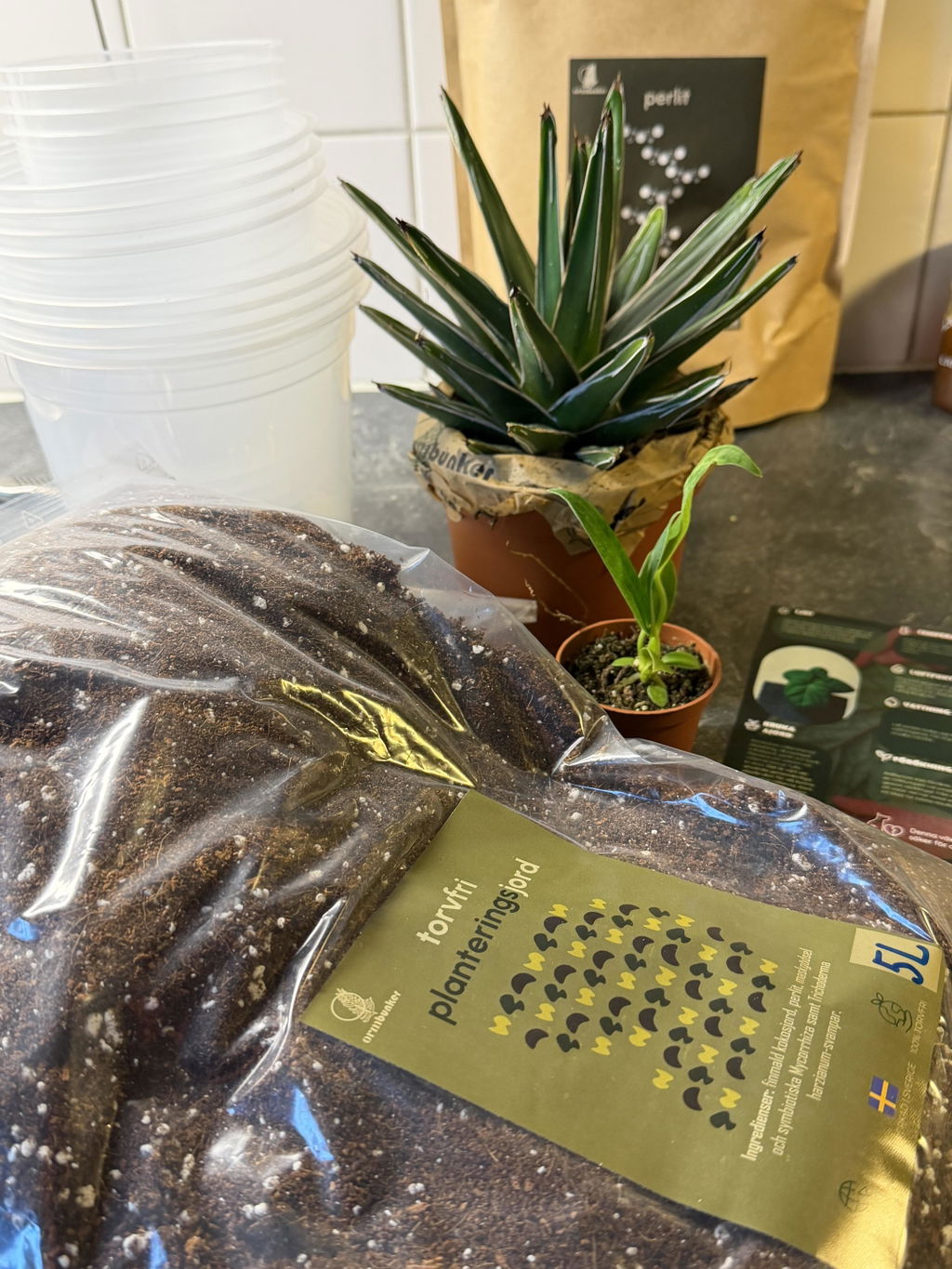
Agave victoriae-reginae is relatively easy to care for and forgiving if basic needs are met. As a houseplant, it thrives best planted in very porous, sandy soil with excellent drainage. Use cactus soil or mix regular potting soil with coarse sand and perlite in a 1:1:1 ratio.
Place the plant where it will receive direct sunlight or bright, light shade. The more light, the denser and more beautiful the rosette will be. Indoors, it thrives best in a sunny window with southern exposure.
Watering should be sparing, allowing the soil to dry out completely between waterings. During the winter, watering is greatly reduced to almost nothing. Overwatering is the most common cause of problems and can lead to root rot. The plant is extremely drought tolerant and does much better with too little than too much water.
Repotting is only needed every 2-3 years as the plant is slow growing. Choose a shallow pot with ample drainage holes, agave has superficial root systems and prefers wider than deeper pots.
Fertilization is minimal, once a month during the growing season with diluted cactus fertilizer is sufficient. Overfertilization leads to too rapid growth which destroys the compact, symmetrical shape of the plant. Buy Agave victoria-reginae online!
Shipping Policy
Shipping Policy
When buying live plants, transport can sometimes affect the condition of the plant. We strive to ensure that all plants arrive in good health, but minor shipping damage, such as a torn leaf or bent stem, is sometimes unavoidable. Read more about our policy here.



Join the customer club
Earn points on purchases and through special actions. Spend your points on rewards including gift products & discounts
Learn more about your plants!
View all-

How to repot houseplants - Step by step
Repotting houseplants is the key to keeping your indoor plants healthy and happy. It's all about the right soil, the right size pot and a little patience. In our guide...
How to repot houseplants - Step by step
Repotting houseplants is the key to keeping your indoor plants healthy and happy. It's all about the right soil, the right size pot and a little patience. In our guide...
-
Indoor Climbing Plants | Complete Guide to Clim...
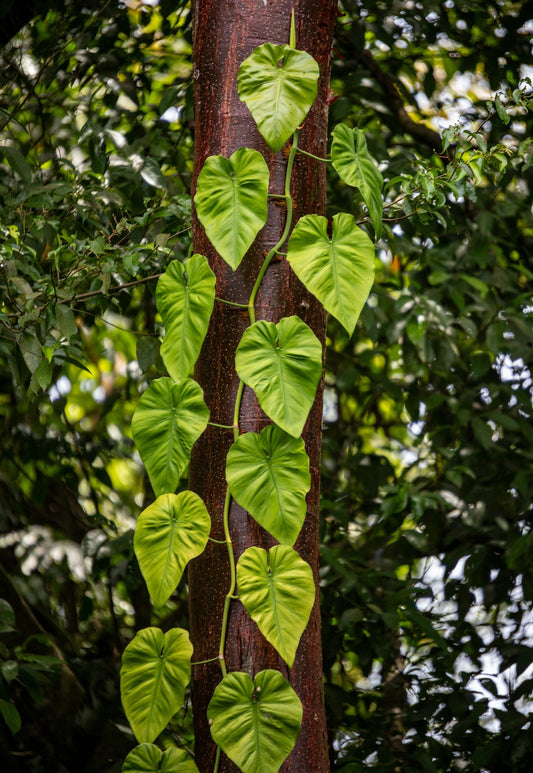
Indoor climbing plants bring life and movement to your home. They can hang freely from hanging baskets or climb up trellises. These green plants quickly transform windows and corners into...
Indoor Climbing Plants | Complete Guide to Clim...
Indoor climbing plants bring life and movement to your home. They can hang freely from hanging baskets or climb up trellises. These green plants quickly transform windows and corners into...
-

Propagate your Houseplants | Tips from the Expert
Is there anything more satisfying than watching a new plant grow from a cutting you made yourself? Plant propagation involves creating new plants from parts of your existing plants. It's...
Propagate your Houseplants | Tips from the Expert
Is there anything more satisfying than watching a new plant grow from a cutting you made yourself? Plant propagation involves creating new plants from parts of your existing plants. It's...

