


Epipremnum aureum 'Manjula'
Epipremnum aureum 'Manjula'
Couldn't load pickup availability


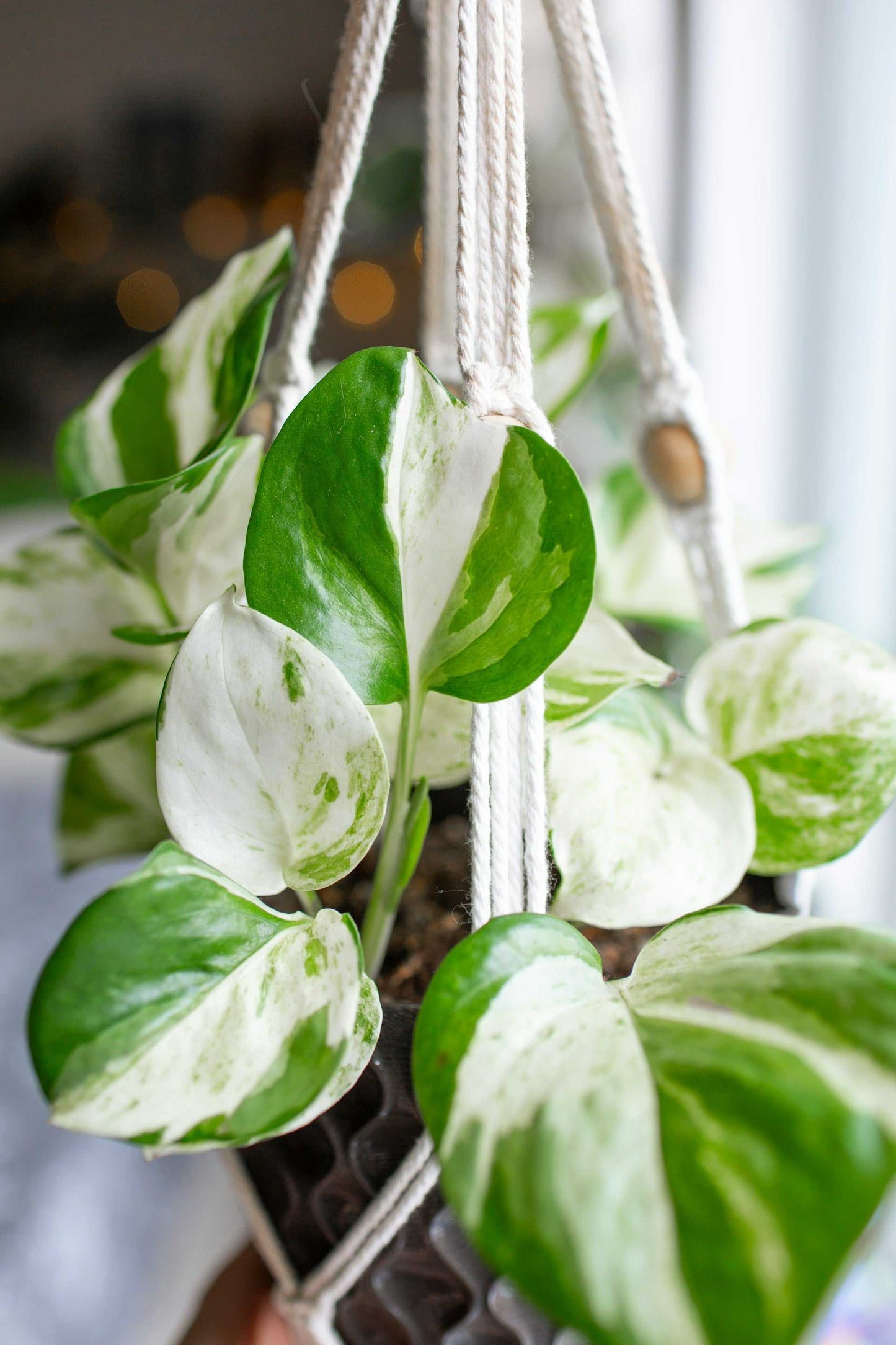
Compact golden pothos with large heart-shaped leaves in silver, white, cream and green
Epipremnum 'Manjula' is a patented variety of Epipremnum, developed by the University of Florida. It has large, heart-shaped leaves with wavy edges that tend to be larger and softer than those of other Epipremnum varieties.
Each leaf displays different pattern variations, with the green appearing from solid patches to predominantly marbled coverage. The leaves can show a combination of silver, white, cream, and light green. The foliage also tends to be denser than in other varieties, and the internodes are shorter, making the plant quite compact.
The species is hemiepiphytic; it can grow almost terrestrially over the pot and roots at each node where soil is present, making it easy to propagate. When it reaches something to climb on, it becomes more epiphytic.
Care
Thrives in bright, indirect light. With so much variegation, this plant does better in a brighter spot; it is the green parts that photosynthesize, and with less green leaf surface, the plant needs all the light it can get. Brighter conditions also encourage more variegation, while too little light results in less variegated leaves. Medium light is the minimum, but avoid direct or too harsh light which can burn the delicate leaves. The key is to find a bright spot without direct sun.
Water when the soil has dried out slightly. Requires well-drained, airy soil. Provide climbing support for larger leaves. Ideal temperature 18-26 degrees Celsius. Fertilize monthly during the growing season. Buy Epipremnum 'Manjula' online!
Shipping Policy
Shipping Policy
When buying live plants, transport can sometimes affect the condition of the plant. We strive to ensure that all plants arrive in good health, but minor shipping damage, such as a torn leaf or bent stem, is sometimes unavoidable. Read more about our policy here.



Join the customer club
Earn points on purchases and through special actions. Spend your points on rewards including gift products & discounts
Learn more about your plants!
View all-

How to repot houseplants - Step by step
Repotting houseplants is the key to keeping your indoor plants healthy and happy. It's all about the right soil, the right size pot and a little patience. In our guide...
How to repot houseplants - Step by step
Repotting houseplants is the key to keeping your indoor plants healthy and happy. It's all about the right soil, the right size pot and a little patience. In our guide...
-

Indoor Climbing Plants | Complete Guide to Clim...
Indoor climbing plants bring life and movement to your home. They can hang freely from hanging baskets or climb up trellises. These green plants quickly transform windows and corners into...
Indoor Climbing Plants | Complete Guide to Clim...
Indoor climbing plants bring life and movement to your home. They can hang freely from hanging baskets or climb up trellises. These green plants quickly transform windows and corners into...
-

Propagate your Houseplants | Tips from the Expert
Is there anything more satisfying than watching a new plant grow from a cutting you made yourself? Plant propagation involves creating new plants from parts of your existing plants. It's...
Propagate your Houseplants | Tips from the Expert
Is there anything more satisfying than watching a new plant grow from a cutting you made yourself? Plant propagation involves creating new plants from parts of your existing plants. It's...

