
Sanseveria tongue is native to South Africa, Tanzania and Congo where it grows in dry, sunny environments. The plant has developed the ability to store water in its thick leaves, making it extremely drought-tolerant.
Summary - Care Instructions in Brief
- Light: Sun to partial shade, avoid scorching midday sun
- Watering: Rarely, let the soil dry out completely between waterings
- Soil: Sandy, well-drained soil mix
- Temperature: At least 16°C, thrives at normal room temperature
- Fertilization: Every two weeks spring to autumn
- Repotting: Every 3-4 years or as needed
- Humidity: Handles dry indoor air excellently

Sanseverias long, sword-like leaves are patterned in shades of green, yellow and shimmering silver. They can grow up to 150 centimetres tall and 7 centimetres wide, making the plant an impressive addition to a plant collection.
A major benefit is that Sanseveria purifies the air by absorbing substances such as benzene, formaldehyde and trichloroethylene. It also converts carbon dioxide into oxygen at night, making it perfect for the bedroom.
Placement and Light
Sanseveria is very adaptable when it comes to light conditions. It thrives in both sun and shade, but grows best in a bright and warm location.
In a sunny window, the colors of the leaves will be stronger and more intense. The plant will also tolerate more shady places, but growth will be slower. Just avoid the very strongest, scorching midday sun, which can damage the leaves.
The temperature should ideally not fall below 16 degrees, but the plant can handle normal room temperatures just fine. During the summer, it can be left outside in a pot.

Watering: Less is More
The most important thing when it comes to Sanseveria is not to overwater. Overwatering is the only thing that can really harm this robust plant. Sanseveria is very drought tolerant!
Allow the soil to dry out completely between waterings. When the soil is completely dry, water thoroughly so that the entire root ball is wet, but then let the plant dry out again before watering again. This may mean you only need to water once a month or even less often during the winter.
The plant does well for longer periods without water, so you can safely go on vacation without worrying.
Soil and Planting
Sanseveria prefers a sandy soil mix with good drainage. Mix regular potting soil with sand or perlite to create the perfect conditions. Unlike many other plants, it does not prefer loamy soil.
Sanseveria grows quickly but thrives in cramped conditions. You only need to repot every three to four years, or when the plant becomes too heavy for the pot. Choose a pot that is about the same height as the previous one and make sure it has drainage holes.
Fertilization
Fertilize with a potting mix every two weeks during the growing season from spring to autumn. During the winter, the plant does not need any fertilization as growth is minimal.
How to propagate Sanseveria
There are several ways to propagate mother-in-law's tongue:
Dividing the plant: The easiest way. The plant forms underground shoots that can be divided and replanted.
Leaf cuttings: Cut a leaf and place it in water until roots form, then plant in soil. This method takes longer and requires high humidity.
Seeds: Least common but possible if the plant flowers and forms seeds.
Different Variants of Sanseveria
There are many different varieties of Sanseveria with varying sizes, colors, and leaf patterns:

Sansevieria trifasciata: The classic variety with green leaves and yellow edges
Sansevieria cylindrica: Unique variety with cylindrical, fan-shaped leaves
Sansevieria moonshine: Silver-green leaves without patterns
Compact variants: Mini versions that only grow to 20-30 centimeters tall
Flowering
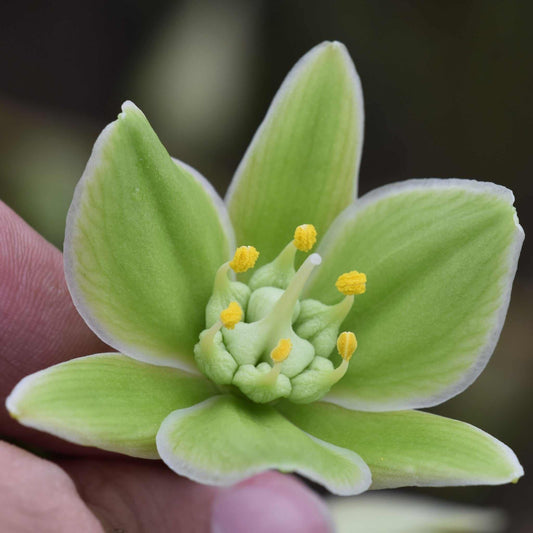
Under the right conditions, Sanseveria can bloom with white, tubular flowers that are fragrant. Flowering is relatively uncommon but more likely if the plant receives a lot of light and is somewhat stressed (a little cramped in the pot).
Pests and Diseases
Sanseveria is very rarely attacked by pests or diseases, which is one of its great advantages. The only problem that can be problematic is root rot from overwatering.
Is Sanseveria Poisonous?
The plant is not classified as seriously toxic but contains sap that can be irritating to pets. Keep the plant out of reach of dogs and cats who may chew on the leaves.
Why is it called Mother-in-law's Tongue?
The name probably comes from the sharp, pointed shape of the leaves combined with old prejudices about mothers-in-law's "sharp tongues". Internationally it is called "snake plant" or "mother-in-law's tongue".
Sanseveria in Modern Interior Design
Sanseveria has gone from being a traditional houseplant to becoming a star in modern interior design. The graphic leaves fit perfectly in minimalist homes and create an architectural element in the room.
Place it in a beautiful ceramic, concrete or metal pot to highlight its modern expression. Group several specimens in different sizes for maximum effect.
Mother-in-law's tongue is the perfect plant for those who want greenery at home without spending a lot of time on care. With minimal care, it will give you beautiful, graphic leaves and cleaner air for many years to come.