
How to care for Dieffenbachia (Dumb Cane)
There aren't many houseplants with such beautiful leaf patterns as the Dumb Cane plant. The large, oval leaves almost always have irregular spots in lighter green, yellow or even cream tones.
Dieffenbachia is named after Johann Dieffenbach, a botanist and gardener at Vienna's Schönbrunn Palace who discovered the plant in 1820. In its natural environment in the rainforest's bottom layer, it can grow over 2 meters tall, but even as a potted plant at home, it quickly fills large spaces.

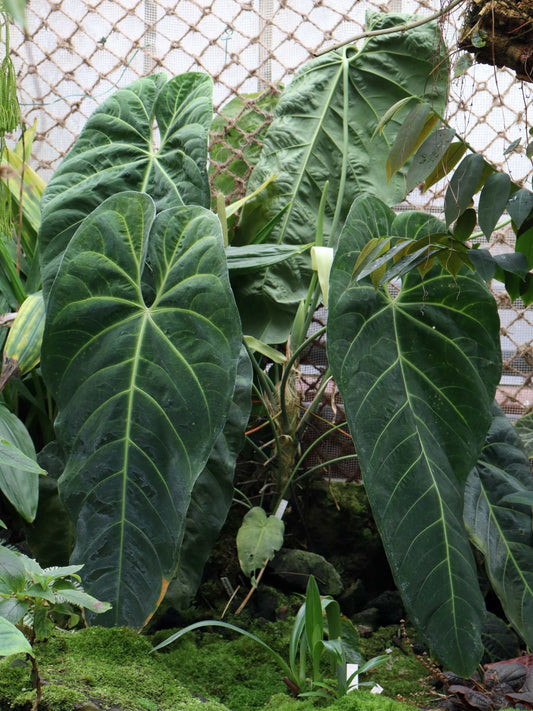
A large Dieffenbachia seguine in a garden in Valle de Ánton, Panama.
Appearance and characteristics
Dieffenbachia are characterized by their strong and decoratively patterned leaves, often with shades of green and white. The leaves are arranged in dense spiral formations at the top of the stem.
The patterns on the leaves develop best in bright conditions. The more white or yellow there is in the leaves, the brighter the plant should be to compensate for the absence of chlorophyll and maintain its beautiful contrasts.
The leaves gradually die from below along the stem, giving older plants a tree-like appearance with a trunk. This actually creates quite a dramatic effect as the plant grows larger.
Older plants may flower with a white-yellow cob surrounded by a green-yellow leaf, which reveals that Dieffenbachia belongs to aroids. After flowering, the main shoot dies, but new root shoots come next to the mother plant and take over.
Popular varieties of Dieffenbachia
There are many different varieties with varying patterns. Most are spontaneous mutations, genetic changes that have occurred during plant breeding.
'Compacta' A low variety that stays compact and looks good planted together with taller varieties. Easy to propagate with cuttings.
'Tropic Snow' has beautiful white marbling that almost shines.
'Camilla' Characterized by large white areas on the leaves.
Is Dieffenbachia poisonous?
Yes, unfortunately, Dieffenbachia is poisonous to both pets and humans. It is important to remember not to taste the plant. Dieffenbachia contains crystalline, needle-like structures that are released when the cell walls are damaged.
The plant sap can irritate the skin. According to the Swedish Poison Information Centre, there have been no serious accidents in Sweden, but it is still important to be careful.
Wear dish gloves when handling the plant such as pruning or when taking cuttings. Small children and pets should be kept away from Dieffenbachia plants. Wash hands thoroughly after handling.
10 Tips for Succeeding with Dieffenbachia
1. Bright but not direct sun
Dieffenbachia prefer bright, indirect light or partial shade. Direct sunlight can burn the leaves and cause them to turn yellow. A location near an east or north facing window is ideal.
2. Dieffenbachia tolerates shade well
The Dieffenbachia is one of the most dark-tolerant houseplants and can handle lower light levels well. However, the leaves will be smaller, growth will be inhibited, and the beautiful leaf patterns will not be as striking. If placed in a dark location a little further into the room, plant lighting can be used.
3. Rotate regularly
Rotate your Dieffenbachia regularly. This ensures that all the leaves receive equal amounts of light and that your plant takes on a more beautiful shape. Like many other plants, Dieffenbachia tend to lean towards the light.
4. Let the soil dry slightly between waterings
Let the soil dry out slightly between waterings. Overwatering can lead to root rot, so wait until the soil has dried out a bit before watering again. Dieffenbachias doesn't like to dry out too much, so the soil shouldn't be completely dry either.
5. Avoid temperature fluctuations
Keep the temperature around the plant consistent and avoid placing it near cold drafts or radiators. Room temperature, 21 to 25 degrees, is optimal. Dieffenbachia cannot tolerate temperatures below 15 degrees.
6. Keep the humidity high
Dieffenbachia prefers a humid environment, so consider using a humidifier or placing a tray of water near the plant. Dieffenbachia thrives in high humidity, so feel free to mist the foliage during the dry winter months.
7. Keep an eye on pests
Common pests such as spider mites and mealybugs can damage the leaves, so look for signs of infestation. Spider mites are the most common pest and live mostly on the underside of the leaves. At Ormbunker, we have natural solutions with beneficial insects that work perfectly.
8. Fertilize regularly
Dieffenbachia can grow quickly if you give them enough of the nutrients they need. Use a liquid plant food every 2 to 4 weeks during the growing season. Feed with potting soil weekly during the summer months and once a month during the winter months.
9. Provide support if necessary
Dieffenbachia can become top-stumping, so consider using a trellis or stake to support the plant as it grows. As it gets larger, the stem often needs a little extra help.
10. Prune regularly
Trim your Dieffenbachia regularly to promote bushier growth and remove yellow or damaged leaves. The leaves will gradually wilt from the bottom and the stem will eventually become bare underneath.

Placement and Light
Dieffenbachia loves indirect bright light, so a spot near an east or north-facing window is ideal. Since they grow in the lower tier of tropical rainforests, they do not tolerate direct sunlight. The prickly pear certainly survives and can even thrive if it gets some morning or evening sun. However, when it is near a sunny south-facing window, use curtains to filter the direct sunlight.
The Dieffenbachia is also known to tolerate shadier conditions, making it one of the most dark-tolerant houseplants. It may not grow as fast, and its leaves may not be as vibrant and large, but it will survive. However, in too-dark situations it can become lanky. If the room is particularly dark, consider adding some grow lights.
The more light spots the plant has, the more light it needs to compensate for less chlorophyll in the leaves. The beautiful leaves look especially nice in backlighting.
How to water Dieffenbachia?
When watering Dieffenbachia, it is important to find a balance between keeping the soil moist and avoiding overwatering. It is prone to root rot if the soil is too wet for a long time. The best time to water is when the top layer of soil is dry to the touch or when the entire soil has dried slightly.
To determine if it's time to water, stick your finger in the soil to check the moisture or use transparent pots as condensation forms on the inside.
Tip: Use room temperature water when watering your Dieffenbachia. Cold water can shock the roots, so it's best to use water that is at a comfortable temperature.
If you are unsure whether it is the right time to water, remember that dry soil is better than wet soil. Your Dieffenbachia will forgive you when you forget to water it. However, if you forget it for too long, the leaves will start to turn yellow (usually the lower and older leaves).
Nutrition for Dieffenbachia
Dieffenbachia benefits from regular fertilization, especially if it is a younger or fast-growing plant in bright light. It will eventually use up all the nutrients it needs from the soil. However, prickly pear can do with minimal nutrients, growing slowly but still maintaining a desirable shape.
As a general guideline, use liquid plant food every 4 to 6 weeks. If the plants are growing in low light, they can be fertilized less often.
It is not necessary to fertilize during the winter months, but if you see your Dieffenbachia growing and new growth coming, you can fertilize a little (dilute it 50 percent, for example). The exception is if you are growing prickly pears with grow lights, then you can fertilize at the same rate year-round. Remember that they are quite sensitive to overfertilization.
Dieffenbachia respond very positively to foliar fertilization. Spraying with foliar nutrition provides both moisture and nutrition in one go.
Temperature and Humidity

Dieffenbachia grows best in temperatures between 18 and 29 degrees, so keeping them in a room with average room temperature is ideal. They do not like sudden changes in temperature. This can disrupt their metabolic and growth processes, leading to stress and potential damage. So keep them away from open windows/doors and radiators.
Dieffenbachia are quite tolerant and can handle lower temperatures for a short period, with a minimum of around 10 degrees. However, temperatures lower than that can cause some damage to the plant.
Dieffenbachia thrives in humid environments with an optimal humidity of between 60 and 70 percent. Although it can handle humidity as low as 40 percent, it may begin to show signs of stress, such as brown leaf edges or wilted leaves. A relatively humid environment results in vigorous growth, as the large leaves can dry out in a warm room.
To increase the humidity around the plant, mist it regularly, place a humidifier near it, or place it on a tray with a watering mat that is kept moist. Additionally, grouping plants together helps them maintain higher humidity.
Soil and Transplanting
Dieffenbachia thrives best in airy, well-drained potting soil. A mixture of sphagnum moss, perlite, and orchid bark is a good option. Avoid compact soil that doesn't drain well. The soil should be slightly acidic, with a pH between 6.0 and 6.5.
Dieffenbachia plants of course need to be repotted, a sign that a prickly leaf needs to be repotted is when the soil dries out too quickly. Then the plant and roots are often a bit too big for the pot they are in.
The frequency of repotting depends on the size of the plant, the size of the pot, and the growth rate. As a general rule of thumb, it's a good idea to repot your Dieffenbachia every 2 years or when you notice the roots have filled the pot and are growing through the drainage holes. Use clear pots to make it easier to monitor the roots.
Small Dieffenbachias grow quickly and need new soil and a larger pot almost every spring. Older plants are replanted every few years. Top-dress each spring by replacing the top layer of soil with new, nutrient-rich soil, preferably with a little worm castings.
Pruning Dieffenbachia
The leaves gradually wither from below and the stem eventually becomes bare underneath. For a bushier appearance, you can plant cuttings next to the mother plant, or plant several small cuttings together.
Take top shoots in spring by cutting off a shoot with 2 to 3 leaves just above a leaf. Plant directly next to the mother plant which can give a fuller appearance.
You can cut back your Dieffenbachia severely if it has grown too long and has become leafless at the bottom. Cut stems can be treated as stem cuttings. The cut stem end left in the pot will also grow new healthy leaves if you continue to water it and give it enough light.
Additionally, you can cut off any yellowed and damaged leaves. It is recommended to wear gloves when pruning as the plant's sap is poisonous.

Propagating Dieffenbachia
Dieffenbachia are easy to propagate, although they may take a little longer to root. You can propagate them when your plant has grown too tall or lanky, or just for the joy of having more plants. A friendly reminder: when propagating, it is best to wear gloves as the plant's sap is poisonous.
Dieffenbachia is most easily propagated with stem cuttings.
Step by Step: Take stem cuttings
- Choose a healthy stem that is at least 8 cm long and has at least 2 to 3 leaves.
- Make a clean cut just below a leaf node (the point where leaves grow from the stem).
- If you have any leaves left at the bottom of the cutting, remove them.
- Dip the lower end of the stem cutting in rooting powder to encourage root growth (Optional).
- Plant the stem cutting in well-drained soil.
- Water your cutting well and place it in a warm, bright spot. Keep it out of direct sunlight.
- Keep the soil evenly moist and shower the leaves regularly to increase humidity.
Alternatively, you can first root your cutting in a glass of water so you can see when it forms new roots. When doing this, remember to change or add some fresh water regularly. Once roots have developed, repot into soil.
You can also take care of root shoots that eventually grow close to the mother plant. When the spikelet flowers, the main shoot dies and the plant survives with the root shoots next to the mother plant. These are easily separated from the mother plant by twisting them off with the roots from the base. Note that you often need to dig down a bit because they often grow at the lower parts of the rhizome.
Common Pests on Dieffenbachia
The classic pests that affect most houseplants can also affect your Dieffenbachia: Particularly common are thrips, mealybugs, spider mites and aphids.
Spider mites: The most common pest on Dieffenbachias. Spider mites live mostly on the underside of the leaves. The leaves suddenly look dusty. It is best to work preventively. Wash the leaves regularly with a damp cloth and treat preventively with predatory mites from Ormbunker.
Mealybugs: Small white fluffy insects. Treat with alcohol on a cotton ball and remove the small white bugs by hand. If it is too much to handle, use beneficial insects, such as ladybugs.
Aphids: Small green or black insects. Shower off or use insecticidal soap.
Thrips: Small black, elongated insects, especially on the underside of leaves. They leave behind white/silvery streaks which are thrips damage. These pests are among the most difficult to get rid of and the most effective on the market right now is beneficial insects . Even with them, you can expect it to take many weeks and sometimes several treatments to get rid of thrips.
Common Problems and Diseases
Root and stem base rot: Caused by the fungus Fusarium. The oldest leaves turn yellow and wilt. Down at the base of the stem you see diseased, soft areas and the stem then bends. Unfortunately there is no cure, the plant and soil must be thrown away.
Dieffenbachia bacteriosis: Caused by the bacterium Erwinia chrysanthemi . Plants suffer from matted, yellowing leaves and drooping shoots. Down at the base of the stem, a gray, dark and wet rot is visible. Unfortunately, there is no cure, and the plant and soil must be thrown away.
Leaf spot disease: Caused by the fungus Colletotrichum gloeosporioides . The leaves develop dry, brown spots. Dark dots are visible in the spots, which are the spore bodies of the fungus. Cut off the affected leaves and throw them in the trash.
Frequently asked questions about Dieffenbachia
Why is my Dieffenbachia getting yellow leaves?
A common cause is overwatering , as the roots of the plant can rot and become unable to properly absorb water or nutrients. Underwatering can also cause the same. Usually when this happens, older leaves turn yellow.
Another possible cause is a lack of proper lighting, as Dieffenbachia prefers bright, indirect light. If the plant doesn't get enough light, it will struggle to provide energy and the leaves may turn yellow as a result.
Yellow leaves can also be caused by a nitrogen deficiency. Young plants in particular grow a lot, which requires a lot of nitrogen. Feed potted plants regularly.
Additionally, pests or diseases can also cause yellowing leaves. It is important to inspect your plant carefully and address any problems as soon as possible to ensure the health of your Dieffenbachia.
Why is my Dieffenbachia losing leaves?
If your Dieffenbachia starts to shed leaves excessively, it could be a sign of stress due to improper care or a change in environment. Temperature changes or insufficient light are the most common causes. Overwatering or underwatering can also cause leaf drop.
Why does my Dieffenbachia have brown leaf edges?
Brown leaf edges are often caused by environmental stress such as lack of humidity, underwatering, or high temperatures (too sunny a location). When this happens, the plant loses water, and the cells on the edges of the leaves can be damaged, causing them to turn brown.
Dry spots are common on white-spotted varieties during winter. This is due to a lack of light, as these varieties have less chlorophyll. Move to a brighter location or install grow lights.
Is my Dieffenbachia crying?
Don't worry, your Dieffenbachia isn't crying! It's just releasing drops of water from its leaves, which is a natural process called guttation. This is often seen in the morning, on the tips or edges of the leaves, and is caused by water movement from the roots to the leaves.
How should you water the Dieffenbachia?
It is generally recommended to bottom water Dieffenbachia plants. This means that instead of watering the plant from the top, you would place the pot in a tray of water and let the roots soak up the water from the bottom. This method can be beneficial for Dieffenbachia plants because it helps prevent water from sitting on the leaves and causing rot or mold.
Final words
This naturally variegated houseplant is a stunning houseplant with beautiful leaf patterns and relatively easy care. It is one of the most dark-tolerant houseplants and is perfect for homes with less light.

The Dieffenbachia quickly becomes a large tree with its large leaves and can grow quite large in the right conditions. The different varieties with almost luminous patterns are a real eye-catcher in the home. Although it loses leaves at the bottom with age, it acquires a beautiful tree-like appearance that many people appreciate.
We at Ormbunker love Dieffenbachia for their tolerance and beautiful leaves, and are happy to help if you have any questions about how to make your plant thrive!