


Kalanchoe beharensis | Felt bush
Kalanchoe beharensis | Felt bush
Couldn't load pickup availability


Sleek succulent from Madagascar reaching 1-2 meters in height
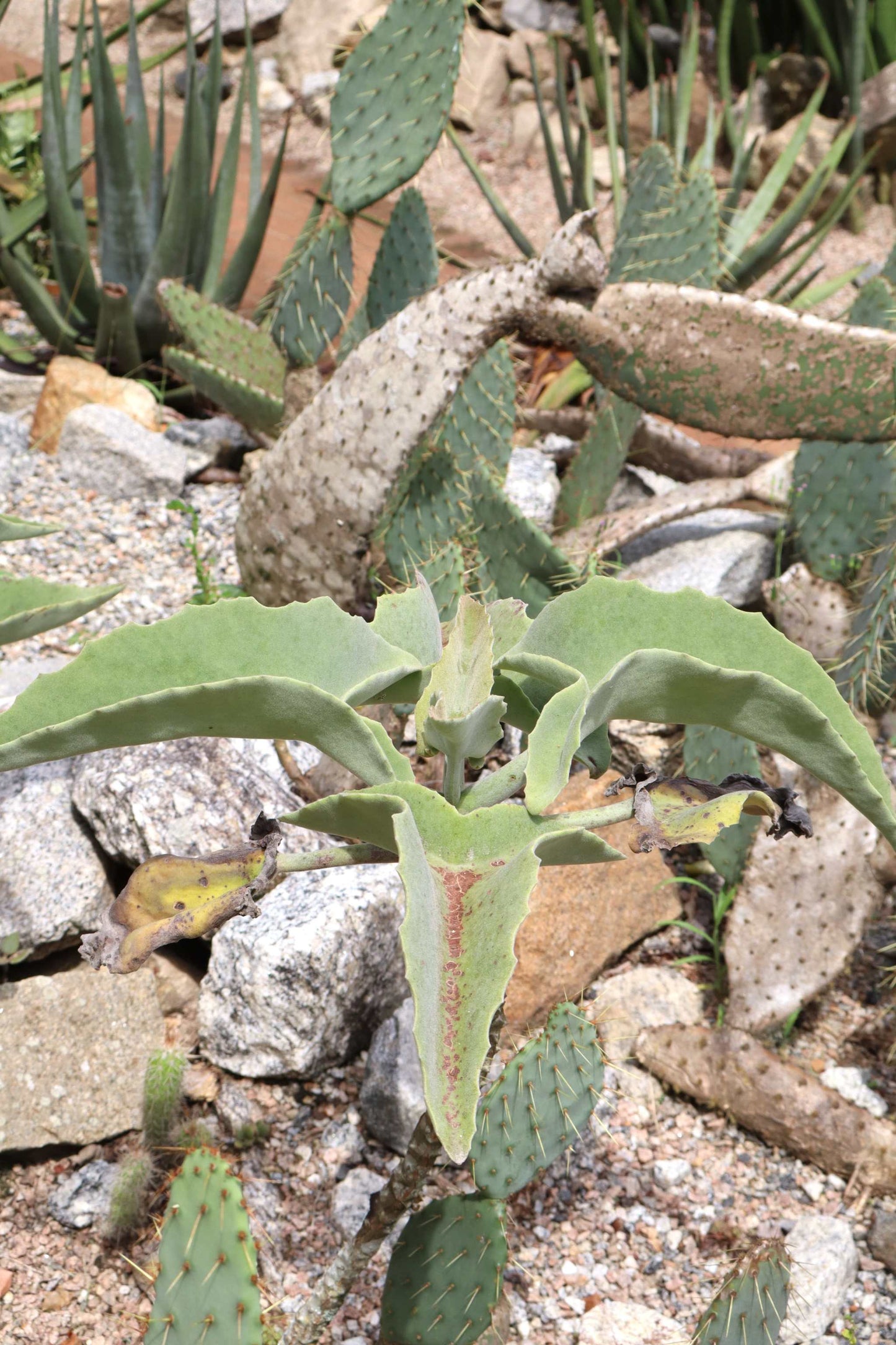
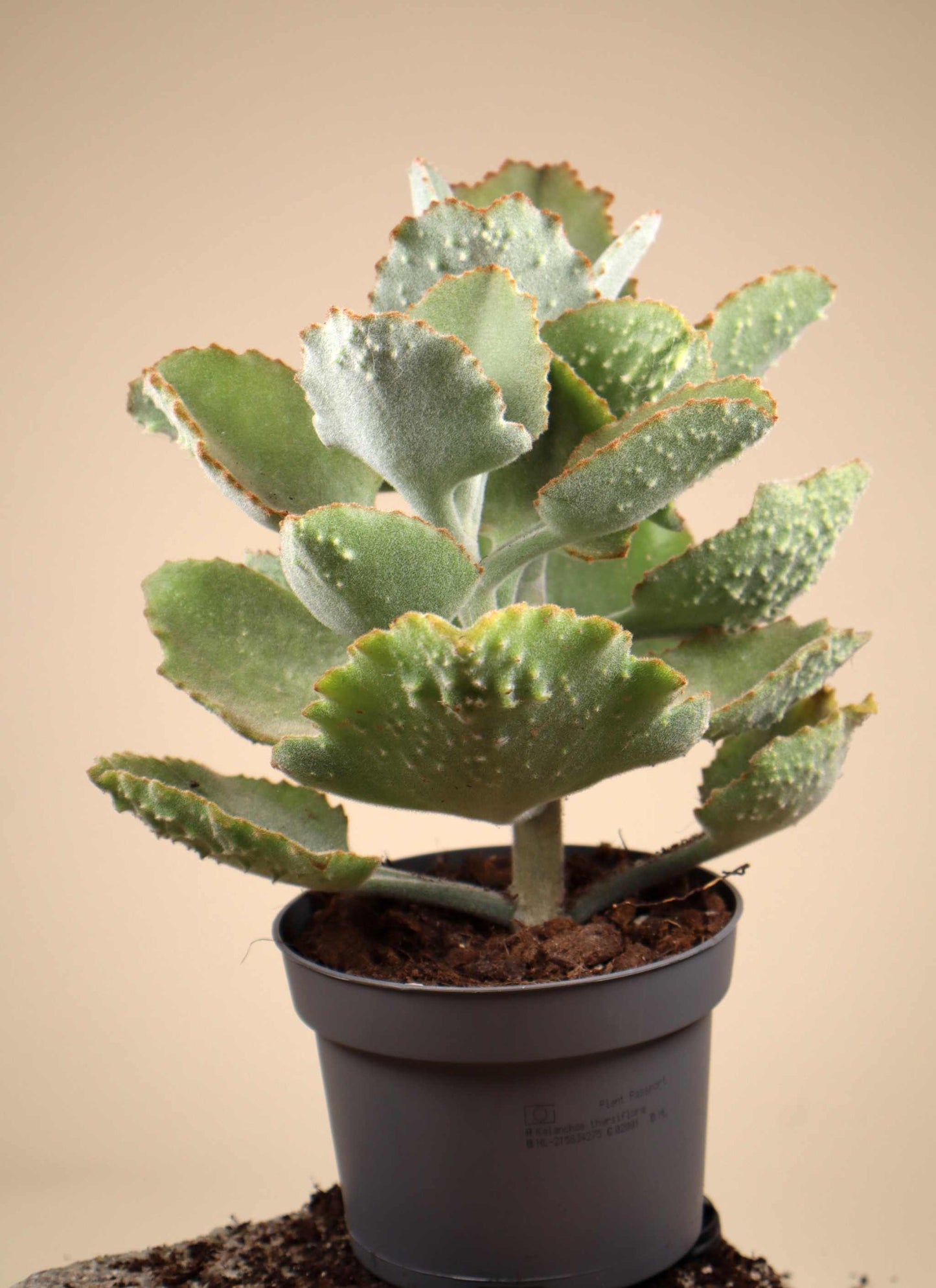
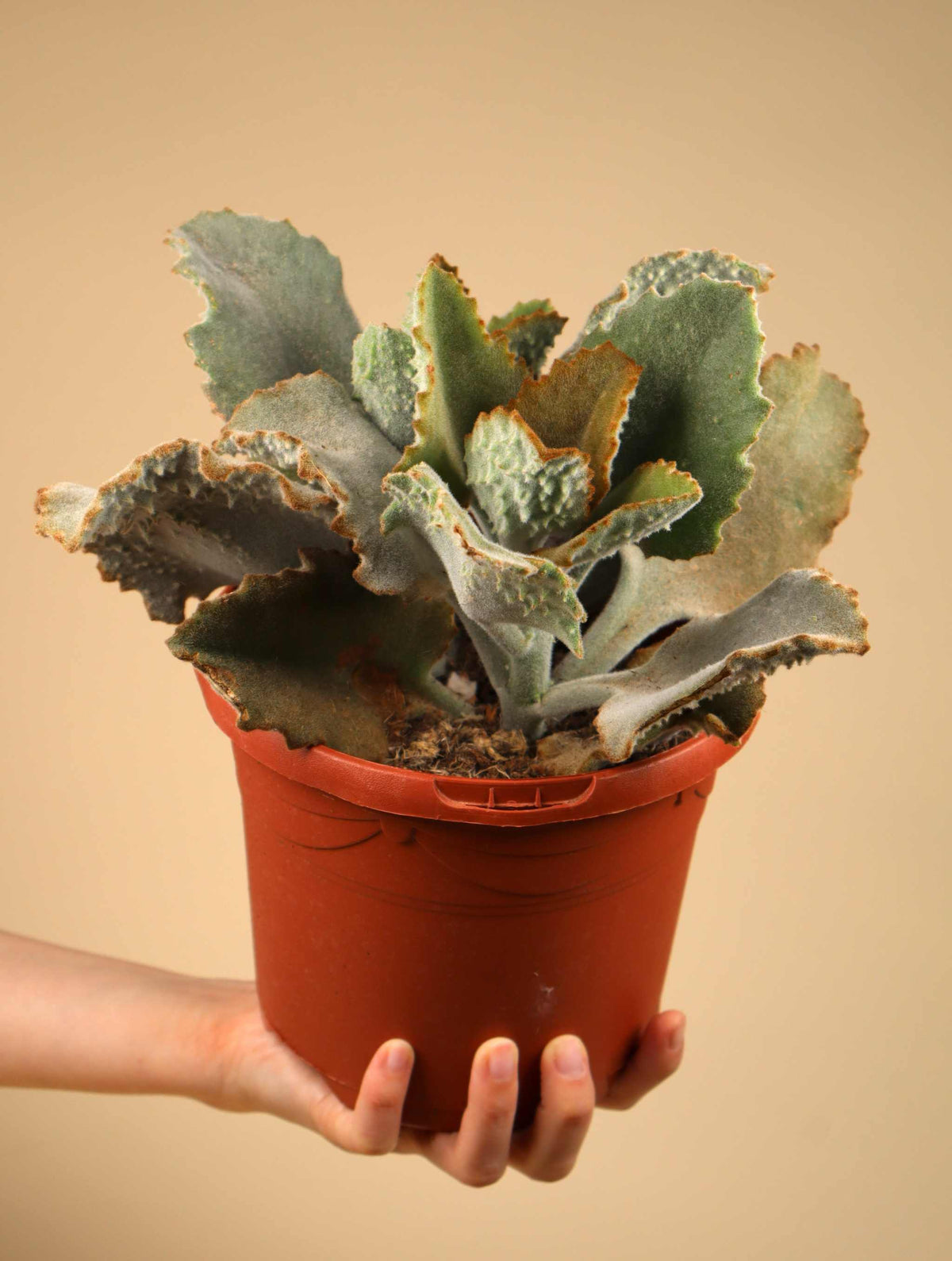
This species is known for its large, olive-green, triangular leaves, about 10 centimeters long and 5-10 centimeters wide, with doubly scalloped leaf margins that give the plant a minimalist appearance.
The undersides of the leaves are smooth and glossy, while the upper side is covered with brownish, woolly hairs towards the leaf tip. The leaves are arranged in opposite pairs, perpendicular to each other (decussate), which makes the shrub appear very symmetrical.
Flowering occurs from spring to summer with small, yellowish flowers. The plant can also reproduce asexually by producing small plantlets along the leaf margins.
Botanical description
Kalanchoe beharensis was originally discovered near Behara in Madagascar but is now recognized as widespread in southern Madagascar. The specific epithet "beharensis" refers to its occurrence near Behara. Locally, the plant is known as mongy, rongy, and tavitavy.

The name Kalanchoe was first described by the French botanist Michel Adanson in 1763 and was an adaptation of a name for a plant in the genus from a Chinese dialect, probably Hokkien, spoken by expatriate Chinese in the Philippines in the late 17th century. The name came to Adanson's attention through Georg Joseph Kamel, a Czech botanist and Jesuit missionary who called the plant "kalanchauhuy" - where 'ka-lan' is a Buddhist term for physical temple gardens and 'huy' means flower.
Kalanchoe beharensis employs a defense system called stress-limited defense, which deters herbivores before high stress levels occur. The plant has amorphous silica in its defense structures with a hardness greater than that of insect and mammal enamel.
Care
Kalanchoe beharensis thrives in full to partial sun with intermediate to warm temperatures above 5°C. It survives occasional light to moderate frost nights but prefers to avoid frost entirely. For greenhouse cultivation, mix equal parts clay and sand with extra perlite, pumice, or other stable material for aeration and drainage.
Allow the soil to dry completely before re-watering; too much water will kill the plant. Water approximately every 10-14 days during the growing season and very sparingly in winter, possibly only once a month. The species is very hardy and survives periods of neglect if protected from strong sun for extended periods.
Propagation occurs by seed but most effectively by cuttings. Any stem, petiole, or leaf cutting will work; the entire plant easily forms new roots when divided. Grow cuttings in sandy, loose substrate away from direct sun but with ample light shade. Dried sphagnum moss is also suitable. Leaf propagation is particularly valuable as the leaves not only form roots at the base but also new plantlets directly from the leaf surface, often randomly. Buy Kalanchoe beharensis online!
Warning: Naturally toxic to humans and cats and can irritate exposed skin. Not reported as toxic to dogs unless the plant has been treated with chemicals.
Shipping Policy
Shipping Policy
When buying live plants, transport can sometimes affect the condition of the plant. We strive to ensure that all plants arrive in good health, but minor shipping damage, such as a torn leaf or bent stem, is sometimes unavoidable. Read more about our policy here.



Join the customer club
Earn points on purchases and through special actions. Spend your points on rewards including gift products & discounts
Learn more about your plants!
View all-

How to repot houseplants - Step by step
Repotting houseplants is the key to keeping your indoor plants healthy and happy. It's all about the right soil, the right size pot and a little patience. In our guide...
How to repot houseplants - Step by step
Repotting houseplants is the key to keeping your indoor plants healthy and happy. It's all about the right soil, the right size pot and a little patience. In our guide...
-
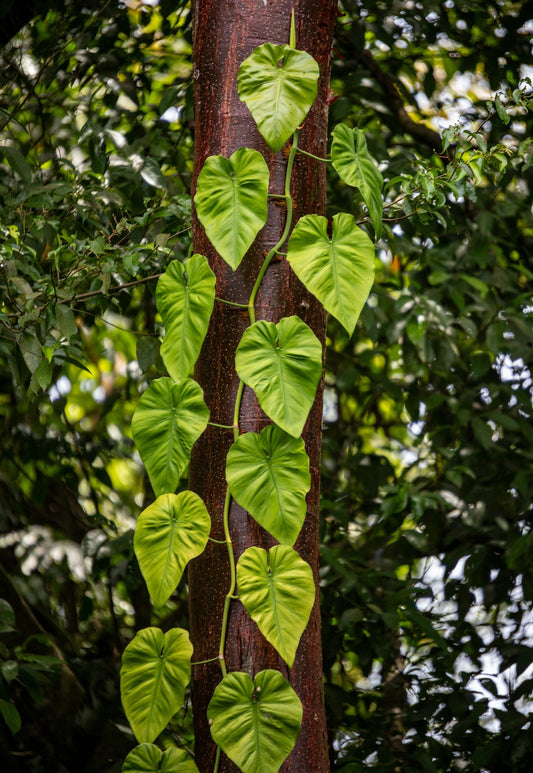
Indoor Climbing Plants | Complete Guide to Clim...
Indoor climbing plants bring life and movement to your home. They can hang freely from hanging baskets or climb up trellises. These green plants quickly transform windows and corners into...
Indoor Climbing Plants | Complete Guide to Clim...
Indoor climbing plants bring life and movement to your home. They can hang freely from hanging baskets or climb up trellises. These green plants quickly transform windows and corners into...
-

Propagate your Houseplants | Tips from the Expert
Is there anything more satisfying than watching a new plant grow from a cutting you made yourself? Plant propagation involves creating new plants from parts of your existing plants. It's...
Propagate your Houseplants | Tips from the Expert
Is there anything more satisfying than watching a new plant grow from a cutting you made yourself? Plant propagation involves creating new plants from parts of your existing plants. It's...

