
The Alocasia genus is originally from Asia. The species sometimes differ greatly, while some look almost identical. Since the Alocasia genus spans an entire continent, care often differs significantly depending on which variety you have at home and where it belongs.
With the right care, almost all Alocasia varieties can become really nice ornamental plants at home.
Alocasia has earned a reputation as something of a diva among indoor plants, but don't worry. Here we'll walk you through how to avoid the drama and instead enjoy this unique houseplant.

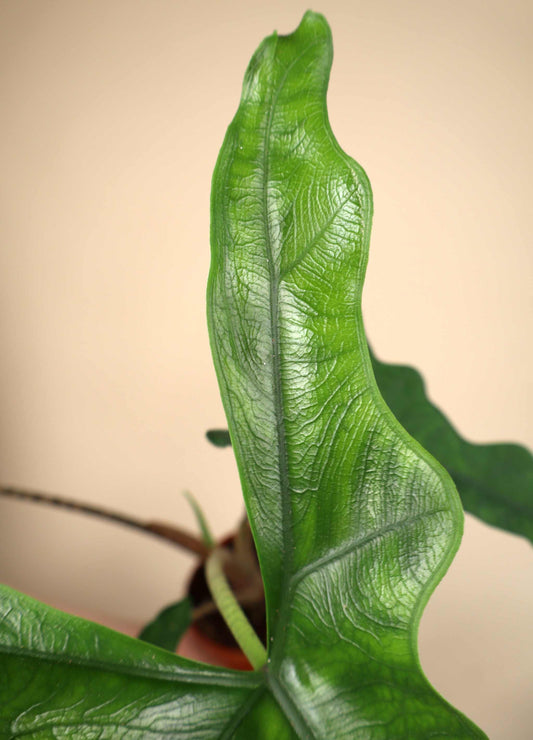
Alocasia baginda 'dragon scale' is from the Borneo rainforest and has leaves that resemble dragon scales.
So how do you best care for Elephant ears?
1. Location & temperature
Elephant ears thrives best in a warm, humid environment. Lowland species require warmer, more even temperatures and higher humidity (our product descriptions often state the altitude the species comes from). Mountain species often tolerate cooler and more extreme temperature changes.
As a rule of thumb, no Alocasia should be kept colder than 20 degrees Celsius, and only some species thrive above 30 degrees Celsius. Normal room temperature is usually fine, as long as the plant is not in a draft or right above a radiator.
TIP! If you think your Elephant ears don't seem to be thriving after all, you can buy a mini greenhouse that you can place the plants inside. Just make sure it's not too sunny or it will become a sauna!

This rare 'Alocasia dragon scale variegata' combines the classic dragon scale-like leaves with stunning albo-variegated, striking white and green areas that make each leaf unique.
2. How much light does Alocasia need?
Place the plant in indirect light. Elephant ears can often handle darker conditions, but to grow well it still needs a bright spot, especially in winter. It is strongly recommended to use additional plant lighting for Alocasia. A few hours of sunlight won't hurt either, just make sure it's morning or evening sun.
3. How often should you water an Alocasia?
Alocasia is very sensitive to both overwatering and drought, the goal is to keep the soil slightly moist at all times. To achieve this without causing root rot, an airy and well-drained soil is needed.
Plants purchased online are often grown with bottom watering. This means that almost all the roots are at the bottom of the pot and it is best to continue watering from the bottom. The soil these plants are in is also perfect for watering in hot greenhouses, as it holds water very well. Indoors, this sometimes leads to the soil staying wet for too long, which can lead to root rot.
In these cases, the plant should be replanted in a new substrate, which we will discuss below.
4. What soil is best for Elephant ears?
Alocasia is sensitive to repotting and it is not uncommon for it to lose leaves or for the leaves to hang for several days after repotting.
We recommend that you stick to one type of growing medium/soil, i.e. if you grow in sphagnum/pumice/regular soil, you should also replant in the same growing medium. This is because the roots get used to the soil type and changing it risks root rot.
There is no 'best soil' for all Alocasias, it depends a lot on what you feel comfortable growing in. Many people have very good results by growing Elephant ears semi-hydroponically, i.e. in only pumice or perlite. Others swear by growing Alocasia entirely in moss.
We find that Elephant ears thrives very well in a mixture of sphagnum moss with perlite or our own peat-free potting soil Aroid & Orchid Soil. Both of these growing media allow you to keep the roots moist almost all the time, without rotting.

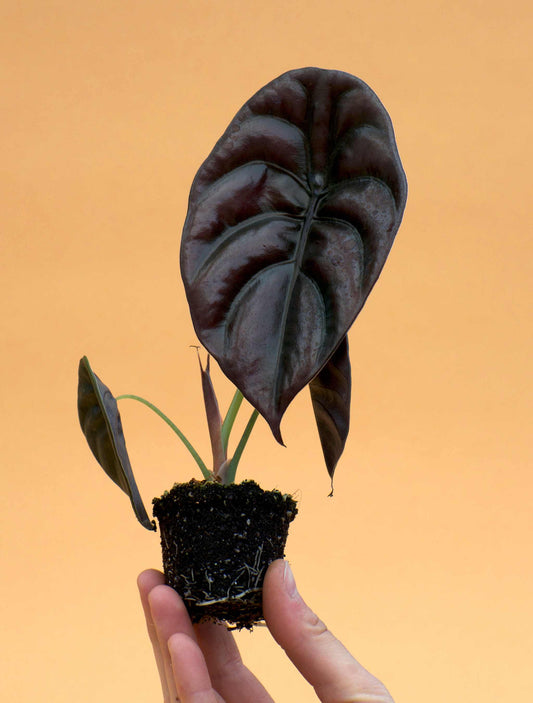
Alocasia longiloba 'purple': A fascinating species from the rainforests of Southeast Asia, A. lonbiloba is known for its extremely variable leaves that can range from completely green to deep purple on the underside.
5. How do you propagate Alocasia?
Alocasia reproduces via small tubers, called corms, which form around the roots. These can be planted in their own growing pots and an airy soil mixture. With the right care, they quickly grow into cute little plants.

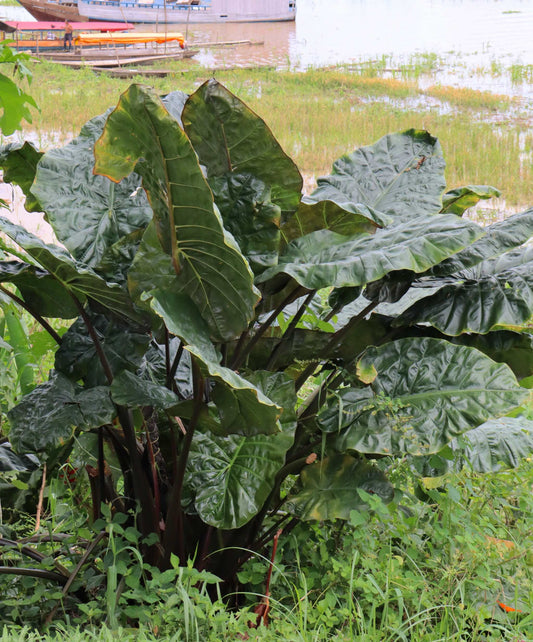
Alocasia macrorrhizos, 'Stingray' is probably a natural hybrid. Very little is known about this plant. It probably originated in the tropical forests of Southeast Asia and northern Australia.
Popular Alocasia varieties
There are many exciting Elephant ear varieties to choose from, from those with large leaves to those with more slender and elegant shapes.
Here is a list of our easy-care Alocasia varieties.
- Alocasia portodora
- Alocasia macrorrhizos
- Alocasia zebrina
- Alocasia bambino
- Alocasia reginula
- Alocasia baginda
And here is a list of more difficult-to-care varieties
- Alocasia micholitziana
- Alocasia cuprea
- Alocasia bisma
- Alocasia heterophylla
- Alocasia melo
- Alocasia tandurusa 'jacklyn'
- Alocasia sp. Sulawesi
- Alocasia infernalis
- Alocasia nycteris
- Alocasia sarawakensis
- Alocasia longiloba
- Alocasia wentii
So is Alocasia difficult to care for?
Many people consider Alocasia to be a difficult to care for plant, but with the right soil and watering it is manageable. It is one of the most species-rich genera from the popular indoor plants 'Aroids'. The diversity and variation in appearance and care means that you rarely tire of these unusual and beautiful plants.

Alocasia frydek variegata : A rarer variety with white, variegated colors in the leaves.
Shop Alocasia and accessories online
We offer a wide range of plants, including Alocasia and other green plants online. Here you will also find orchid pots , peat-free soil and other accessories for your Alocasia. Alocasia is an exotic flower and a nice addition for those who like tropical plants.