Monstera obliqua vs. adansonii: 6 key differences
Unfortunately, there is a lot of mis-marketing out there (intentional or not) that leads people to believe they are buying an obliqua when it is actually an adansonii. We have seen this so many times!
We have dug deep into this topic and compiled 6 important differences that will help you distinguish Monstera obliqua from adansonii.
MONSTERA OBLIQUA VS ADANSONII - QUICK OVERVIEW
Here are the 6 differences at a quick glance before we get into the details:
- The inflorescence
- Blade thickness
- The shape of the holes in the leaves
- Presence of stolons (shoots)
- Leaf size and edge
- Growth rate
1. FLOWER ARRANGEMENT

An important difference is the number of flowers on the cob. The Monstera genus belongs to the Araceae family (aroid family) and has very characteristic inflorescences.
All aroids have similar inflorescences consisting of a perianth (which looks like a hood) and the pistil, which is the long, cone-shaped part in the middle. The actual flowers are actually very small and sit on the pistil.
So what's the difference? Obliqua often has much fewer flowers and later seeds (berries) than adansonii. This is actually one of the surest ways to tell them apart, if you ever see them in flower!
2. SHEET THICKNESS
Given how rare obliqua is, most of us will never get the chance to compare them side by side. But the leaf thickness is a clear difference.
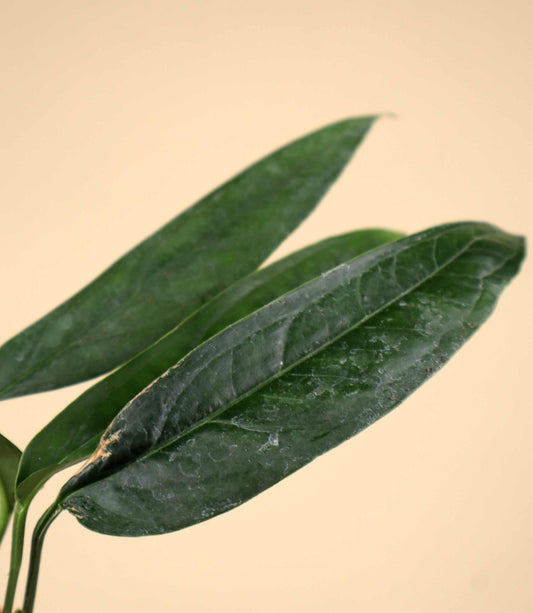
Monstera obliqua has much thinner leaves than adansonii. The obliqua leaves are almost like paper, so thin that they almost appear transparent!


3. THE SHAPE OF THE HOLE
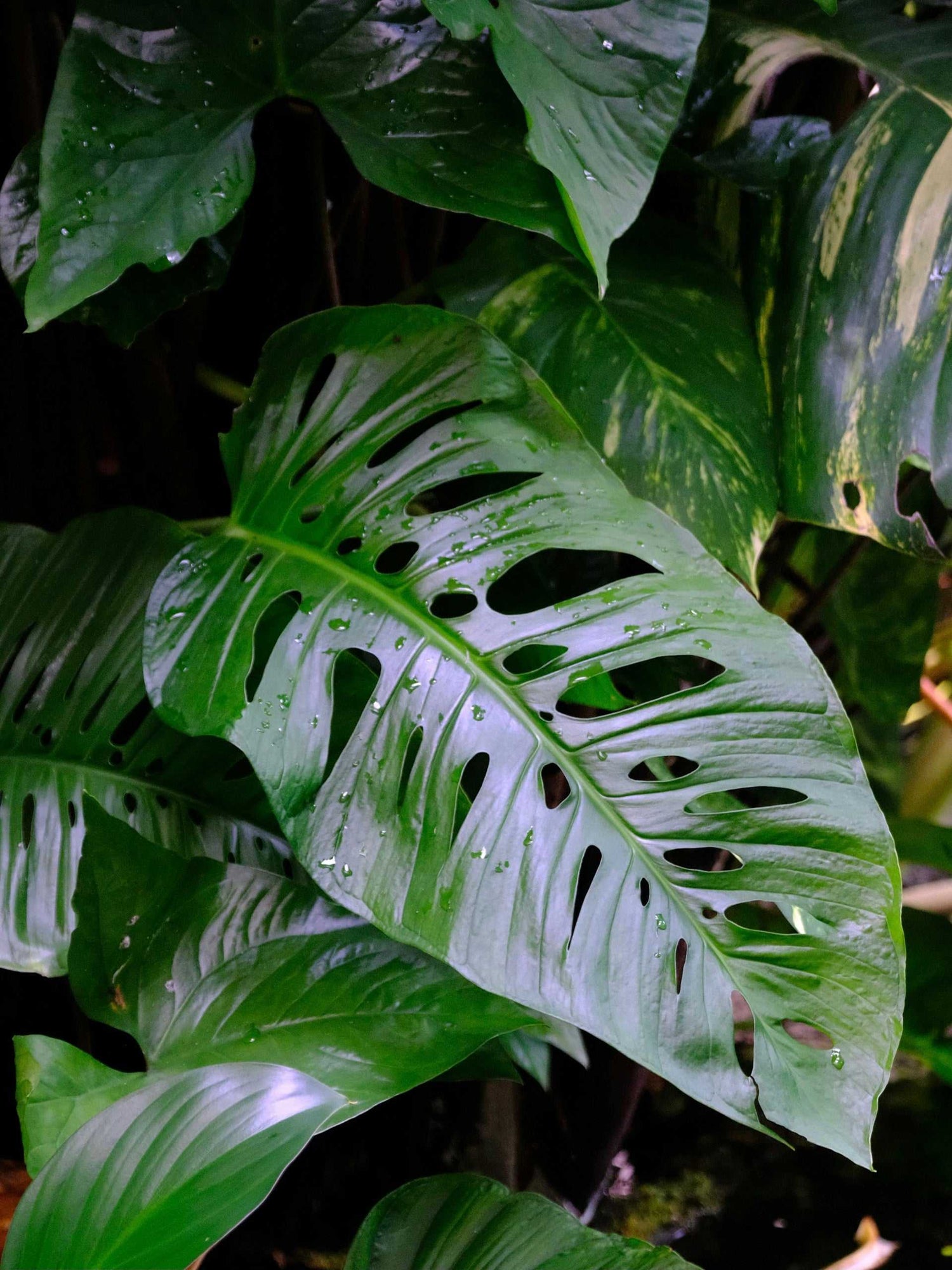
The holes on Monstera adansonii tend to be a little narrower, while obliqua has rounder holes. It's a subtle difference, but once you know what to look for, it becomes more obvious.
Look closely at the shape, adansonii has more oblong holes while obliqua has more circular ones.
4. STOLONS (SHOULDERS)
Obliqua readily forms stolons while adansonii does not.
What is a stolon? It is basically a "shoot", a long stem that grows out and eventually forms roots and new plants at the nodes. The plant sends out leafless shoots along the ground and when it finds a tree to climb, it starts growing upwards.

The picture shows an obliqua with an offshoot just below the large leaf on the left.
Have you seen strawberry plants? They are classic stolon formers that send out runners with new plants.
If you are one of the lucky few who has a true obliqua, it will form stolons even at home. Adansonii does not.
5. SHEET SIZE AND EDGES
Obliqua leaves usually have slightly wavy edges, while adansonii has straight leaf edges. This is one of the easier differences to see.
6. GROWTH RATE
If your plant grows quickly at home, you can be almost certain it is an adansonii.
Obliqua grows painfully slowly. Even in the wild, in tropical climates with high humidity, it takes them several years to climb just a few meters!
My adansonii, on the other hand, probably grows half a meter in a month!
CONCLUSION
Be careful when shopping for obliqua or adansonii on online marketplaces. Almost everything marketed as obliqua is actually adansonii.
And is it really that bad? Adansonii often has a more satisfactory growth and is much better suited as a potted plant. Obliqua, however, is from a purely botanical point of view more satisfactory to grow. However, it is much more difficult to care for!
Are you obsessed with Monstera? We totally get it, these plants really have something special about them. Check out our range of Monstera species and find your next favorite!